A practical, vendor-neutral guide for CIOs, IT directors, and digital workplace leaders evaluating SharePoint consulting partners in Australia — including a comparison...
Hybrid work changed a simple assumption that most internal communication was built on: that employees are in the same place, on the same schedule, looking at the same screens. In a typical US organization today, a policy update might reach the Chicago office through a hallway conversation, reach a field team in Texas through a forwarded email three days later, and never reach the contractor onboarding from home in Denver at all.
Traditional intranets were not designed for this. Many were built as static document libraries or news pages that assumed people would visit them from an office desktop, on the corporate network, during business hours. For a distributed workforce, that model breaks down fast. Content goes stale, search returns the wrong version of the wrong file, and the intranet quietly becomes the place nobody checks.
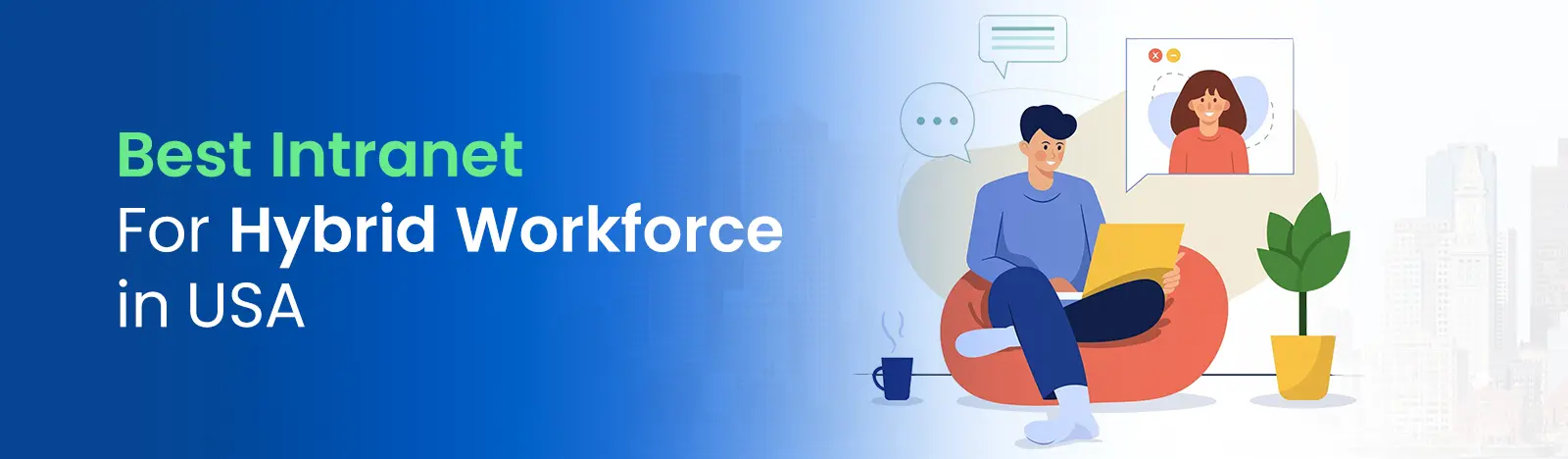
The organizations getting hybrid work right treat the intranet differently. They use it as the connective layer of a digital workplace: the single place where every employee, regardless of location or device, can find what they need, hear what matters, and feel part of the company. This guide explains what that requires, how to evaluate your options, and why a SharePoint-based solution such as Beyond Intranet is a strong fit for US organizations already running on Microsoft 365.
Why Hybrid Workforces Need a Modern Intranet
A hybrid workforce intranet solves a specific set of problems that appear the moment people stop sharing a physical space. If you recognize more than two of these in your own organization, the case for a modern intranet is already made.
When teams split across offices and home locations, information tends to pool in the tools each team uses most: a department Teams channel, a shared drive, someone’s inbox. Nobody deliberately hides anything, but the effect is the same. A sales rep in Atlanta cannot find the pricing sheet that lives in a Dallas engineer’s OneDrive.
In-office employees pick up context from proximity. Remote employees do not. Without a deliberate communication hub, remote staff hear about reorganizations, benefits changes, and product launches late, or secondhand. Over time this creates two tiers of employee: those who know, and those who find out.
Knowledge workers spend a meaningful share of their week searching for information rather than acting on it. McKinsey’s often-cited research on the social economy estimated this at roughly 20 percent of the workweek. In a hybrid environment the problem compounds, because you cannot lean over and ask the person who knows.
Gallup’s research on remote and hybrid work has consistently found that fully remote employees report lower connection to their organization’s mission and purpose than hybrid or on-site peers. An intranet cannot fix culture on its own, but it is one of the few channels that reaches every employee equally.
A new hire in the headquarters office gets a welcome lunch and a desk neighbor to ask questions. A new hire in a home office gets a laptop shipped to them. The gap in experience is not about generosity; it is about infrastructure. A modern intranet gives both employees the same starting point.
Onboarding is where hybrid gaps become most visible. Forms scattered across HR systems, a compliance training link buried in an email, and no clear picture of who to contact for what. Distributed onboarding needs a single, guided path.
Culture survives on shared stories, recognition, and visible leadership. In an office, these happen naturally. In a hybrid model, they need a home. The intranet is where a CEO update, a team milestone, and a peer shout-out can all live in one feed that everyone sees.
What Should a Hybrid Workforce Intranet Include?
A modern intranet for distributed teams should include personalized content delivery, centralized communications, deep Microsoft 365 integration, strong search, mobile access, an employee directory, department hubs, HR self-service, collaboration tools, analytics, and enterprise-grade security. Each of these maps directly to one of the hybrid problems above.
Personalized employee experience. The homepage should change based on who is logging in. A warehouse supervisor in Ohio and a finance analyst in New York should not see identical content. Personalization by role, location, department, and language keeps the intranet relevant and therefore used.
Centralized company information. One authoritative place for policies, benefits, org charts, and company news. The test is simple: if an employee asks “where do I find the current PTO policy,” there should be exactly one correct answer.
Employee communications. Targeted news, leadership updates, mandatory reads with acknowledgment tracking, and the ability to reach a subset of employees (only US East, only managers, only field staff) without spamming everyone.
Microsoft 365, SharePoint, and Teams integration. For the majority of US mid-market and enterprise companies, Microsoft 365 is already the platform employees live in. The intranet should surface inside Teams, use SharePoint as its content backbone, and respect Microsoft Entra identity and permissions rather than maintaining a parallel user store.
Document and knowledge management. Version control, metadata, approval workflows, and a clear distinction between working documents and published knowledge. Hybrid teams cannot rely on “the latest one is the one Jane emailed.”
Powerful search. Search is the feature employees judge an intranet by. It should span SharePoint, OneDrive, Teams conversations, and people, and it should respect permissions so results are both complete and safe.
Mobile accessibility. Frontline, field, and traveling employees often have no desk. A responsive experience, or a native mobile app, is not a bonus feature for hybrid organizations. It is table stakes.
Employee directory. Rich profiles with skills, location, reporting line, time zone, and availability. In a distributed company, the directory replaces the ability to walk over and ask.
Department and team sites. Structured hubs where HR, IT, Finance, and individual teams own their own content within a consistent global design and navigation.
HR resources and forms. Benefits enrollment, expense claims, time-off requests, and policy acknowledgments available as self-service, ideally powered by workflows rather than email chains.
Events and announcements. A shared calendar for company events, town halls, and training, with time-zone awareness for multi-location teams.
Collaboration tools. Deep links into Teams channels, shared workspaces, and co-authoring rather than a separate collaboration silo.
Analytics and engagement insights. Who is reading what, which content is ignored, where search fails, and how adoption trends by location. Without this you are guessing.
AI-powered search and knowledge discovery. Where appropriate, natural-language search, content summarization, and Copilot-style assistants that answer “what is our remote equipment stipend” instead of returning twelve PDFs. Any AI feature should respect the same permissions model as everything else.
Security and governance. Single sign-on, conditional access, data residency options, retention policies, and clear content ownership. Hybrid work expands the attack surface, and the intranet often holds sensitive HR and financial content.
How to Choose the Best Intranet for a Hybrid Workforce
The best intranet for a hybrid workforce is the one that employees actually use, that fits your existing technology stack, and that your organization can govern and scale over time. Use the twelve criteria below as a scoring framework when comparing vendors. Weight them according to your own priorities; a 400-person professional services firm and a 6,000-person manufacturer will not weight them the same way.
Ease of use. Can a non-technical communications manager publish a news article without a ticket to IT? Can employees find the homepage without training?
Microsoft 365 compatibility. Does it use SharePoint, Teams, OneDrive, and Entra natively, or does it sync copies of content into a separate system?
Search and discoverability. Test it with your own messy content, not the vendor’s demo data.
Personalization. Audience targeting by role, location, department, and language, without manual maintenance.
Mobile experience. Try the mobile experience on a phone with a weak connection. That is the field employee’s reality.
Collaboration. Does it complement Teams or compete with it?
Security. Single sign-on, multi-factor authentication support, and inheritance of existing permission models.
Governance. Content ownership, review cycles, archiving, and site provisioning controls.
Scalability. Will it handle acquisitions, new regions, and growth in content volume without redesign?
Analytics. Adoption, engagement, search, and content performance reporting out of the box.
Employee engagement. Recognition, social features, surveys, and two-way communication, not just top-down broadcast.
Implementation and support. Who builds it, how long it takes, and what happens after launch. Ask for the support model in writing.
A practical tip from real implementations: run a pilot with one hybrid department, ideally one with both office-based and remote members, before committing organization-wide. The feedback from that pilot will tell you more than any vendor scorecard.
Types of Intranet Solutions for Hybrid Organizations
US organizations generally choose from four categories. Each has a legitimate use case.
Built on Microsoft SharePoint Online within Microsoft 365, either using out-of-the-box modern SharePoint or a packaged solution layered on top of it.
Strengths: No separate content store, native Teams and Entra integration, existing licensing, enterprise security and compliance inherited from Microsoft 365, and a large partner ecosystem in the USA.
Limitations: Out-of-the-box SharePoint can feel generic without design and configuration investment. Governance is essential; without it, site sprawl happens quickly.
Dedicated SaaS intranet products with their own content management, user store, and mobile app.
Strengths: Polished user experience, fast time to value, strong mobile apps, and features aimed at communicators.
Limitations: Another system to license, secure, and integrate. Content often gets duplicated between the intranet and Microsoft 365. Integration with Teams and SharePoint is typically through connectors rather than native.
Developed from scratch or heavily customized on a web framework.
Strengths: Total control over design and functionality.
Limitations: Long build times, ongoing maintenance burden, key-person dependency, and typically weaker integration with Microsoft 365. Most organizations that build custom eventually migrate to a platform.
Why SharePoint-Based Intranets Are Well Suited to Hybrid Work
For organizations that already run on Microsoft 365, a SharePoint intranet for hybrid work removes the biggest source of friction in any intranet project: the gap between where content lives and where employees work.
SharePoint provides the content management, document libraries, versioning, and site structure. Modern SharePoint pages are responsive by default.
Microsoft Teams is where hybrid employees spend most of their day. A SharePoint intranet can be pinned inside Teams so news, policies, and directories are one click away from a meeting.
OneDrive keeps personal and working documents in the same permission model, so search across “my files” and “company files” behaves consistently.
Microsoft Entra handles identity, single sign-on, conditional access, and group membership. Audience targeting on the intranet can be driven by the same groups HR and IT already maintain.
Power Platform turns HR forms, approval workflows, and simple apps into self-service experiences embedded in the intranet, without custom code.
Microsoft Search and Copilot extend across SharePoint, Teams, and OneDrive, so the intranet inherits improvements in search and AI rather than needing a separate index.
Microsoft Purview and compliance tooling apply retention, sensitivity labels, and data loss prevention to intranet content the same way they apply everywhere else.
The practical outcome is that a SharePoint-based intranet does not become “one more app.” It becomes the front door to a Microsoft 365 digital workplace that hybrid employees already use.
Beyond Intranet: A Strong Choice for Hybrid Workforces in the USA
Beyond Intranet is a modern SharePoint-based intranet solution built within the Microsoft 365 ecosystem. It is designed to improve employee communication, collaboration, knowledge sharing, document access, and engagement for organizations with hybrid and distributed teams. Because it runs on SharePoint rather than alongside it, it inherits the integration, security, and scale advantages described above while adding the structure and experience layer that out-of-the-box SharePoint lacks.
Measured against the twelve evaluation criteria, here is how Beyond Intranet addresses the specific needs of hybrid organizations:
Modern SharePoint experience. Responsive, branded pages built on modern SharePoint, so the intranet looks and behaves consistently on an office monitor and a phone in the field.
Personalized employee homepages. Content targeted by role, department, and location, so remote and on-site employees each see what is relevant to them.
Centralized communications. Company news, leadership updates, and announcements published once and surfaced everywhere, including inside Teams.
Intelligent search. Search across SharePoint, OneDrive, and people, respecting existing permissions.
Employee directory. Profiles with skills, location, and reporting line drawn from Microsoft Entra, so distributed employees can find the right colleague quickly.
Department and team hubs. Structured sites for HR, IT, Finance, and project teams within a consistent global navigation.
Document and knowledge access. SharePoint document libraries with versioning and metadata as the single source of truth for policies and procedures.
Microsoft 365 and Teams integration. Native, not connector-based, because the intranet is SharePoint.
Mobile-friendly experience. Responsive design for employees who work from phones and tablets
Employee engagement. Recognition, events, and two-way features that help maintain culture across locations
Digital workplace personalization. Quick links, tools, and workflows tailored to the individual employee.
Governance and security. Inherits Microsoft 365 identity, permissions, and compliance controls.
Scalability. Grows with additional sites, regions, and acquisitions using the same SharePoint foundation.
For a US organization already invested in Microsoft 365, this combination is what makes Beyond Intranet a credible candidate for the best intranet for hybrid workforce needs. The recommendation is not that it does everything every standalone platform does. It is that it delivers the capabilities hybrid teams depend on, inside the platform they already use, without a second content store to govern.
Beyond Intranet vs Traditional Intranets
Feature
Traditional Intranet
Modern Hybrid Workforce Intranet
Beyond Intranet
Platform
Static web pages or legacy CMS
Cloud-based, integrated with collaboration tools
Built on SharePoint Online within Microsoft 365
Personalization
One homepage for everyone
Targeted by role, location, and department
Audience-targeted content and personalized homepages
Search
Site-only, often keyword matching
Cross-platform, permission-aware
SharePoint and Microsoft Search across content and people
Mobile access
Desktop-first, often network-restricted
Responsive or native app
Responsive modern SharePoint design
Teams integration
None
Connector or embedded
Native, surfaced inside Teams
Document management
Uploaded copies, weak versioning
Version control and metadata
SharePoint document libraries with versioning and metadata
Employee directory
Basic contact list
Rich profiles with skills and location
Entra-driven profiles
Identity and security
Separate logins
Single sign-on
Microsoft Entra SSO and conditional access
Governance
Ad hoc
Defined ownership and lifecycle
Microsoft 365 governance and compliance tooling
Analytics
Page views at best
Adoption and engagement reporting
SharePoint and Microsoft 365 usage analytics
Content store
Separate from work tools
May duplicate content
Single store, no duplication
Benefits of Implementing Beyond Intranet for Hybrid Teams
The outcomes below are the ones organizations typically set out to achieve with a modern intranet. They are described as expected benefits, not as guaranteed results, and any figures you add here should come from your own adoption data.
Faster access to information. One search, one source of truth, and fewer requests to colleagues for “the latest version.”
Better internal communication. Announcements reach remote and office employees at the same time, with acknowledgment tracking for mandatory content.
Improved employee engagement. A feed that includes recognition and team news, not just corporate broadcast.
Reduced information silos. Department content becomes discoverable across the company rather than trapped in team channels.
Better onboarding. A guided onboarding hub that gives a remote new hire the same starting point as one in headquarters.
Stronger connection between remote and office employees. Directory, profiles, and shared events reduce the “two tiers” effect.
More consistent employee experience. Same navigation, same branding, same self-service tools regardless of location or device.
Better knowledge sharing. Published knowledge separated from working documents, with clear ownership and review cycles.
How to Build an Intranet Strategy for a Hybrid Workforce
Technology is the smaller half of an intranet project. The larger half is strategy and governance. The sequence below reflects how successful hybrid intranet rollouts typically run.
Define employee needs. Interview a cross-section of office, remote, and frontline employees. Ask what they cannot find and what they hear about too late.
Audit existing content. Most organizations discover that a large share of legacy intranet content is outdated or duplicated. Decide what to migrate, rewrite, or retire.
Establish governance. Assign content owners, define review cycles, agree on who can create sites, and document it. Do this before launch, not after sprawl.
Design information architecture. Organize by task and audience, not by org chart. Employees look for “how do I submit an expense,” not “Finance department.”
Prioritize high-value employee journeys. Onboarding, benefits enrollment, IT support, and company news usually deliver the most value first.
Integrate Microsoft 365. Pin the intranet in Teams, connect Entra groups for targeting, and use Power Platform for forms and approvals.
Launch in phases. Start with a pilot department, then expand. A hybrid department with mixed remote and office members makes the best pilot.
Measure adoption. Track active users, search success, content engagement, and mobile usage by location. Set baselines before launch.
Continuously improve. Review analytics quarterly, retire unused content, and add features based on what employees actually use.
The best intranet for a hybrid workforce is one that gives every employee the same access to information, communication, and colleagues regardless of location, and that integrates with the tools they already use. For organizations running Microsoft 365, a SharePoint-based solution such as Beyond Intranet is a strong choice because it delivers personalization, search, Teams integration, and mobile access on the platform employees already work in.
At minimum: personalized content, centralized company communications, Microsoft 365 and Teams integration, permission-aware search, mobile access, an employee directory, department hubs, HR self-service, collaboration links, analytics, and enterprise security and governance.
Yes, particularly for organizations already using Microsoft 365. SharePoint provides responsive pages, document management, Teams integration, and identity through Microsoft Entra. Its main limitation is that out-of-the-box SharePoint needs design, configuration, and governance to become a polished intranet, which is where packaged solutions add value.
An intranet is primarily a communication and information hub. An employee experience platform bundles intranet features with engagement, recognition, surveys, and sometimes HR service delivery. Many organizations get the outcomes they need from a well-implemented intranet combined with tools they already own.
It gives remote employees the same access to news, policies, documents, and colleagues as office-based staff, closes the information gap created by distance, and provides a single starting point for onboarding and self-service.
Costs vary widely based on platform, organization size, customization, and implementation scope. SharePoint-based intranets often have a lower incremental cost because Microsoft 365 licensing is already in place; the main investment is design, configuration, and governance. Standalone platforms typically charge per user per month plus implementation. Request a scoped quote rather than relying on published list prices.
Yes. SharePoint-based intranets can be pinned directly inside Teams so employees access news, directories, and documents without leaving their collaboration workspace. Standalone platforms typically integrate through connectors or embedded tabs.
Yes. Beyond Intranet is a modern SharePoint-based intranet solution built within the Microsoft 365 ecosystem, which means it uses SharePoint for content, Microsoft Entra for identity, and integrates natively with Teams and OneDrive.
Choosing an intranet for a hybrid workforce comes down to twelve questions: ease of use, Microsoft 365 compatibility, search, personalization, mobile experience, collaboration, security, governance, scalability, analytics, engagement, and implementation support. Score your shortlist against those, run a pilot with a mixed remote and office team, and let employee feedback carry more weight than feature checklists.
If your organization already runs on Microsoft 365, the shortlist should include a SharePoint-based Intranet solution. It removes the duplicate content store, inherits your security and identity model, and puts the intranet inside Teams where hybrid employees already spend their day. Beyond Intranet is built for exactly that scenario, and for US organizations with distributed teams it is a strong candidate for the top of the list.
Ready to see how it fits your hybrid workforce?Book a Beyond Intranet demo and walk through a personalized homepage, Teams integration, and search on your own Microsoft 365 tenant. Or talk to our SharePoint consultants about an intranet strategy for your organization.