A practical, vendor-neutral guide for CIOs, IT directors, and digital workplace leaders evaluating SharePoint consulting partners in Australia — including a comparison...
When COVID-19 hit the world, we knew something was going to change. But would it change the way we continue working for years and years later? may not be. However, hybrid work is now a reality worldwide. Organizations across the world have cracked it. It is reasonable, cheaper, and more efficient than the traditional work environment. And with that has come a change in office design layout.
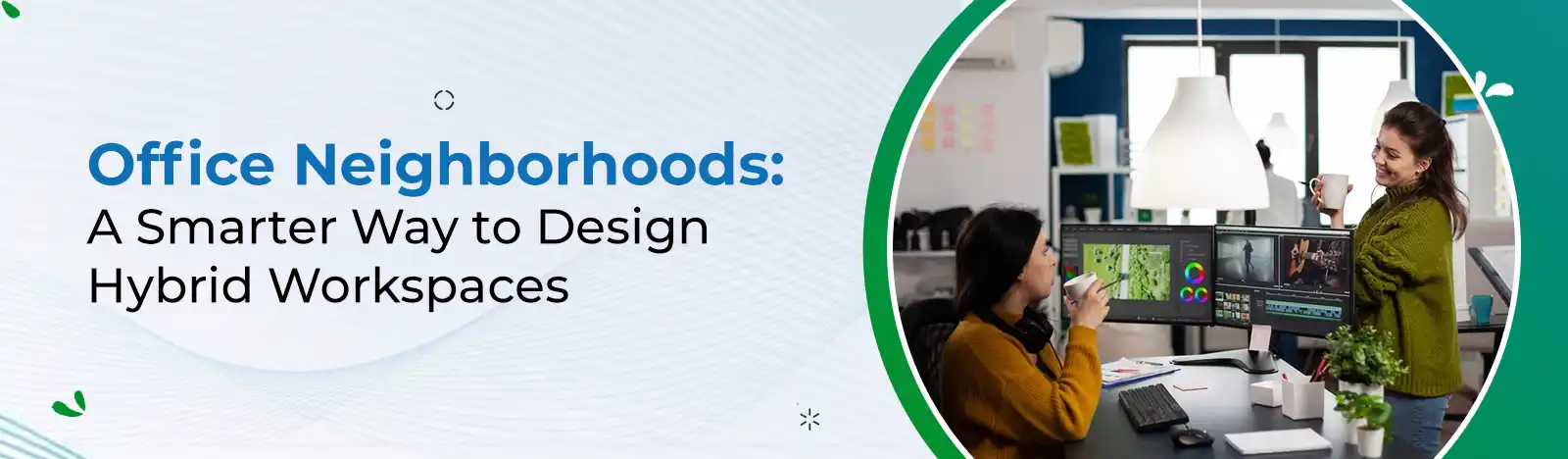
Organizations are moving away from assigning permanent desks or keeping layouts open. Instead, they are using flexible workplace strategies that strike a balance among collaboration, productivity, and space efficiency. Along the same lines, a new introduction has taken place – the office neighborhoods. They are new-age workspace designs that have become very popular because they prioritize team needs and collaboration over individual employees.
Office neighborhoods are designed to enhance the benefits of a hybrid work environment while eliminating common problems that arise in such settings. Often, employees struggle to find a seat, teams cannot work together, and office spaces are not utilized to their full potential. Thus, the design of these office neighborhoods provides specific areas for teams to collaborate while working from the office.
But again, you need to manage these neighborhoods well. You must set up systems that help you assign these common spaces flexibly to the different teams and avoid overcrowding. Furthermore, technical support needs to be provided to the teams. Then you must ensure everyone sits in the right place.
Beyond Intranet – A desk booking software that keeps your neighbourhood office in order
Office neighborhoods are workspaces that are organized around teams, departments, or functions. They don’t have any fixed individual desks; they are assigned to employees upon their request. This system allows employees to pre-book a space when they have to work on-site within a designated office neighborhood.
Employees can pre-book:
A shared desk for team members
Collaboration tables
Quiet focus area
Informal/formal meeting spot
This helps increase collaboration among teams and gives them the flexibility to work in a space with all the required resources, enabling them to collaborate efficiently.
Office Neighborhoods vs Traditional Open Office
Traditional open offices are designed to increase desk density. You are very unlikely to observe any structure in its design. Rows of desks that are linked together for people to work individually. Additionally, it does not support team collaboration. Too much distraction and noise can hamper a team’s productivity. They are designed for people to sit and work, but not collaborate. Furthermore, the ownership of the space is unclear.
Although the office neighborhood sounds very much like an open office, it eliminates the problems found in a traditional one. In contrast, it introduces zones. Intentional zoning is used to give teams a chance to book spaces and increase collaboration. They support team workflow because they are technologically advanced. It is designed to reduce friction and to make collaboration more natural.
Office neighborhoods are structured to provide flexibility. It is an evolution in the workplace design that supports the needs of specific teams.
Why Companies Are Moving to Office Neighbourhoods
As an organization, you have a few priorities while designing a workspace. First, the office space must cater to the needs of all the teams that will use it. Secondly, the space should not be underutilized. Third, it should improve collaboration among employees. Fourth, it should be affordable.
1. Improved Collaboration
Office neighborhoods are known to enhance spontaneous collaborations. It allows people to locate their teammates, brainstorm ideas, and resolve issues much more quickly without scheduling formal meetings. It plays on the proximity of teammates, with a seating arrangement that is well thought out and preserves a sense of team.
2. Flexibility for Hybrid Teams
Employees can simply use the desk booking feature to pick the time, desk, and dedicated zones to work in. It gives them the flexibility that is much sought-after in the hybrid work environment. This arrangement liberates employees without losing the organization’s structure. This makes it a key part of hybrid success.
3. Better Use of Office Space
There is no need for permanent allocation of desks and team zones. Since not everyone comes to the office daily, most seats remain unused on some days of the week. Adopting neighborhood seating allows you to use empty desks and assign them to another individual for the day. This helps you make optimal use of the space – now you may not need a space big enough to accommodate all employees. The result leads to reduced rents, reduced maintenance, and increased flexibility.
4. Increased Employee Satisfaction
Flexibility does not have to come at the cost of familiarity. Ensuring employee satisfaction is crucial. Not finding the right place to sit and work, or collaborate, creates a lack of belonging and dampens enthusiasm. Having an option to choose from where they want to work is a great way to keep your employees productive and engaged.
The Challenges of Managing Neighborhood Seating
While office neighborhoods offer clear advantages, managing them manually creates operational challenges.
Common issues include:
Unassigned desks are causing confusion during busy office days
Overcrowding within popular neighborhood spaces
Manual spreadsheets are failing to track attendance accurately
Hybrid scheduling conflicts between teams
Lack of visibility into desk availability
Without coordination tools, workplace managers often struggle to maintain order. Employees waste time searching for seats, and teams lose the collaboration benefits neighborhoods are meant to provide.
This is where desk booking software becomes essential for managing modern office neighborhoods.
How Desk Booking Software Powers Office Neighborhoods
Technology is what transforms office neighborhoods from a design concept into a scalable workplace strategy. Modern desk booking software enables organizations to manage seating dynamically while maintaining structure.
Zone-Based Desk Assignments
Administrators can define office layouts by team zones, creating digital representations of each office neighborhood. Employees simply select their designated area when booking a desk.
This prevents random seating while preserving flexibility.
Booking Within Specific Neighborhoods
Employees reserve desks directly inside their assigned neighborhood office. This ensures team members sit near each other even when attendance varies throughout the week.
Hybrid Team Coordination
Managers gain visibility into who plans to work onsite and when. Teams can align schedules to maximize collaboration days—a major benefit of working in office neighborhoods.
Real-Time Availability
Live floor maps show which desks are available, booked, or occupied. Employees avoid confusion, and workplace managers eliminate manual coordination.
Utilization Analytics
Analytics dashboards reveal how frequently each neighborhood space is used. Organizations can optimize layouts based on real data rather than assumptions.
Administrative Controls
IT and workplace teams can manage permissions, booking rules, and capacity limits to prevent overcrowding and maintain fairness.
Platforms like Beyond Intranet’s desk booking software enable efficient management of office neighborhoods while supporting evolving hybrid policies.
Teams hustling to book desks? End that today; learn more about our desk booking software here!
Power Your Office Neighborhoods with Smart Desk Booking
Modern workplaces need systems that remove friction rather than create more administrative work. Smart booking technology helps organizations fully unlock the benefits of office neighborhoods.
Key benefits include:
Reserve desks within designated neighborhood zones
View real-time availability across office neighborhoods
Track utilization trends and optimize space planning
Support flexible and hybrid work policies
Reduce workplace confusion and employee frustration
Book a Free Demo of Beyond Intranet’s Desk Booking Software
Best Practices for Implementing Office Neighborhoods
Successfully implementing office neighborhoods requires more than rearranging furniture. Organizations must combine thoughtful design with operational processes.
Define Team Zones Clearly
Each office neighborhood should align with a team or department. Clear boundaries help employees understand where they belong while maintaining flexibility.
Balance Collaboration and Focus Areas
Effective neighborhoods include both shared collaboration zones and quiet desks. This ensures employees can shift between teamwork and focused tasks without leaving their neighborhood space.
Use Booking Tools to Manage Capacity
The desk booking software helps you maintain smooth operations as you scale a hybrid work environment.
Workplace needs evolve constantly. Utilization data helps organizations refine layouts, adjust capacity, and continuously improve their neighborhood office strategy.
Measuring the Success of Your Neighbourhood Office
To ensure office neighborhoods deliver value, organizations should track measurable performance indicators.
Desk Utilization Rate
Shows how efficiently the workspace is being used and whether neighborhood seating aligns with employee attendance patterns.
Booking Frequency
Measures adoption levels and employee engagement with hybrid workplace tools.
Space Efficiency
Evaluates whether the organization can support more employees with fewer desks.
Employee Experience Metrics
Working in office neighborhoods makes employees feel supported and valued. You can use feedback surveys and usage data to unravel crucial information on employee experience.
Desk booking software by Beyond Intranet comes with an integrated analytics dashboard that helps you gain actionable insights that guide long-term workspace decisions.
Book a Free Demo of Beyond Intranet's Desk Booking Software
Office neighborhoods have mushroomed as an evolution. They are replacing the traditional hybrid workspaces and providing practical solutions. They are more flexible and support higher collaboration. They are efficient in space utilization. It gives employees a structured desk setup without rigidity and helps companies create workplaces designed to support modern work patterns.
However, it is one thing to design and another thing to manage. Take your office neighborhood’s management one step ahead with technology. Efficient, feature-rich desk booking systems are a one-stop solution for office neighborhood management. They give you real-time visibility, simplify coordination, and ensure neighborhood seating works smoothly, efficiently, and effectively.
Office neighborhoods are a workplace design solution. It is a workspace zone where employees can book desks within a shared area instead of having a permanently assigned seat.
Office neighborhoods support the hybrid work environment by providing team-based seating solutions. It improves on-site team collaboration during workdays and offers employees a flexible attendance facility.
Neighborhood seating is a seating arrangement that allows a team to book a work zone to collaborate on-site during workdays. It is a team-centric seating solution rather than an individual one.
Some proven methods for measuring success in office neighborhoods include desk utilization, booking frequency, employee satisfaction, and space efficiency.