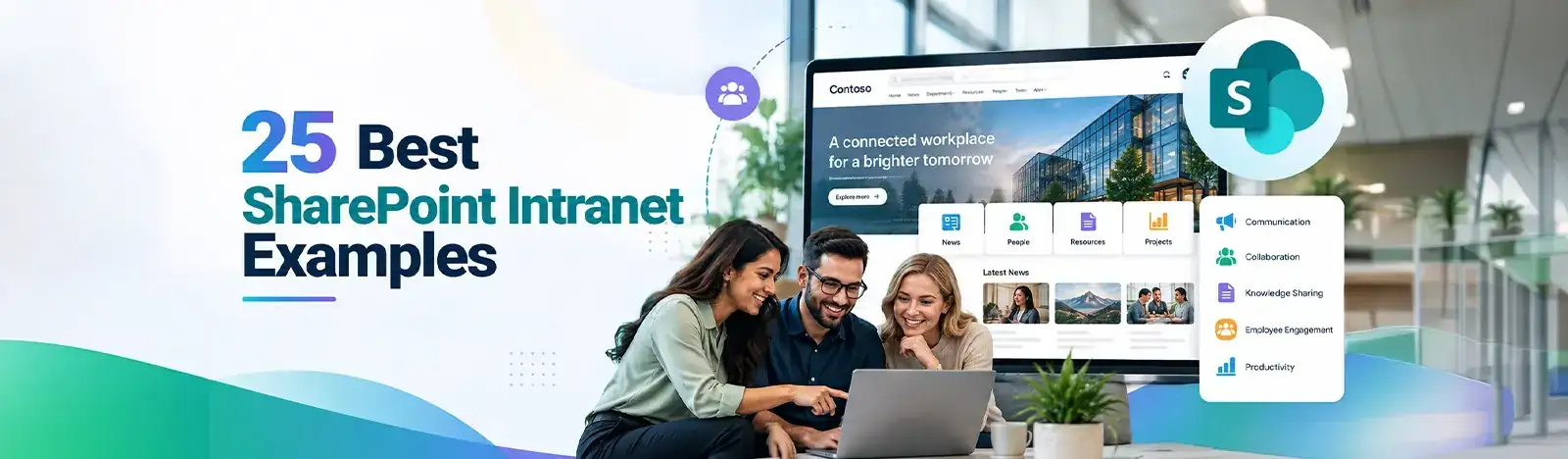
A practical, vendor-neutral guide for CIOs, IT directors, and digital workplace leaders evaluating SharePoint consulting partners in Australia — including a comparison...
Capex sourcing is where procurement gets serious — and where the margin for error shrinks to almost nothing. This is machinery that runs for a decade, infrastructure that shapes how a facility operates, technology platforms entire teams depend on for years. Get the decision right and the asset pays for itself. Get it wrong and you’re stuck with something finance will bring up at every review for the next five years.
The stakes are straightforward: high cost, long commitment, hard to reverse. Budget overruns, wrong vendor selection, projects that start late and finish later — these come from a missing process. And unlike OpEx, you don’t get a reset next quarter.
This guide covers the full picture — what it involves, how it differs from everyday purchasing, the step-by-step process from PR to vendor award, and the capex procurement strategy and best practices that separate teams who get this right from those who learn expensive lessons.
What Is CapEx Sourcing?
Capex sourcing is how organisations find, vet, and select vendors for the big-ticket assets they’ll live with for years — equipment, facilities, technology platforms, fleet, infrastructure. Not a one-off purchase decision. A structured cycle that runs from the first internal request all the way through to a signed contract and vendor award.
That definition matters because it draws a hard line between this discipline and what most procurement teams do on a Tuesday. OpEx purchasing — consumables, services, subscriptions — runs on speed and price. Capital expenditure sourcing runs on completely different rules. Longer evaluation, deeper approvals, financial consequences that last a decade or more. If you want a primer on how sourcing works at a fundamental level, start there. But capex deserves its own process and its own governance.
Think about what typically runs through this: production lines, new facility fit-outs, fleet replacement, ERP rollouts. Each shapes how the business operates for years after the PO is signed. The evaluation for a major equipment purchase shouldn’t look anything like the one for an annual service contract. But in most organisations? Same template, same speed.
CapEx Sourcing vs OpEx Sourcing — Key Differences
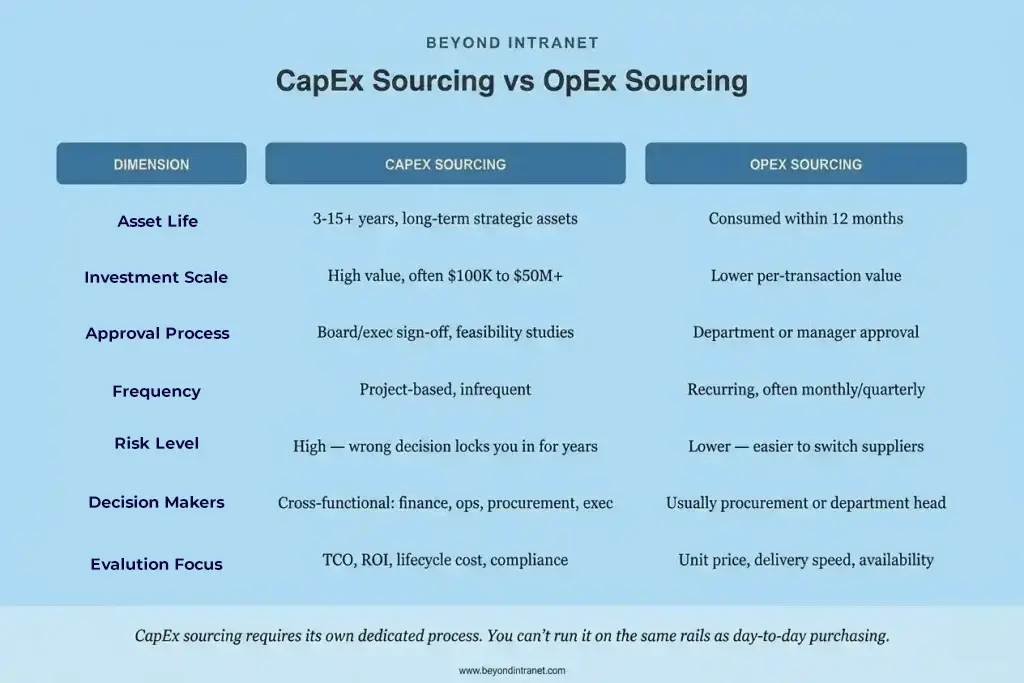
Most procurement teams understand the difference in theory. CapEx is long-term assets, OpEx is recurring costs. Clean enough on a slide. In practice? They often run both through the same process — same templates, same approval speed, same evaluation criteria. That’s where it goes sideways
Here’s the gap that costs money: capex approval involves market analysis, feasibility studies, and board-level sign-off. OpEx rarely gets that treatment. Force a capital sourcing event through an OpEx process and corners get cut on evaluation, TCO gets ignored, the wrong vendor wins on price alone. A dedicated capex procurement strategy prevents that.
The CapEx Sourcing Process — Step by Step
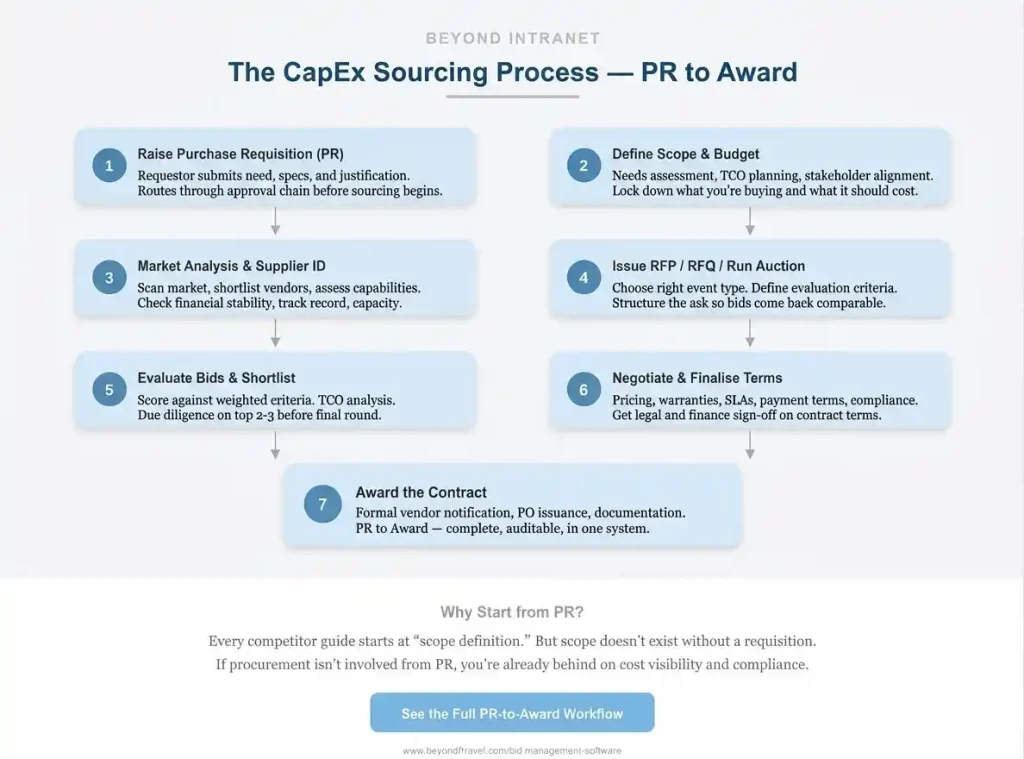
Every competitor guide starts at “define scope.” Too late. We’re starting at the Purchase Requisition, because that’s where any serious capex procurement strategy begins. Procurement not involved at the PR stage? You’ve already lost visibility on cost, compliance, and vendor selection. Nobody’s even called a supplier yet.
Step 1: Raise a Purchase Requisition (PR)
Someone in the business has a need. Operations, a project team, facilities. They raise a PR with specs, justification, and estimated budget. It routes through approval based on value thresholds. Here’s what people get wrong: if that requisition is vague or half-finished, every stage after it inherits the mess. Capex sourcing doesn’t fix a bad PR.
Step 2: Define Scope & Budget
What are you actually buying, and what should it cost over its lifetime? TCO planning, stakeholder alignment, requirements locked down before a single supplier hears about it. Scope creep on a capital project isn’t annoying. It’s a budget crisis.
Step 3: Market Analysis & Supplier Identification
Who makes what you need? How many credible suppliers exist? Shortlist based on capability, financial stability, and delivery track record. Not just whoever you used last time.
Step 4: Issue RFP / RFQ / Run Auction
Choose the right event type based on what you’re sourcing. A complex machinery purchase needs an RFP with weighted scoring. A commodity asset might suit a reverse auction. The key in capital procurement is structuring the ask so bids come back in a format you can actually compare — not five PDFs in five different layouts.
Step 5: Evaluate Bids & Shortlist
This is where a capex procurement strategy earns its money. Score bids against the weighted criteria you set before anything went to market. Run TCO analysis. Do due diligence on the top two or three — site visits, reference calls, financial checks. You’d be surprised how many teams skip this and wonder why the winner underdelivers.
Step 6: Negotiate & Finalise Terms
Price, warranties, SLAs, payment milestones, compliance. Get legal involved now — not after the PO is about to drop. On a high-value capex purchase, what’s in the contract matters as much as the quote. A capex procurement strategy without legal at this stage has a hole in it.
Step 7: Award the Contract
Formal vendor notification, PO issuance, full documentation. The sourcing cycle closes here. Everything from PR to award should be traceable, auditable, and stored in one place — not scattered across email chains, shared drives, and someone’s desktop folder.
Running CapEx Sourcing Across Email and Spreadsheets?
Beyond Intranet’s bid management platform manages the full PR-to-award cycle for capital procurement — in a single system, inside Microsoft 365.
Here’s a stat that should bother you: roughly 42% of capital projects fail to meet their original objectives. Not bad execution. Insufficient planning upstream. Your capex procurement strategy is where that planning either happens properly or doesn’t happen at all.
Involve Procurement Early, Before Budgets Are Locked
By the time most procurement teams see a capex request, the budget’s approved and someone has a vendor in mind. Backwards. Procurement should be at the table when the business case is being built. Writing the capex procurement strategy after the budget’s locked isn’t strategising. It’s administering.
Build a TCO Framework, Not Just a Price Comparison
Unit price is one number. And it’s the wrong one. Total cost of ownership — installation, maintenance, energy, downtime, disposal — that’s what the asset actually costs. I’ve seen a vendor win on price and end up 30% more expensive over five years once spares and service contracts got added. Your evaluation framework needs TCO built into scoring before bids arrive. If you’re still ranking on price, start with strategic sourcing principles and work from there.
Standardise Your RFP and Scoring Criteria
Every capital sourcing event should use a consistent evaluation framework. When each project team invents their own scoring, you can’t benchmark across projects, you can’t learn from previous cycles, and you can’t defend the decision when audit comes knocking.
Establish Cross-Functional Stakeholder Alignment
Finance wants budget variance and depreciation schedules. Operations wants uptime and specs. Procurement wants supplier risk managed and commercial terms locked. Three scorecards, one event. If they’re not aligned before the RFP goes out, the evaluation stalls. I watched a major project lose a full quarter because finance and operations couldn’t agree on how to weight price against delivery speed.
Set KPIs from Day One
On-time delivery, budget variance, asset utilisation in the first year, maintenance cost against forecast. Define success before the PO drops. Otherwise you’ll never know if your capex procurement strategy worked or you just got lucky.
Common Challenges in CapEx Sourcing
Budget timing is the first problem. Most organisations approve capex annually, so a project that surfaces in October either waits ten months or gets rushed through without proper evaluation. Both options are bad.
Supplier lock-in is the second. Buy a major asset from a single OEM and you’re tied to their parts catalogue, their service pricing, their upgrade roadmap. For a decade. Fine if you chose it deliberately. Not fine if the sourcing process just didn’t surface alternatives.
Technology obsolescence is real on longer cycles. An automation project scoped in Q1 might be outdated by award in Q4. Regulatory compliance adds another layer — different states, different certifications, different environmental norms.
And the one most guides skip: nobody owns the end-to-end process. PR sits in one system. RFP goes out from another. Bids land in someone’s inbox. Award documentation? Good luck finding it. When the process lives in four places, errors don’t happen sometimes. They happen every time.
How Technology Supports CapEx Sourcing
The problem isn’t that teams don’t know the steps. They do. The problem is those steps live in five tools, three email threads, and a spreadsheet nobody’s updated in months. A bid management platform gives the process a single home — PR, RFP, bids, evaluation, award. One place.
Beyond Intranet’s bid management software manages the full PR-to-award cycle in a single system. Structured bid evaluation, automated deadlines, audit-ready documentation. No manual handoffs. The capex procurement strategy you’ve defined actually runs through a process that enforces it.
That’s not a pitch for capex sourcing softwareas a category. It’s an observation: teams running capital procurement through a connected platform award faster, audit cleaner, and avoid the errors from stitching the process together manually.
CapEx Sourcing Best Practices at a Glance
Get procurement in the room before the budget is locked. Build a TCO model for every capex evaluation — unit price alone tells you nothing useful. Pick one scoring framework and use it across every capital project. Consistency is what makes benchmarking possible. Align finance, operations, and procurement before the RFP goes out. Sorting disagreements during evaluation costs weeks. Define success metrics at the start: delivery timing, budget adherence, first-year asset performance. Run the whole thing through one system. Stitching PR-to-award across email and spreadsheets is how errors get made.
It’s how organisations find and select vendors for long-term assets — equipment, facilities, technology, fleet. Unlike day-to-day purchasing, capex sourcing involves deeper evaluation, cross-functional sign-off, and a financial commitment that lasts years. The process typically runs from an internal purchase requisition all the way through to a formal vendor award.
Capex is about assets you’ll use for years: big investment, executive approval, TCO-based evaluation. OpEx is about things you consume or renew regularly: lower value per transaction, faster approval, often department-level authority. The key difference is reversibility. A bad OpEx decision gets corrected next quarter. A bad capex decision stays with you.
A strong capex procurement strategy includes early procurement involvement before budgets get locked, a TCO model applied to every bid, a scoring framework consistent across projects, and alignment between finance, operations, and procurement before anything goes to market. Plus KPIs defined upfront so you know whether it worked.
Seven stages starting from the purchase requisition: define scope and budget, scan the market and shortlist suppliers, issue an RFP or RFQ, evaluate bids using weighted criteria, negotiate terms, and award. Most guides skip the PR step, but that’s where procurement either gets involved early or gets involved too late.
Annual budget cycles that force bad timing. Single-source decisions that create vendor lock-in. Long evaluation timelines where technology moves faster than the process. Regulatory requirements that differ by jurisdiction. And the one nobody talks about: running the whole thing across disconnected tools where things fall through cracks.
Getting this right isn’t about adding complexity. It’s about one connected workflow that matches the seriousness of the investment. Beyond Intranet’s bid management platform gives your team the PR-to-award process that capital procurement demands — structured, auditable, and fast enough to actually get used.
Ready to Fix Your CapEx Sourcing Process?
One platform. PR to Award. Full audit trail. Inside your Microsoft 365 environment.