A practical, vendor-neutral guide for CIOs, IT directors, and digital workplace leaders evaluating SharePoint consulting partners in Australia — including a comparison...
Summary: Constant organizational changes create real operational friction. Bringing in dynamic org chart software and automated employee directory platforms immediately reduces change fatigue. These modern tools make reporting lines clear, speed up stabilization after reorgs, and improve manager oversight for enterprise leaders.
Introduction
As enterprise leaders, we know average corporate employees currently face ten planned change programs every single year. Constant structural shifting creates serious mental strain across the business.
Moving Past Older Spreadsheets
We clearly need reliable org chart software to view new hierarchies instantly. Implementing dynamic employee directory systems brings much needed workforce alignment, replacing dangerous guesswork with clear structural visibility during critical business transitions.
Why Organizational Restructures Often Cause Confusion
The Problem with Outdated Methods
We all know enterprise reorganization should theoretically make decision making faster and improve business results. Yet, execution often fails because companies still rely on outdated change management methods. Announcing structural shifts without instantly updating role visibility creates incredibly large information gaps.
Protecting Your Revenue Streams
When shifts happen, people simply do not know their new reporting lines, new teams, or owners for specific workstreams. Consequently, productivity drops fast. As leaders, we want smoother transitions that protect revenue streams. Providing clear direction ensures our teams remain productive instead of confused and frustrated.
Digital Interruptions and Mental Exhaustion
Think about your modern knowledge workers dealing with constant digital interruptions. Relying on slow communication to find new team members just makes their mental exhaustion worse. Without real time structural visibility, finding exact project owners stalls completely.
Overcoming Operational Roadblocks
Because of these delays, decisions take much longer to finalize. Duplicate work happens across separated departments because teams lack visibility into other groups. It is clear that organizations need better technological support to smooth out these bumps.
Ensuring Business Continuity
When restructuring happens, we must provide tools offering immediate clarity to our workforce. Failing to do so turns strategic pivots into operational roadblocks. Giving employees direct access to updated reporting lines ensures business continuity and stronger operational focus across the board.
Keeping Structure Visible with Dynamic Org Charts and HR Directory Data
Connecting to Core Identity Systems
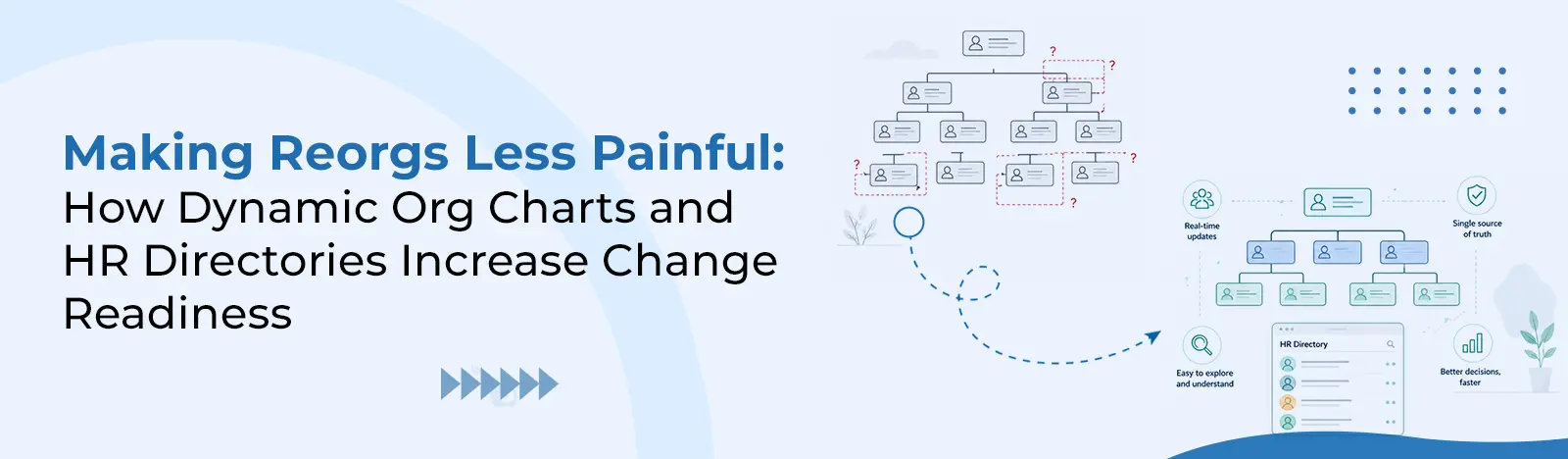
Fighting post reorganization confusion requires moving away from static files toward living organizational data. Fast moving business models make rigid hierarchy maps completely unhelpful today. Modern agility demands a dynamic org chart deployment connected right to your core identity systems.
Instant Access to Team Frameworks
When your enterprise structure shifts, dynamic employee directory software solutions automatically sync the vital data. This automated syncing replaces manual searching with instant access to accurate team frameworks.
Building Quick Reflexes for Change
You can think of these dynamic directories as quick reflexes for change. Employees seamlessly look up updated profiles rather than sending guessing messages on chat platforms. Making this discovery a natural habit lowers overall anxiety. Giving people immediate structural clarity removes so much transition friction.
Boosting Internal Talent Mobility
With these tools, employees easily find updated departments and matrix setups. Transparent data also boosts internal talent mobility. In fact, LinkedIn labor market data shows internal mobility increasing by six percent year over year. Visible internal paths keep your best performers engaged and motivated to stay.
Real Time Talent Mapping
Interactive employee directory platforms basically act as real-time talent maps. They highlight open roles and help us deploy skills fast. Keeping structure visible during and after reorgs builds lasting organizational resilience.
Visualizing Collaborative Networks
Your teams can visualize their new collaborative networks instantly. Agility naturally improves when people understand exactly where their specific skills fit within the newly designed corporate framework.
Benefits for HR: Easier Communication and Better Manager Support
Removing Heavy Administrative Weights
We have to acknowledge that human resources teams carry heavy administrative weights during structural changes. Manual data updates across separate spreadsheets slow down core HR operations. Bringing in smart connected HR solutions yields up to 35 percent time savings across HR functions.
Shifting to Proactive Workforce Planning
Removing manual data entry finally frees up HR professionals. Teams then put their energy toward proactive workforce planning instead of fixing broken data points. Smarter technology offers highly compelling alternatives to legacy processes that drag down overall efficiency.
Reducing the Burden on Managers
Currently, managers face immense pressure during organizational transitions. Consider how Microsoft research indicates 75 percent of managers report feeling overwhelmed by role expansion. Furthermore, many remain unequipped to lead change communications well.
Stopping Basic Administrative Questions
Giving managers automated org chart software stops basic administrative questions right in their tracks. Leaders avoid answering routine questions about reporting structures. They focus instead on coaching teams through actual transition details and strategic goals.
Preventing Widespread Manager Burnout
Setting up structural communication automation prevents widespread manager burnout. Companies lacking good tools force middle management to explain complex reorganizations manually. Providing self service structural tools gives managers their time back, enabling stronger peer to peer leadership.
Driving Actual Business Results
When managers spend less time explaining the new reporting matrix, they naturally spend more time driving actual business results and supporting their direct reports.
How Beyond Intranet Solutions Architect Structural Clarity
Unifying Your Employee Information
Reaching necessary agility requires enterprise grade tech fitting smoothly into our current digital workspaces. Beyond Intranet HR Directory 365 gives expert level tools for solving post reorganization friction. Companies must unify employee information in one user-friendly employee database software platform.
Seamless Auto Sync Architecture
HR Directory 365 runs on an auto sync architecture connected straight to Microsoft 365 data. Any structural change made at core identity levels shows up instantly across all enterprise directories. This makes administrative upkeep much simpler and far more reliable.
Delivering Multi Dimensional Views
Users experience complete organizational collaboration fusion while navigating through unified platforms. Modern operating models absolutely need multi dimensional views. Beyond Intranet solutions deliver powerful multi view directory dashboards.
Users switch easily between tree, matrix, and department views.
This flexibility handles highly complex matrix structures and agile teams perfectly.
Creating Org Charts in Minutes
At the same time, executives can effortlessly create an org chart in minutes with our SharePoint Organization Chart Software. Decision makers get clear flowchart style views of the company structure from top to bottom.
Ensuring Security and Transparency
Using a sharepoint org chart ensures tight security compliance while keeping absolute structural transparency. Each profile card gives quick access to employee details right after departmental shifts. Advanced search filtering lets workforce members run lightning fast searches based on specific skills or business areas.
Creating a Single Source of Truth
Real time presence indicators close communication gaps that normally slow down post reorganization productivity. Connecting Microsoft 365 data directly to an interactive employee directory creates single sources of truth for your entire workforce.
Business Metrics: Faster Stabilization and Manager Comprehension
Lowering Transition Friction
Successful organizational restructuring means cutting down the time taken to stabilize operations. Launching advanced employee directory software drastically lowers transition friction. Automated alignment ensures workforces see reorganization as logical updates, avoiding chaotic disruption.
Improving Your Return on Investment
Providing undeniable structural clarity stops operational delays. When people know exactly where they fit, stabilization happens much faster. Business metrics improve when change friction drops. Organizations secure much stronger returns on investment from restructuring efforts because teams return to full productivity sooner.
Measuring Managerial Span of Control
Executive leadership must accurately measure managerial span of control. Flattening structures too aggressively to increase decision speed risks major managerial failure if mapped poorly. Adjusting span of control based on random headcount targets just hurts engagement.
Empowering Executives with Dynamic Data
A dynamic org chart empowers executives to see structural loads across every specific manager. Good organizational design groups managerial work into distinct types. This dictates precise direct report limits that keep teams balanced and focused on core deliverables.
Building Healthier Team Dynamics
Better manager comprehension of their span of control directly leads to healthier team dynamics. Total visibility enables enterprise organizations to get better operating leverage, scale strategic capabilities, and achieve core reorganization goals without breaking critical human capital.
Transforming Painful Reorganizations
Making structural data accessible transforms a painful reorganization into a smooth, lucrative strategic pivot. It is an investment that truly benefits the entire enterprise.
Final Thoughts
Ultimately, managing reorganizations shouldn’t break your operational flow. By embracing dynamic org charts and automated HR directories, we immediately empower our teams with structural clarity. Let’s equip our workforces properly and make our next enterprise transition a seamless, strategic success.