A practical, vendor-neutral guide for CIOs, IT directors, and digital workplace leaders evaluating SharePoint consulting partners in Australia — including a comparison...
Our team worked with a facilities management company in Sydney last quarter. They had 47 suppliers in the onboarding queue. Some had been waiting six weeks. The procurement director said the holdup wasn’t approvals or budget. It was tax forms sitting in someone’s inbox, insurance certificates that expired between submission and review, and banking details sent over with no verification step.
That’s what the supplier onboarding process looks like at most mid-market organisations. Scattered inboxes and shared folders that nobody fully trusts. Projects get delayed. Suppliers start work before compliance documents are in. Payments get blocked because someone forgot to collect the right tax form upfront.
What Is Supplier Onboarding?
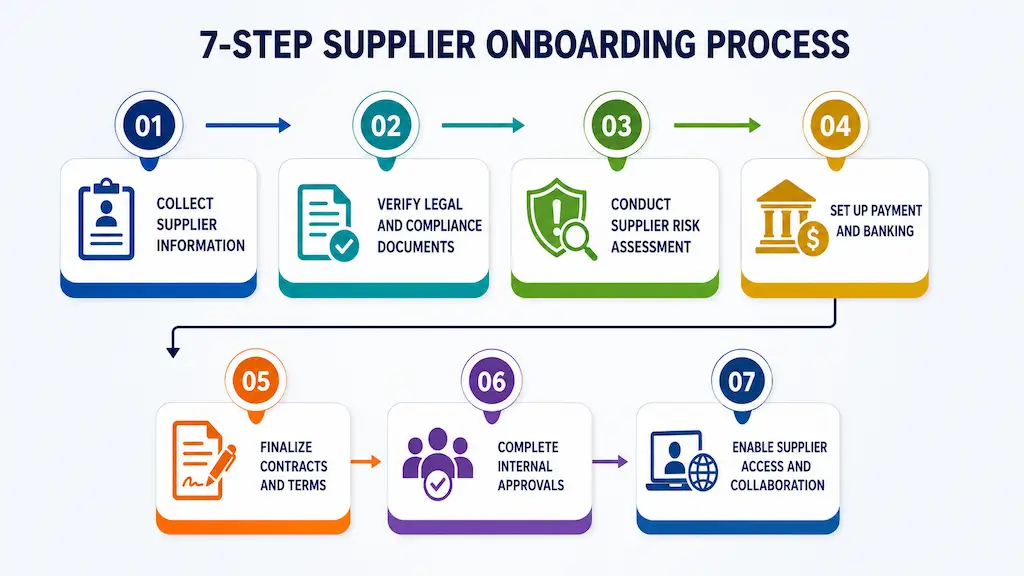
Think of supplier onboarding as the front door for every vendor relationship. A new supplier has been selected. Before they can receive a purchase order, deliver anything, or submit an invoice, your organisation needs their details on file, their documentation verified, their risk profile checked, their payment channel configured, a signed contract, internal approvals completed, and portal access set up.
When that front door works well, a supplier goes from “approved” to “active” inside a week. When it doesn’t, it takes a month and the first invoice bounces because nobody verified the bank account.
Why Supplier Onboarding Matters
A construction firm in Dubai brought on a new subcontractor last year without finishing the compliancereview. The subcontractor’s insurance had lapsed two months earlier. Nobody caught it. Then there was an incident on site. No valid coverage. The general contractor absorbed the full liability because the onboarding gap was on their side.
That’s the extreme case. The everyday version is quieter but adds up fast: duplicate vendorrecords across sites, payments stuck because a W-9 was never collected, procurement teams burning 30% of their week chasing paperwork instead of managing categories.
What Slows Supplier Onboarding Down
The pattern is almost always the same. Somebody sends the new supplier a list of what’s needed. Half the documents come back. The other half don’t. A follow-up goes out. A week passes. The missing certificate arrives but it’s the wrong version. Another follow-up. Meanwhile, the project manager is asking when the supplier can start and nobody has a clear answer.
And approvals? They stall because nobody can see where anything stands. Finance waits on procurement. Procurement waits on legal. Legal doesn’t know the request is sitting in their queue. Four departments involved. Zero visibility.
What Should a Supplier Onboarding Checklist Cover?
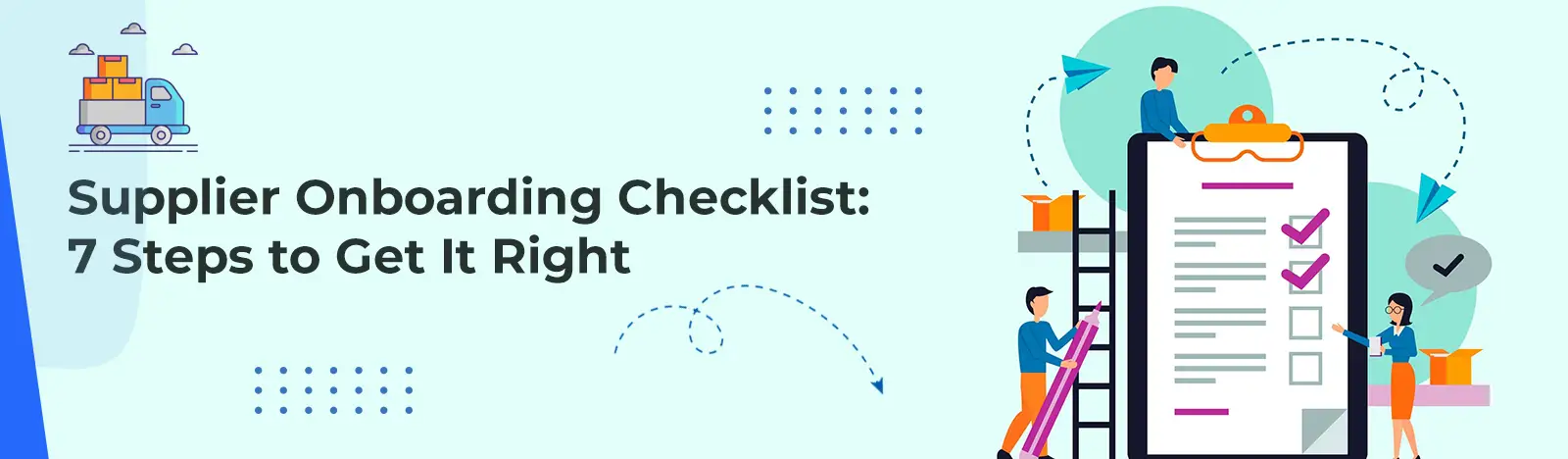
Seven areas. We’ve broken each one into a step below. The core principle: every piece of information and every sign-off the supplier will eventually need should be captured before they go active. The moment you skip a step, the gap surfaces downstream. Usually at the worst possible time.
Step 1: Collect Supplier Information
We’ve seen organisations with three different records for the same supplier because the legal entity name, the trading name, and the name on the invoice were all slightly different. Get the basics right upfront: legal name, tax ID, registered address, primary contact, and how the supplier should be categorised. Tie it all to a single unique ID.
Step 2: Verify Legal and Compliance Documents
A construction subcontractor in Riyadh needs different certifications than an IT services vendorin Melbourne. The documents vary by jurisdiction and category, but the principle doesn’t: collect tax registrations, business licences, industry certifications, and insurance policies before the supplier starts work. Discovering a missing tax form at invoice time is too late.
Step 3: Conduct Supplier Risk Assessment
A $500K logistics contract in Houston warrants a full financial health check, credit review, and sanctions screening. A $5K office supplies vendorprobably doesn’t. But both need at least a basic compliance check. Match the depth of the assessment to the spend and the risk profile of the category.
Step 4: Set Up Payment and Banking
Here’s the one that catches people. Wire fraud through fake banking updates is one of the most common procurement scams running right now. A supplier sends “updated” bank details by email. Nobody calls to verify. The payment goes to a fraudulent account. A 30-second verification call to a number you already have on file costs nothing. Skipping it can cost six figures. Collect the bank details, invoicing preferences, and payment terms. Then verify independently before the first payment runs.
Step 5: Finalize Contracts and Terms
We’ve seen suppliers deliver three months of work before anyone realised the master service agreement was never signed. That’s a compliancenightmare waiting to happen. The contract, including SLAs, payment terms, liability clauses, and termination conditions, needs to be executed and filed before the supplier goes active in your system. Backdating a contract after services have already been delivered doesn’t hold up under audit.
Step 6: Complete Internal Approvals
This is the stage where onboarding stalls at most organisations. Procurement needs to sign off. Then legal. Then finance. Then the category owner. When those approvals are handled manually, they sit in queues because nobody realises the request is waiting. We’ve seen a single supplier stuck at the legal review stage for eleven days because the request was buried in a shared inbox.
Put a workflow engine with escalation rules underneath that process and the entire approval chain clears in hours.
Step 7: Enable Supplier Access and Collaboration
The vendorneeds a portal login. They should be able to check their purchase orders without calling someone. Invoice submission needs to work from the portal too. Set up credentials, confirm what they can see, and the supplier is active.
Supplier Onboarding Checklist Template
Adapt this to your organisation’s requirements. The structure holds across industries.
Tax certs, licences, insurance, industry certifications
Pending / Done
3. Risk Check
Credit review, sanctions screening, financial health assessment
Pending / Done
4. Banking
Bank account verified independently, invoicing prefs, payment terms
Pending / Done
5. Contracts
MSA signed, SLAs agreed, payment and termination terms confirmed
Pending / Done
6. Approvals
Procurement, legal, finance, and category owner sign-off complete
Pending / Done
7. Access
Supplier portal login, PO visibility, invoice submission enabled
Pending / Done
Best Practices for Supplier Onboarding
Automate document collection. A structured supplier portal with required fields, upload slots, and status tracking will cut onboarding time by more than half. Our clients typically see the cycle drop from four to six weeks down to under ten days once they move to a portal-based collection process.
And standardise the workflow across every office. If the team in Chicago onboards suppliers one way and the team in Dubai does it differently, the data won’t match. Duplicate vendor records appear. Compliance reporting becomes impossible because every site collected different information.
How BeyondIntranet Simplifies Supplier Onboarding
BeyondIntranet’s supplier management platform handles this end to end. Onboarding forms on the supplier portal collect every required document in a structured format. When a submission comes in, the approval workflow routes it to the right stakeholder automatically, with escalation rules if someone doesn’t act within the deadline. And every certificate, contract, and compliance record stays in one place with expiry alerts so nothing lapses without someone being notified.
The platform runs on Microsoft 365. Your existing tenant, your existing login. Because the same system handles sourcing and contracts, the onboarding data stays with the supplier’s profile for the life of the relationship. Get in touch to see how it works.
Three Things to Do This Quarter
1. Count your onboarding backlog. How many suppliers are waiting right now? What’s the average time from first contact to active status? If it’s longer than two weeks, the process needs work.
2. Find the bottleneck. For most teams it’s somewhere between document collection and internal approvals. Identify the specific stage where suppliers get stuck and fix that one first.
3. Move document collection into a portal this quarter. A structured form with required fields and upload slots removes most of the back-and-forth. One change. Biggest impact.
Supplier onboarding is one of those processes nobody thinks about until it breaks. And by then the damage is already done. Projects delayed because a supplier wasn’t cleared to start. Payments blocked because a tax form was never collected. A structured supplier onboarding checklist turns that reactive scramble into something your team can repeat on every new vendor without reinventing the process each time.
Stop Losing Weeks to Supplier Paperwork
BeyondIntranet replaces the back-and-forth with a supplier portal, automated approvals, and onboarding workflows that cut cycle time from weeks to days.