A practical, vendor-neutral guide for CIOs, IT directors, and digital workplace leaders evaluating SharePoint consulting partners in Australia — including a comparison...
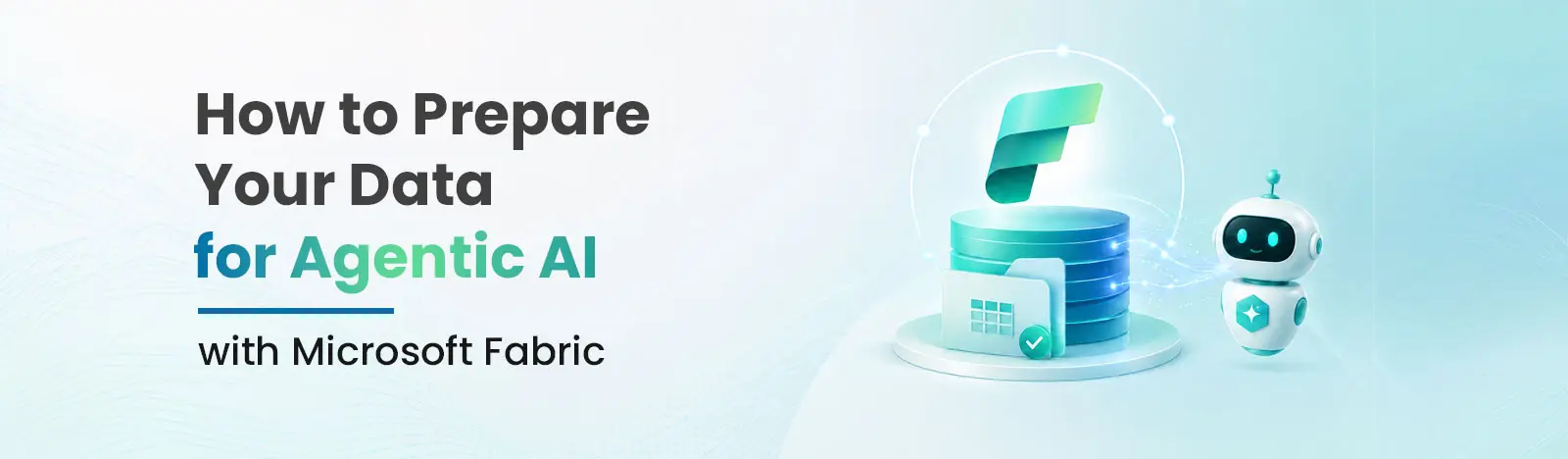
If you are tired of watching your AI initiatives stall out because your data is scattered across five different systems, this guide is exactly what you need. We break away from the usual hype around basic chatbots and dive straight into how you can build a genuine, real-time data brain for autonomous digital workers using Microsoft Fabric.
By reading through, you will get a clear, step-by-step look at how platforms like OneLake and Direct Lake eliminate messy data silos, slash your storage bills by roughly 40%, and speed up compliance timelines by 30%. We also map out a practical 12-week deployment roadmap and stack Fabric up against Databricks so you can make the right infrastructure choice for your budget.
It is essentially a complete blueprint for cutting out pipeline complexity and giving your business an actual, measurable edge with Agentic AI.
Why Is the Corporate Focus Shifting from Chatbots to Agentic AI?
The scramble to deploy standard generative AI chatbots is hitting a structural wall. Over the past few years, businesses rushed to implement passive AI assistants designed to handle basic, human-triggered requests like summarizing a text document or drafting a standard response email. However, these passive tools are inherently limited: they require a human to write a prompt, review the output, and manually execute the next operational step.
We are moving past simple chat interfaces and stepping into a completely new era driven by Agentic AI autonomous, multi-agent networks that reason, map out multi-step plans, call external software APIs, and manage complex business workflows with little to no human intervention. Imagine an autonomous inventory agent that monitors stock levels, handles vendor contract negotiations when data shows stock has hit a critical threshold, and updates compliance logs automatically.
What are the biggest challenges for Enterprise-Grade AI Production?
An autonomous agent is only as dependable as the underlying data engine backing it. If you feed an agent a fragmented, unorganized “data swamp,” you are simply automating flawed operational logic at a massive scale.
Based on the recent engineering feedback we collected from our client we found, the primary bottleneck for enterprise-grade production agents isn’t the choice of Large Language Model (LLM), it’s the complete lack of a clean, shared organizational context. Without a unified data foundation, every new agent you build operates in a silo, wasting computing power trying to find where data live and guessing what your internal business rules mean.
To fix this structural bottleneck, modern data architects are leveraging Microsoft Fabric. Fabric acts as an all-in-one SaaS data environment that brings together ingestion, semantic modeling, and security protocols turning raw corporate data into a trusted, context-rich launcher for autonomous agentic AI workflows.
What Are the Core Benefits of Anchoring AI Agents Inside Microsoft Fabric?
Transitioning your backend infrastructure to support autonomous agents rewires how your enterprise analytics function. When you anchor your agents inside Microsoft Fabric, your data operations transform in four distinct ways:
How does it eliminate cold starts? Agents stop starting from scratch; they immediately inherit a shared corporate knowledge base, allowing different agents to coordinate seamlessly.
How does it reflect real business operations? By synchronizing transactional databases in real-time into OneLake, agents get a real-time updated holistic view of your real business operations.
What is the clear semantic alignment it provides? Built-in data alignment tools give models clear architectural roadmaps, ensuring they don’t have to play hide-and-seek to answer basic business questions.
How does it inherit compliance boundaries? It neutralizes compliance boundaries by inheriting modern compliance standards by enforcing security rules such as RLS and data governance protocols like privacy labels which is embedded directly with the agent layer. This eliminates the requirements of any sort of custom code.
Here’s how Microsoft Fabric tidies up and organizes your messy business data so AI agents can actually use it – explained without all the heavy tech jargon:
Gets Everything Into One Place: Fabric has a “OneLake” system that pulls all your scattered databases, customer logs, and messy files into one central dashboard without duplicating your files or adding extra storage costs.
Automates the Digital Scrubbing: It uses “Dataflows Gen2” to automatically wash your data. This means it instantly deletes duplicate records, fixes formatting glitches (like broken dates), and fixes text typos that would normally confuse an AI agent.
Organizes Data for Speed: It saves your cleaned data into an ultra-fast, organized format called “Delta Parquet”. This allows an AI agent to read historical business records and write new operational updates at the exact same time without crashing your systems.
Adds Plain-English Labels: AI cannot guess what cryptic column names like YTD_Rev_v2 mean. Fabric allows you to add clear, natural language descriptions and business rules directly to your data tables, essentially giving the AI agent a cheat sheet of your business terminology.
Turns Text into Searchable Memory: For word-heavy files like legal contracts or company policies, Fabric breaks the text into small pieces and translates them into a format the AI can scan instantly, allowing agents to answer complex business questions in seconds.
Locks Down Security Automatically: Fabric integrates directly with your existing corporate login security (Microsoft Entra ID). And your data privacy rules directly apply to the AI agent so it never accidentally exposes restricted financial or HR data to the wrong employee.
Common Challenges & How to Solve Them
Moving to an agentic setup brings unique engineering hurdles that old-school business intelligence never had to deal with. Here is how you keep your deployment from going off the rails:
The “Hallucination” Risk: If your agents pull outdated or irrelevant documents, they are going to execute the wrong business actions.
The Fix: Set up a hybrid search strategy inside your Lakehouse that combines vector embeddings with classic keyword indexing to guarantee high-precision data retrieval.
Data Latency: Traditional batch-processing can leave a gap between what is actually happening in the business and what the agent thinks is happening.
The Fix: Use Direct Lake mode to bring updates directly into your semantic models, so agents can make decisions based on the latest available data.
Context Window Overload: Feeding too much raw text into an LLM can quickly increase cloud costs and slow down performance.
The Fix: Use Spark Notebooks to break documents into smaller, well-labeled sections, so agents can pull only the most relevant information instead of processing entire files.
In 2026, we have a lot of modern data platforms that can assist with Agentic AI model development by streamlining existing data challenges. But the two noteworthy names that are at the top can be Microsoft Fabric & Databricks.
Why Fabric?
For it’s simplicity and ability to unify fragmented data models
Why Databricks?
For it’s unique capabilities & modern features
Let us check which one is the best fit for your business?
Microsoft Fabric vs. Databricks for Agentic AI
Capability
Microsoft Fabric
Databricks
Management
True SaaS (Fully managed, zero infrastructure tuning required)
PaaS (Requires cluster management and active DevOps scaling)
Integration
Native out-of-the-box links to Microsoft 365, Azure AI, and Power BI
Standalone platform; requires building custom external connectors
Storage
Unified OneLake (SaaS-native layout)
Unity Catalog sitting over separate multi-cloud buckets
Security
Inherited Microsoft Entra ID data governance
Proprietary Unity Catalog mapping to external IAM systems
Integration Economics: Budget & Roadmap
Fabric Infrastructure Pricing
Fabric uses a centralized, capacity-based billing setup (known as F SKUs), which stops you from getting hit with fragmented bills across multiple distinct databases and processing engines.
Compute (Azure F SKUs): Early development usually starts on the lighter F2 tiers (running roughly $262/month PAYG), while production-grade autonomous agents typically move to the F32 or F64 tiers (starting around ~$4,204/month), which also opens up free report viewing for your entire company.
Storage: You can expect flat, predictable storage costs sitting at approximately $0.023 per GB/month for active Lakehouse files.
The 12-Week Roadmap
Phase
Focus
Timeline
Foundation
We handle your core tenant setup, organize security roles, and configure workspaces.
Weeks 1–2
Ingestion
Our engineers centralize scattered data streams into OneLake via Dataflows Gen2.
Weeks 3–6
Optimization
We build your data models and use Spark Notebooks to generate vector embeddings.
Weeks 7–9
Deployment
Our team links your data foundation to your target AI frameworks for validation tests.
Weeks 10–12
We recently helped a US-based Logistics & Supply Chain simplify complex data challenges for developing of routing & scheduling AI-assistant. Let’s check the full use case:
A global logistics and supply chain business was struggling with highly fragmented inventory records that kept their managers stuck doing manual spreadsheet entry every day. By migrating their backend over to Microsoft Fabric, they unified their operational data into clean Delta Parquet files and used Spark Notebooks to turn thousands of supplier contract documents into searchable vector embeddings.
The shift completely transformed their workflows: they deployed an autonomous agent that now resolves complicated supplier reorder requests in under 1.5 seconds, while simultaneously slashing their data pipeline maintenance costs by 58%.
Partnering with an Elite Microsoft Consultant
Building a secure, highly optimized data estate that can feed autonomous AI agents takes deep technical knowledge, clean semantic mapping, and a practical engineering roadmap.
At Beyond Intranet, we are a verified Microsoft Solutions Partner and an officially designated Microsoft Fabric Featured Partner placing our consulting team in an elite group of fewer than 150 verified platform experts across the entire globe. Our architects specialize in turning messy, legacy corporate data into high-performance, AI-ready foundations without breaking your day-to-day business operations.
If you are ready to stop waiting on laggy data refreshes and want to start building the future of autonomous workflows, drop us a line at contact@beyondintranet.com to connect with a senior solution architect today.
Frequently Asked Questions
Q: Can AI agents query unstructured files?
Yes, absolutely. You can use native Fabric Spark Notebooks to parse raw PDFs, Word documents, or text files into structured vector embeddings. This allows your autonomous agents to run highly accurate semantic searches across all your unstructured documentation just as easily as they query database tables.
Q: Do I need to move data out of other clouds?
No, you don’t have to move anything. Fabric includes a feature called “Shortcuts,” which lets you build virtual links to data sitting in external environments like Amazon S3 or Google Cloud. This gives your agents full access to the data without forcing you to deal with the physical migration project.