A practical, vendor-neutral guide for CIOs, IT directors, and digital workplace leaders evaluating SharePoint consulting partners in Australia — including a comparison...
Summary: Pinpointing what is an mro changes your entire operational approach. This guide breaks down the exact mro sourcing meaning, details hard-hitting mro sourcing strategies, and provides technical frameworks to control rogue spend, manage tier-one suppliers, and protect enterprise working capital
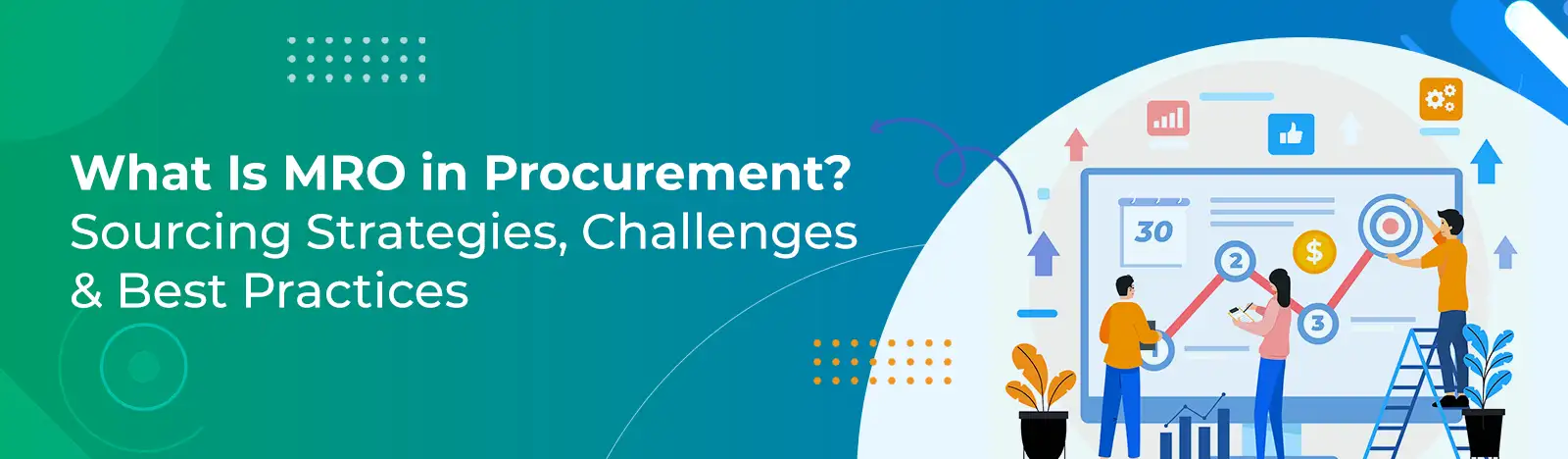
Chief Procurement Officers ask what is mro in procurement when indirect spend audits reveal massive financial leaks. The category reached USD 643.04 billion globally in 2023. Defining what is an mro exposes untracked inventory and rogue buying habits. We need strict mro sourcing strategies immediately to reclaim lost margins.
Defining What Is an MRO: Distinguishing Indirect from Direct Materials
You cannot manage what you do not categorize correctly. The first step in understanding what is an mro is drawing a hard line between your direct and indirect materials.
Direct Materials: The Revenue Drivers
Direct materials end up with your customer. If you manufacture HVAC units, copper coils and thermostats are direct materials. They sit on your primary bill of materials and tie directly to the cost of goods sold. Demand mirrors your production schedule. If forecasts project a thousand units, your ERP orders exact copper amounts in advance.
Indirect Materials: The Operational Backbone
Indirect materials break predictable rules. MRO stands for maintenance, repair, and operations. These items never leave your facility. When a technician applies synthetic grease to a stamping press, that grease is an indirect material. Understanding what is an mro means recognizing these as pure operating expenses consumed to keep operations running.
The Trap of Localized Buying
Manufacturers often over-manage direct materials while neglecting indirect spend. Assigning engineers to negotiate global copper prices while plant managers buy grease at local hardware stores destroys leverage. This lack of centralized mro purchasing means you pay retail markups fifty times over across regional facilities.
The True Cost of Transaction Volume
Indirect materials typically account for 15% to 25% of enterprise spend but generate 70% to 80% of procurement transactions. Accounts payable wastes hours processing low-value invoices for drill bits and safety gloves. If you do not know what MRO is in procurement, you remain blind to this administrative drain. Centralizing this category slashes internal processing costs.
Stop bleeding cash on low-value invoices. Centralize your indirect spend to maximize processing efficiency today.
Deep Dive: The Critical Types and Categories of MRO Spend
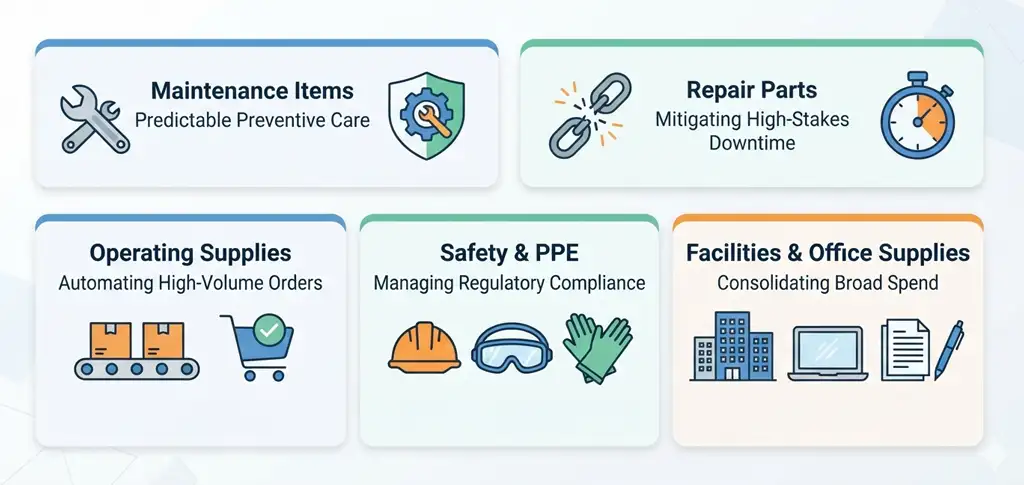
You need a taxonomy. You cannot execute an effective mro procurement strategy if your master data is a mess. When purchasing teams map out the true mro sourcing meaning for their operations, they divide the spend into five strict buckets. This structure is not just for reporting; it dictates which vendors you use and what purchasing software workflows apply.
Hard hats, safety goggles, cut-resistant gloves, fall harnesses, respirators
Facilities & office
LED lighting, commercial floor wax, hand soap, copy paper, breakroom supplies
Maintenance Items: Predictable Preventative Care
Maintenance items prevent machine failure predictably. Your computerized maintenance management system (CMMS) tracks run hours. When a belt hits 5,000 hours, the system flags a lubrication check. You order grease in advance, matching supply contracts precisely to your preventative schedules.
Repair Parts: Mitigating High-Stakes Downtime
Repair parts are your highest financial risk. A broken $50,000 variable frequency drive halts your entire factory. Sourcing mro in this category requires calculating the holding cost of that spare part versus a devastating three-day factory shutdown while waiting for overseas replacements.
Operating Supplies: Automating High-Volume Orders
Operating supplies are daily burn items like packing tape and zip ties. The unit cost is pennies, but volume is massive. An effective mro procurement strategy automates this entirely. Negotiate a fixed mega-distributor price annually and enable touchless reordering without buyer intervention.
Safety & PPE: Managing Regulatory Compliance
Safety gear carries massive legal liability. You cannot source this based on price alone. Buying uncertified fall harnesses risks OSHA fines that erase a decade of savings. Sourcing mro in safety demands strict vetting of vendors providing certified, compliant gear.
Facilities supplies keep the building functional. Lightbulbs and floor wax do not impact manufacturing output but are operationally necessary. Aggressively consolidate this spend. Stop decentralized local buying and push all volume to one national contract for the lowest unit price.
Organize complex indirect categories automatically to eliminate duplicate inventory and lower your holding costs permanently.
Why MRO in Procurement Dictates Enterprise Resilience
Let us talk about the specific mechanics of where you lose money.
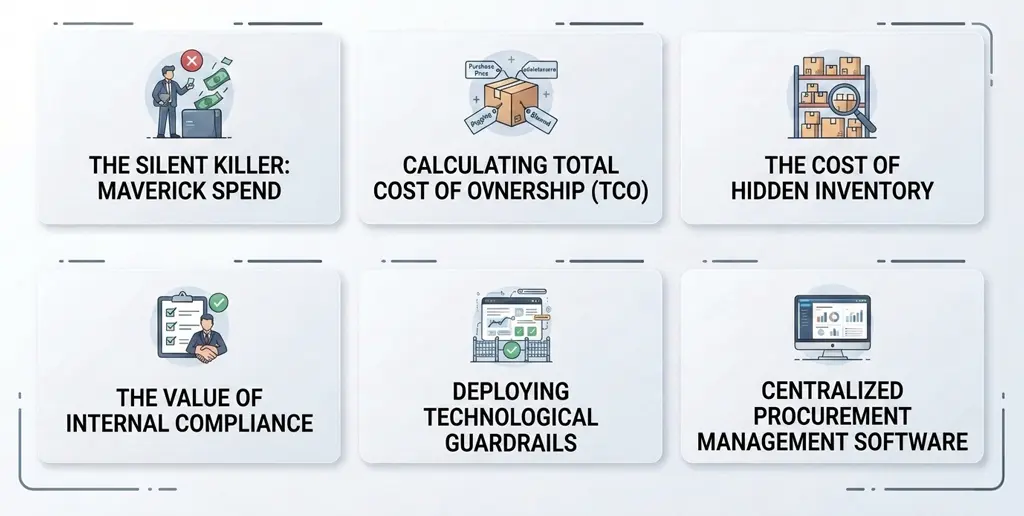
The Silent Killer: Maverick Spend
Uncontrolled localized buying causes maverick spend. Maverick spend is the silent killer of procurement margins. It happens when an employee bypasses your official purchasing portal and buys directly from an unvetted supplier. A maintenance tech needs a specific Milwaukee power tool. Instead of logging into the system and buying from your contracted supplier at a 25% discount, they drive to a retail hardware store with a corporate card and pay full price.
Calculating Total Cost of Ownership (TCO)
To truly grasp what is an mro, you have to look at the total cost of ownership (TCO) of that maverick purchase. The loss is not just the 25% retail markup. The loss includes the labor cost of the tech driving to the store. It includes the accounting clerk who has to reconcile the credit card receipt. It includes the fact that the tool is not entered into your asset tracking software, so when it breaks, nobody knows if it is under warranty. Maverick spend inflates your TCO across every metric.
The Cost of Hidden Inventory
Then there is the localized hoarding problem. Plant managers are terrified of stockouts. A stockout means a machine is down and they miss their production quota. Because they do not trust the corporate supply chain to deliver parts on time, they hoard. They order three spare motors when they only need one, and they hide the other two in a locked cabinet. Your ERP system shows zero inventory, so corporate buys a fourth motor. You now have thousands of dollars in working capital trapped in a cabinet because you lack operational visibility.
The Value of Internal Compliance
This is why you have to deploy mro sourcing strategies that enforce strict process compliance. According to leading Chief Procurement Officers, internal compliance is a primary driver of enterprise value. Compliance means your employees actually use the systems you built. They buy from the approved digital catalogs. They follow the approval routing workflows. They stop hiding inventory.
Deploying Technological Guardrails
You cannot achieve this without technology. The transaction volume is too high for manual oversight. You need a digital architecture that makes it physically impossible for an employee to issue a purchase order to an unapproved vendor. When you lock down the digital process, you lock down the cash flow.
Centralized Procurement Management Software
Streamline procurement, automate workflows, and achieve 2X faster sourcing with our smart procurement management software. Transform your procurement process from one unified Procurement Management System and save your organization’s valuable time and effort. Built on SharePoint. SOC & GDPR Compliant. Start in Minutes.
Eradicate silent maverick spend and enforce absolute purchasing compliance across your entire manufacturing floor easily.
The BeyondIntranet 5-Pillar Framework for MRO Sourcing Strategies
You need a playbook. Telling your staff to buy smarter accomplishes nothing. The BeyondIntranet 5-Pillar Framework gives you the exact mechanical steps to take control of your indirect spend. We focus heavily on eSourcing-led operational control. This is not about vague AI promises; it is about restricting vendor access, cleaning your master data, and automating your daily purchase requests. These five mro sourcing strategies will fundamentally restructure your operations.
1. Aggressive Supplier Rationalization
You have too many vendors. Over the years, every new plant manager has brought their favorite local suppliers into your system. You might have two thousand active vendors in your ERP, but you only actively trade with four hundred. The first pillar requires a brutal spend cube analysis. You pull the accounts payable data for the last 24 months and categorize every dollar.
You will find that you are buying standard safety glasses from twelve different suppliers across the country. You take that consolidated volume, run a formal RFQ event, and award the entire national contract to one tier-one distributor. You immediately close the accounts of the other eleven suppliers. This rationalization instantly drops your unit pricing because you are finally leveraging your true corporate volume. It also drastically reduces your invoice processing burden. You go from paying twelve different vendors every month to paying one.
2. Granular Category Segmentation and Tiering
You cannot treat a custom pneumatic valve the same way you treat a box of paperclips. The second pillar forces you to segment your catalog using an ABC inventory analysis. A-items are your high-value, critical repair parts. B-items are your standard maintenance consumables. C-items are your low-value, high-volume daily operating supplies.
This segmentation dictates your workflow. A-items require human intervention. If a plant requests a $20,000 custom gearbox, your software routes that request directly to a senior buyer. The buyer negotiates the lead time, checks the freight insurance, and verifies the warranty terms. C-items, like latex gloves, require zero human intervention. You negotiate a locked catalog price annually. When a worker needs gloves, they click a button, and the system generates a touchless purchase order straight to the supplier. Segmenting your spend ensures your highly paid buyers spend their time on high-risk items, not clerical order entry. This is practical mro purchasing.
3. Native Catalogue Standardization
If your master data is garbage, your software will fail. The third pillar is data standardization. When a technician searches your internal portal for a claw hammer, but your legacy database lists it as a striking tool, the technician assumes you are out of stock. They pull out the corporate card and commit maverick spend. Understanding what is an mro means recognizing that poor data naming conventions directly cause financial losses.
You have to scrub the database using a strict noun-modifier format. The primary noun comes first, followed by the specific attributes. The entry must read: Hammer, Claw, Steel, 16oz. This alphabetical formatting allows your technicians to find the exact tool in seconds. During this scrub, you will find massive duplication. You will discover the exact same ball bearing loaded into your system under four different internal part numbers. You delete the duplicates, merge the inventory counts, and establish a single source of truth. Clean data drives user adoption. If the catalog is accurate, they will use it. If it is not, they will bypass it. That is the reality of mro purchasing.
AI-Powered Sourcing Software
Discover, evaluate, and engage with the right suppliers faster. With our intuitive, AI eSourcing platform, you simplify and automate your RFx process, cut costs, and scale sourcing operations globally across your teams and industries. Built on Microsoft 365. 7-Day Free Trial. SOC 2 & GDPR Compliant.
4. Strategic Long-Term Contracts and Vendor Managed Inventory
Stop paying to hold cheap inventory. The fourth pillar requires shifting the carrying cost of C-items back to your suppliers through Vendor Managed Inventory (VMI). In a VMI setup, the supplier physically owns the bins of nuts, bolts, and pipe fittings sitting on your factory floor. You do not pay for the item until a technician physically removes it from the bin.
The supplier sends a representative to your facility weekly. They scan the bins, calculate the consumption, and restock from their truck. Your procurement team does not write a single purchase order. At the end of the month, the supplier issues one consolidated invoice for exactly what was consumed. This removes the entire ordering and stocking burden from your internal staff. To execute this, you must sign multi-year master service agreements. The supplier takes on the physical risk, so they need a guaranteed contract length. This is a critical component of any serious mro procurement strategy.
5. Proactive eSourcing-Led Demand Planning
Reactive purchasing is the most expensive way to run a factory. The fifth pillar bridges the gap between your factory floor and your sourcing desk through direct API integration. Your CMMS tracks the vibration and heat signatures of your critical motors. It uses predictive algorithms to determine that a specific motor will fail in approximately 90 days.
The CMMS sends an automated data payload to your procurement software. Predictive maintenance powered by AI reduces breakdowns by 70% and lowers maintenance costs by 25%. The software instantly generates a draft RFQ for the exact replacement motor. Your buyer has 90 days to run a competitive sourcing event, negotiate the best price, and ship the motor via standard ground freight. The part sits in your staging area. When the scheduled maintenance window arrives, the tech swaps the motor. You pay zero expedite fees. You suffer zero unplanned downtime. This is what true mro sourcing meaning looks like in practice. It completely eliminates the panic buying cycle.
Purchase Requisition Software
Ensure your buying lines up, so you get a full picture of what is going on financially and operationally. When your system plays well with other systems, procurement just works better. Contact our team to see how SharePoint integration simplifies your daily workflows.
Execute targeted supplier rationalization and touchless software workflows to secure your enterprise profit margins rapidly.
Technological Integration: Activating Your Strategy
You cannot execute these frameworks with spreadsheets and emails. You need purpose-built enterprise architecture. Figuring out what is mro in procurement requires tracking granular data across thousands of daily touchpoints.
Implementing Touchless Procurement
The digital workflow starts at the point of need. A facility worker logs into your purchase requisition software. They access the standardized, locked-down catalog. They select a pack of replacement HVAC filters and hit submit. The software checks the worker’s pre-approved departmental budget. It sees the request is for $150, which falls below their $500 threshold limit. It verifies the item is mapped to an active, contracted supplier. The system approves the request, generates a PO, and transmits it via EDI to the supplier. No human buyer was involved. This touchless processing is the holy grail of transactional procurement. It strips out the internal administrative cost.
Centralizing Custom Bid Management
For custom requests, the workflow shifts. A request for a custom fabricated steel bracket gets flagged by the software and routed to the central buying desk. The buyer uses bid management software to execute a formal tender. They select three approved machine shops and invite them to bid. The vendors submit their pricing and lead times into the secure portal. The buyer evaluates the bids side-by-side, selects the winner, and the system issues the award. All communication is centralized. No quotes are lost in email inboxes.
Ensuring Audit Readiness
This strict digital environment creates an immutable audit trail. Auditing bodies emphasize that clean audit trails are non-negotiable for enterprise risk management. If a financial auditor asks why you awarded a contract to a specific supplier, you do not dig through filing cabinets. You pull the system log that shows the exact timestamp of the bid, the competitive quotes, and the manager who approved the final budget. Technology enforces the rules you write.
AI-Powered Bid Management Software
Enabling efficient, strategic, and scalable buying. Take control of your process with our SharePoint software. Streamline your buying process with our AI-powered bid and tender management system to efficiently manage and evaluate vendor bid submissions with streamlined workflows, centralized tracking, and seamless integration.
Identifying and Eradicating Common Procurement Pitfalls
Even the best software fails if you ignore end-users.
The Risk of Ignoring End-Users
Dictating catalog items without consulting maintenance engineers invites revolt. If buyers switch to cheaper drill bits that snap under industrial loads, mechanics will revert to maverick retail spend. Include operational leads in the sourcing mro process, providing physical samples for rigorous testing before signing contracts.
The Danger of Migrating Dirty Data
Migrating unstructured legacy Excel data into a state-of-the-art platform guarantees failure. You must endure the pain of scrubbing master data before going live. If you do not know exactly what you are buying, you do not really understand what is mro in procurement for your business.
The Need for Executive Enforcement
Your executive team must enforce the mandate. If the VP of Operations allows plant managers to bypass the contracted catalog, the strategy collapses. Present monthly maverick spend reports to the C-suite, illustrating the exact dollar amounts lost to non-compliant buying.
Essential MRO Procurement Review Checklist
You need a benchmark to measure your operational maturity. Companies that ask what is an mro generally fail the majority of these checks. Review this list against your current physical operations. A fully realized mro procurement strategy checks every single box.
Strictly separate all indirect material spend from direct material spend in the general ledger.
Calculate the exact percentage of total spend occurring outside of master vendor contracts.
Consolidate all fragmented regional tool vendors into one primary national distributor agreement.
Deploy a touchless automated catalog workflow for all low-value daily operating supplies.
Establish a formal vendor managed inventory system for basic fasteners and bulk consumables.
Scrub and rewrite all internal catalog descriptions using the strict noun-modifier format.
Configure hard-coded budget approval routing rules inside the purchasing software.
Integrate the factory computerized maintenance software with the purchasing portal via API.
Track supplier delivery metrics using objective system data, not anecdotal feedback.
Eliminate email-based quote requests and execute all RFQs through digital bid software.
Conclusion
Defining what is an mro gives you the blueprint to stop financial leakage entirely. Execute these mro sourcing strategies to strip out maverick spend and lock down compliance. Centralize your data, automate the busywork, and protect your margins. Contact us today to deploy the exact digital architecture required to secure your indirect supply chain.