A practical, vendor-neutral guide for CIOs, IT directors, and digital workplace leaders evaluating SharePoint consulting partners in Australia — including a comparison...
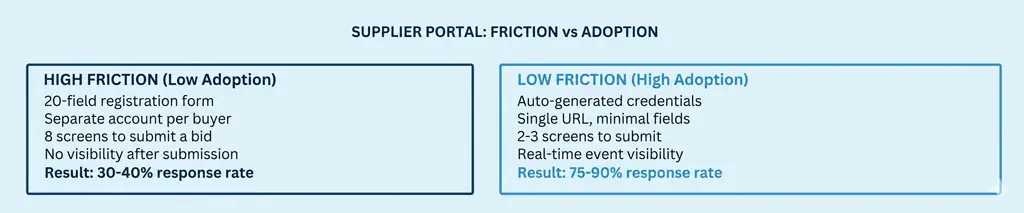
Your procurement team spent three months selecting a supplier portal. IT signed off on the security review. The implementation partner configured the workflows. The portal is live. Suppliers have been invited. And six weeks later, your response rate on RFQs is 35%.
Not because the suppliers don’t want the work. Not because the portal doesn’t have the right features. Because the experience of using it is painful enough that a $50,000 bid opportunity isn’t worth the 45 minutes of registration, navigation, and data entry the portal demands before the supplier can even see the RFQ.
That’s the supplier portal adoption gap. And it’s not a technology problem. It’s an experience problem that most procurement teams don’t see because they’ve never submitted a bid through their own portal.
We’ve asked procurement directors at conferences whether they’ve ever gone through their own portal registration as a test. Fewer than 10% have. The ones who did were universally surprised by how painful the process was.
Why Supplier Adoption Is the Metric That Changes Everything
A sourcing event with three bidders produces a different outcome than one with seven. That’s arithmetic, not opinion. More qualified suppliers in the competition means sharper pricing, better terms, and a wider range of technical approaches to evaluate. A reverse auction with five active bidders generates savings that a two-bidder event physically cannot.
But here’s the catch. Your supplier portal determines how many of those qualified vendors actually participate. A portal with high friction filters out the suppliers who have options. The vendor with the strongest capabilities and the busiest pipeline is exactly the one who won’t spend an hour fighting your registration process. They’ll bid on the next opportunity that takes them 10 minutes instead.
The suppliers you lose to friction aren’t the ones you want to lose. They’re the ones you most need in the competition.
A procurement team in Chicago ran a packaging sourcing event through their new portal. Twelve suppliers were invited. Seven started the registration process. Four completed it. Three submitted bids. That’s a 25% response rate on a pool of vendors who were already qualified and interested. The portal was the bottleneck, not the suppliers’ willingness to compete.
Understanding the Adoption Gap
Making a portal available and making it usable are two different things. Most procurement teams conflate them. The portal exists. The link was sent. Training materials were shared. Why aren’t suppliers using it?
Because suppliers don’t work with one buyer. A mid-size manufacturing supplier in Dallas might be registered on 8 to 12 different buyer portals. Each one has a different login. A different interface. A different way of structuring bid documents. A different set of fields to fill. Every additional portal is a tax on their operations team, and the portals that demand the most effort get the least attention.
The gap is the distance between “we built a portal” and “suppliers choose to use it.” That distance is measured in clicks, screens, and the number of times a vendor’s sales coordinator mutters “I forgot the password again” before giving up and emailing the bid directly to the buyer’s personal inbox. Which, of course, defeats the entire purpose of the portal.
And here’s what makes the gap invisible to procurement teams. When a supplier emails their bid directly instead of using the portal, the buyer still gets the response. The sourcing event still closes. The award still gets made. Nobody notices that the portal failed because the outcome happened anyway. But the audit trail is broken, the comparison isn’t structured, and the next event will have the same adoption problem because nobody diagnosed it.
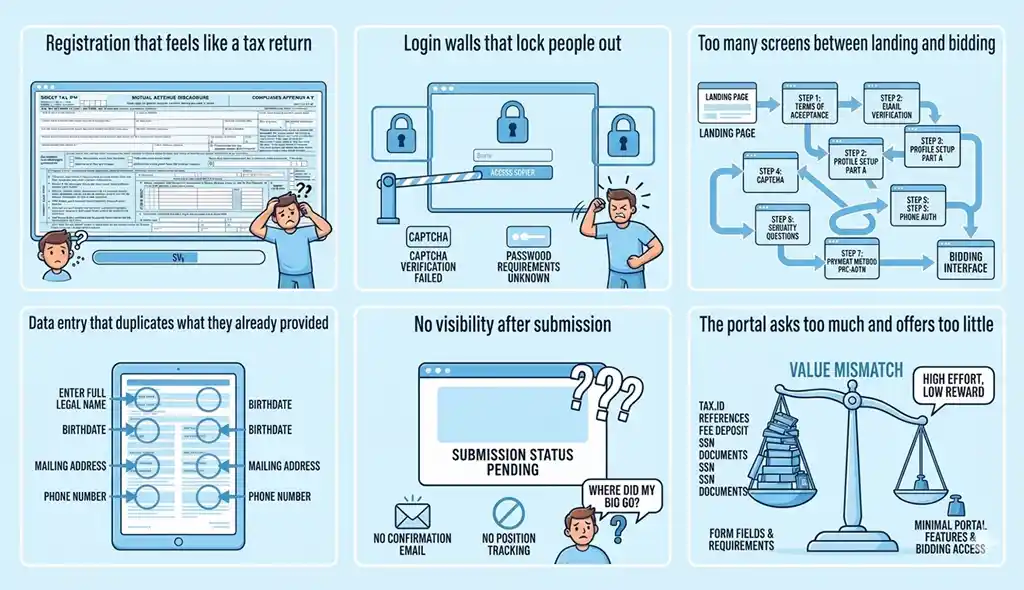
Six Friction Points Suppliers Won’t Tell You About
1. Registration that feels like a tax return
Twenty fields. Company name, address, tax ID, bank details, three references, insurance certificates, sustainability questionnaire. All before the supplier has seen a single sourcing event. A supplier in Melbourne told us they abandoned a portal registration after 25 minutes because the system timed out and lost their progress. They never went back.
2. Login walls that lock people out
Separate credentials for every buyer portal. Password policies that expire every 90 days. MFA that sends codes to a phone number the supplier changed six months ago. The IT-friendly security measures that protect the buyer’s data also create the friction that prevents the supplier from showing up.
3. Too many screens between landing and bidding
A supplier lands on the portal. They want to see the RFQ and submit a price. Instead they navigate through a dashboard, a profile completion prompt, a notification settings page, and three menu levels before finding the active sourcing event. Eight clicks to get to the one thing they came for.
4. Data entry that duplicates what they already provided
The supplier filled out their company profile during registration. Now the RFQ response form asks for the same information again: company size, certifications, delivery capabilities. Different forms. Same questions. The supplier notices. They always notice.
5. No visibility after submission
The bid goes in. The portal says “submitted.” Then nothing. No status update. No timeline. No indication of whether the bid was even opened. That silence is what the vendor remembers six months later when your next RFQ invitation lands in their inbox. They think about the two hours they spent and the nothing they heard back. And they bid on someone else’s event instead.
Now picture the opposite. The supplier submits. Instantly: confirmation, a timeline showing when evaluation starts, and a note about when they’ll hear back. Two weeks later, a notification: “Your bid has advanced to the shortlist.” That vendor bids again next quarter. Without being asked.
6. The portal asks too much and offers too little
From the supplier’s perspective, the portal is work. It takes time. It adds process. And if the only thing the portal provides is a place to upload a PDF, the supplier reasonably asks: “Why couldn’t I just email this?” Fair question. The portal earns its existence when it gives the vendor something they can’t get over email: visibility into where their bid stands, what’s coming next in the timeline, or faster payment terms for portal-submitted invoices.
What Suppliers Actually Want from a Sourcing Portal
Put yourself in the supplier’s chair for a minute. A $30,000 opportunity shows up. Worth bidding on. But the portal requires 45 minutes of setup before the RFQ is even visible. Is it still worth it? Maybe. A $5,000 opportunity with the same 45-minute barrier? Definitely not. The portal just lost you a bidder.
When will I hear back? If the answer to all three is “no idea,” the vendor gives you the minimum effort. Compliance-level engagement. Check the box. Submit. Move on to the buyer who actually tells them what’s happening.
If a supplier can go from clicking the invitation link to submitting a completed bid in under 15 minutes, your response rates will look completely different than they do right now. That’s the bar.
WHAT PROCUREMENT TEAMS PRIORITISE
WHAT SUPPLIERS PRIORITISE
Security and compliance controls
Speed and minimal registration
Complete supplier profiles with all documentation
Ability to bid without filling 20 fields first
Audit trails and process governance
Visibility into where their bid stands
Feature-rich portal with dashboards and reports
A simple screen that shows the RFQ and lets them respond
Neither side is wrong. Procurement needs the audit trail and the compliance controls. Suppliers need speed and simplicity. The portals that get high adoption are the ones that deliver both without forcing the vendor to absorb the cost of the buyer’s governance requirements.
Design Choices That Actually Move the Needle on Adoption
Auto-generated credentials sent with the event invitation. The supplier clicks one link and they’re inside. No registration wall. No password to remember. No MFA code to hunt for. The security is handled on the back end. The supplier’s experience is “click, see RFQ, respond.”
Minimal data entry at first contact. Ask for what you need to evaluate the bid. Company profile, certifications, and financial data can come later if the supplier is shortlisted. Front-loading that data collection into the registration process is the single biggest driver of supplier drop-off.
Fewer screens. Two or three between landing and bid submission. Not eight. Every additional click is a decision point where the supplier can close the tab.
Real-time event visibility. The supplier can see active events, their bid status, and upcoming deadlines in one view. That transparency gives them a reason to come back. The portal isn’t just a submission form. It’s an information source.
Post-submission communication. Acknowledge the bid. Provide a timeline. Update the status when decisions are made. The supplier who knows what happens next is the supplier who bids next time.
Building a Sourcing Process Suppliers Don’t Avoid
Stack those five changes and the conversation flips. Instead of chasing suppliers to use the portal, suppliers choose it because bidding through the portal is faster and easier than the alternative. That’s the difference between 35% response rates and 80%+.
None of this requires weakening your compliance posture. The approval workflows are still there. The audit trail is still recording every action. Sealed bidding still works. The supplier just doesn’t feel the weight of those controls. They feel the speed.
Try this next week. Ask someone in your office who has never touched the supplier portal to register as a vendor and submit a mock bid. Hand them a laptop and a stopwatch. If it takes more than 15 minutes from first click to submitted response, your portal is costing you suppliers. Every day.
The Adoption Gap Is an Experience Gap
What they don’t have is the right experience from the supplier’s side. Vendors aren’t avoiding portals because they can’t figure out the technology. They’re avoiding them because the effort doesn’t justify the outcome. Every procurement team that fixes this sees the same result: more bidders, sharper pricing, stronger sourcing outcomes.
BMS’s supplier portal was designed with the vendor’s experience as the starting constraint, not the afterthought.
See How BMS’s Supplier Portal Reduces Friction
Auto-generated credentials. Simplified bid flow. Real-time event visibility. Microsoft 365-native.