A practical, vendor-neutral guide for CIOs, IT directors, and digital workplace leaders evaluating SharePoint consulting partners in Australia — including a comparison...
The debate about human resources trends is no longer hypothetical; it’s operational. In fact, according to PwC, 71% of CEOs believe that human capital is the biggest contributor to economic value. However, many HR operations are still using disparate systems, manual processes, and siloed data.
The disconnect between what HR can do strategically and what HR does operationally is growing. The trending topics in human resource management are no longer just about being aware; they are about executing. In fact, what HR operations need to do in 2025-26 is no longer just about enabling the business; it’s about shaping the business. This includes designing systems, not just strategies. This includes measuring outcomes, not just activities. This includes using technology, not just as a tool, but as a foundation.
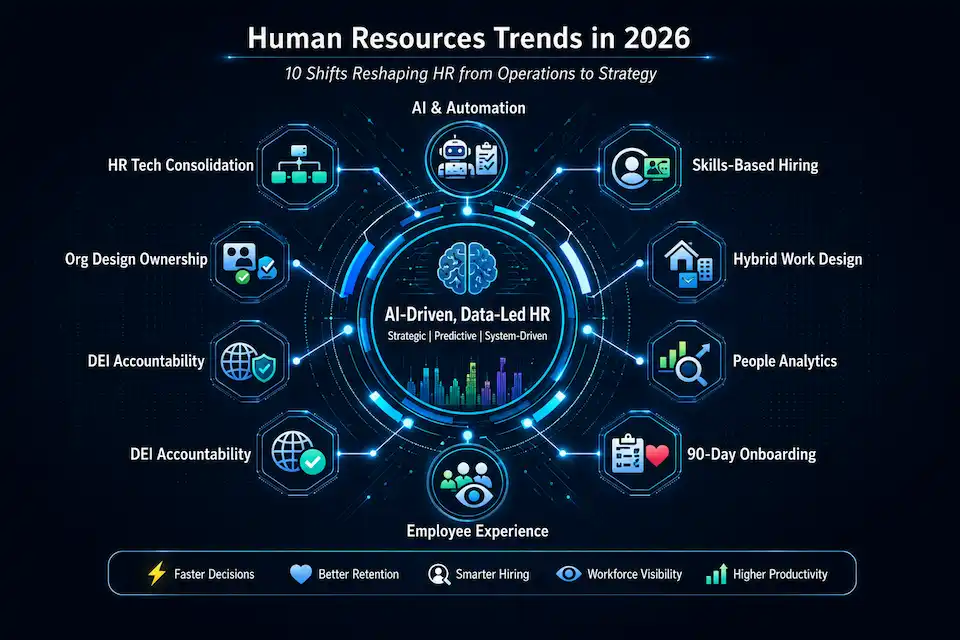
This article explores 10 critical shifts shaping HR in 2025–26, with a clear focus on what they mean in practice for HR leaders navigating complexity, scale, and digital transformation.
Trend 1: AI and Automation The Biggest Innovation in HR Management Right Now
The most visible innovation in HR management is the integration of AI into everyday workflows. This is not about experimentation anymore, AI is now embedded into core HR operations.
Gartner has also stated that by the year 2025, 80% of the HR technology platforms will have AI capabilities.
Where AI is delivering real value
Recruitment efficiency – AI tools scan through resumes and identify the best candidates in seconds.
Onboarding automation – AI tools automatically generate offer letters and other documents.
Employee self-service – AI tools instantly answer employees’ HR-related questions.
Predictive insights – AI tools have the ability to foresee employee turnover and skill shortages.
In addition, AI technology has the ability to decrease the dependency of employees on the HR department for information. This is because employees can obtain information through AI-powered assistants.
The risk of inaction
Organisations that delay AI adoption are not only forgoing potential efficiencies; they are also exposing themselves to greater operational risk.
What this means in practice
Start small but intentional. Identify repetitive tasks that are currently consuming HR bandwidth, such as answering common employee FAQs or processing employee onboarding documents. Then expand toward predictive capabilities.
For a structured approach, refer to this HRMS guide for business efficiency to understand how integrated platforms support automation at scale.
Trend 2: Talent Acquisition Is Getting Smarter (and Faster)
Hiring remains one of the most resource-intensive HR functions. According to SHRM, 73% of HR professionals struggle to find qualified candidates.
Among emerging HR industry trends, talent acquisition is shifting toward precision and speed.
What is changing in hiring
Skills-based hiring: Organizations are focusing more on skills than qualifications
AI-assisted screening: Technology helps in faster candidate screening
Structured interviews: The process helps in a more efficient evaluation of candidates
Candidate experience: Timely responses from the employer help in creating a better employer brand
The new generation of candidates expects the same level of efficiency in the hiring process as they experience as customers.
Strategic shift: Focus on quality over quantity
Instead of increasing the volume of applications, the best HR teams are focusing on better matching candidates with the available roles, which helps in reducing turnover rates.
What this means in practice
How can your hiring funnel be evaluated? Where are there delays? Are recruiters wasting time on screening instead of focusing on engaging with top talent?
Using integrated recruitment solutions, particularly those that integrate with Microsoft 365 environments, can greatly benefit an organization.
Trend 3: Hybrid Work Is Now Permanent, HR Must Lead Its Design
Hybrid work has stabilised into a long-term model. Gallup reports that 59% of employees prefer hybrid arrangements, and this preference is influencing retention.
This evolution is redefining trends in human resources. HR is no longer managing policies, it is designing work systems.
The new challenges of hybrid work
Lack of visibility across distributed teams
Difficulty in maintaining team cohesion
Unclear reporting structures
Reduced informal collaboration
The role of HR technology
Workforce visibility tools are now essential. Digital employee directories and org charts help employees navigate the organisation regardless of location.
Platforms like HR Directory 365 provide real-time visibility into who is in the organisation, what they do, and how to reach them directly within Teams or SharePoint.
Similarly, organisational chart tools help HR leaders visualise reporting structures and identify gaps or inefficiencies.
What this means in practice
Hybrid work requires intentional design. Start by ensuring employees can easily find and connect with colleagues. Then focus on clarity, roles, reporting lines, and communication norms.
Trend 4: People Analytics Is No Longer Optional
HR decisions can no longer rely on instinct alone. Companies leveraging people analytics outperform peers significantly, according to McKinsey.
This is one of the most transformative HR industry trends, the shift from reactive to predictive HR.
Key analytics capabilities
Area
Example Metrics
Business Impact
Hiring
Time-to-hire, cost-per-hire
Faster recruitment
Retention
Attrition rate, exit reasons
Reduced turnover
Performance
Productivity metrics
Better workforce planning
Diversity
Representation ratios
Stronger DEI outcomes
Moving from data to insight
Collecting data is not enough. HR teams must translate metrics into actionable insights.
For example:
High attrition in a department → review manager effectiveness
Long hiring cycles → streamline approval workflows
What this means in practice
Start with a focused analytics strategy. Identify the top three decisions leadership needs support with and align your data collection accordingly.
Integrated platforms like HRMS 365 bring multiple data sources together, making analytics more accessible and reliable.
Trend 5: Onboarding Redesign Is Driving Retention from Day One
Onboarding has become one of the most strategic human resources initiatives. According to Brandon Hall, effective onboarding improves retention by 82%.
The modern onboarding model
Onboarding is now a structured journey:
Pre-boarding: Document collection, introductions, and preparation
First week: Orientation, system access, and role clarity
First month: Skill building and team integration
90 days: Performance alignment and feedback
Common gaps in onboarding
Lack of structured communication
Over-reliance on manual processes
Limited manager involvement
No follow-up beyond week one
What this means in practice
Redesign onboarding as a journey, not an event. Focus on consistency, clarity, and engagement over the first 90 days.
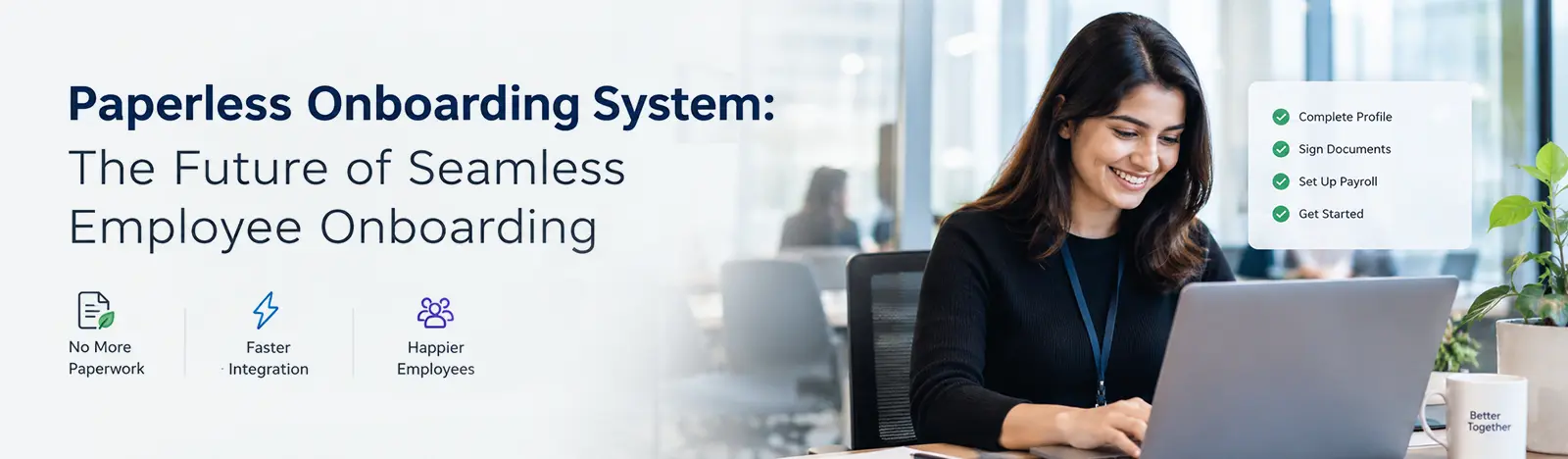
Evaluating tools? An onboarding platform guide for HR leaders provides practical selection criteria. If your onboarding still relies on emails and spreadsheets, Beyond Intranet’s Employee Onboarding Software brings automated, role-based workflows, pre-boarding portals, and real-time tracking into a single SharePoint-native platform.
Trend 6: Employee Experience Has Replaced Employee Satisfaction as the HR North Star
Employee experience has become a measurable driver of business performance. Organisations leading in EX achieve significantly higher growth (IBM).
Many organisations collect engagement data but fail to act on it. The shift now is toward visible responsiveness.
What this means in practice
Shorten feedback cycles. Run quarterly surveys and communicate actions taken. Employees value responsiveness more than perfection.
Trend 7: HR Is Getting Serious About Workforce Planning and Productivity Data
Workforce planning is emerging as a priority among trends in human resource management. Gartner reports that 41% of HR leaders rank it as their top focus.
Why this matters
Hybrid work has reduced visibility into productivity. HR teams need structured data to make informed decisions.
Key focus areas
Time tracking and utilisation
Skills gap analysis
Workforce forecasting
What this means in practice
Define productivity metrics relevant to your organisation. Then implement tools that capture data consistently without adding friction for employees.
Trend 8: DEI Is Moving from Aspiration to Accountability
DEI is evolving into a measurable strategy. This shift is central to both human resources initiatives and broader trends in human resources.
What accountability looks like
Public diversity targets
Pay equity audits
Inclusion metrics in performance reviews
Why it matters
Transparency builds trust with employees, candidates, and stakeholders.
What this means in practice
Move beyond statements. Define metrics, track progress, and report outcomes.
Trend 9: Organisational Design Is an HR Responsibility
Organisational design is gaining attention among trending topics in human resource management.
What HR teams are now responsible for
Designing team structures
Defining reporting hierarchies
Planning succession pathways
What this means in practice
Use data and visual tools to assess your structure. Simplify where possible to improve speed and accountability.
Trend 10: HR Technology Consolidation: Less Tools, More Integration
The average organisation uses dozens of tools. Consolidation is now a strategic priority and a major area of innovation in hr management.
The case for consolidation
Reduced operational complexity
Improved data accuracy
Lower costs
Microsoft 365 advantage
For organisations already using Microsoft tools, SharePoint-native HR platforms provide seamless integration without additional infrastructure.
What this means in practice
Audit your current systems. Identify redundancies and opportunities for consolidation.
The human resources trends defining 2025–26 share a common direction: HR is becoming a strategic, data-driven, and technology-enabled function.
Organisations that adopt AI, redesign employee journeys, and unify their HR systems will move faster and make better decisions.
For teams operating within Microsoft 365, HRMS 365 offers a single platform to manage recruitment, onboarding, analytics, and more. And with HR Directory 365, organisations can ensure workforce visibility and connectivity in hybrid environments.
The future of HR will not be defined by awareness of trends—but by how effectively organisations act on these trends in human resources.
The biggest human resources trends include AI-driven automation, hybrid work design, employee experience strategy, and people analytics. These are reshaping how HR delivers value.
Innovation in HR management helps organisations automate repetitive tasks, improve decision-making through data, and enhance employee experience. It allows HR teams to shift from administrative work to strategic workforce planning.
Key hr industry trends include skills-based hiring, AI adoption in recruitment, employee experience transformation, and HR technology consolidation. These trends are shaping how HR teams operate and deliver value.
AI is automating recruitment, onboarding, and employee support while enabling predictive analytics for workforce planning. This makes AI one of the most impactful drivers of modern human resources trends.
Effective human resources initiatives include structured onboarding programmes, continuous feedback systems, manager training, and internal mobility opportunities. These initiatives help improve engagement and reduce turnover.
People analytics helps HR teams make data-driven decisions by tracking metrics like attrition, hiring efficiency, and performance. It enables predictive insights that improve workforce planning and retention strategies.
Trends in human resources are shifting onboarding from a one-time event to a structured 90-day journey. This includes pre-boarding, role-based training, and continuous engagement to improve retention.
Trends in human resource management for hybrid work include workforce visibility tools, digital employee directories, and redesigned collaboration models. HR teams now play a central role in designing hybrid work systems.
Employee experience is directly linked to engagement, productivity, and retention. Organisations that invest in EX as part of innovation in HR management often see stronger business performance.
HR teams can improve workforce planning by using data on skills, productivity, and capacity. Tools like time tracking and analytics platforms help align workforce decisions with business needs.
Modern HR teams are adopting integrated platforms that combine HRMS, recruitment, onboarding, analytics, and employee directories. These tools reduce complexity and support evolving hr industry trends.
Companies are consolidating HR tools to reduce data silos, improve efficiency, and lower costs. This shift is a key part of innovation in HR management and supports better decision-making across HR functions.