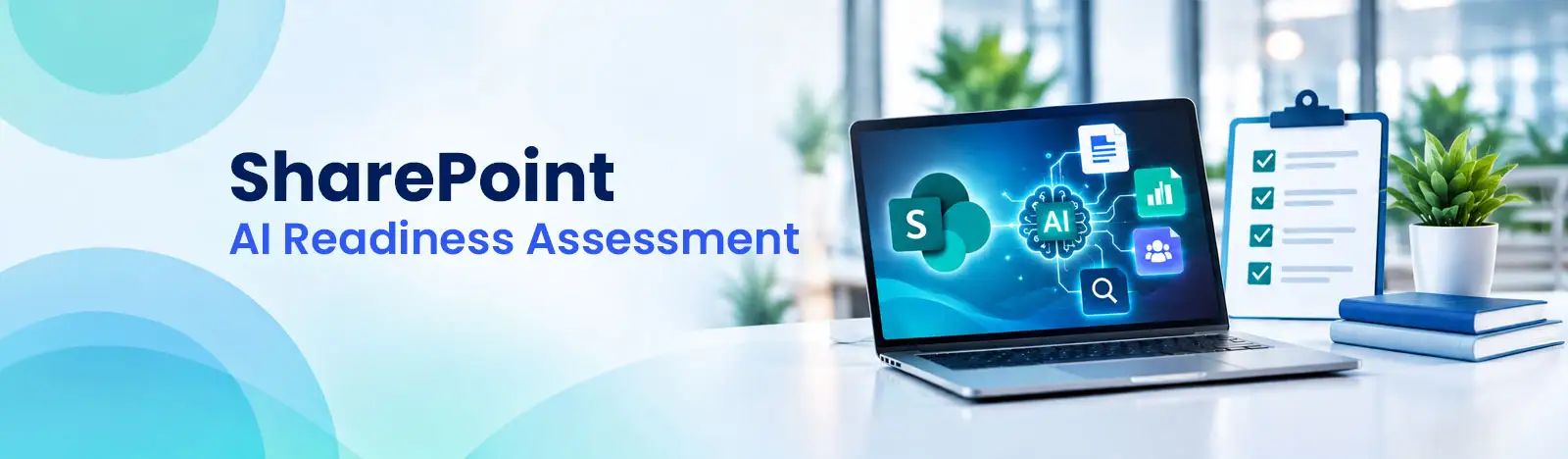
A practical, vendor-neutral guide for CIOs, IT directors, and digital workplace leaders evaluating SharePoint consulting partners in Australia — including a comparison...
Quick answer: A SharePoint AI Readiness Assessment is a structured evaluation of a Microsoft 365 tenant’s governance, information architecture, content...
15 Best Employee Onboarding Software Picks for 2026 (With Reviews & Features)
Onboarding a new employee is a tedious task. Let me correct myself – only if you do it manually. It may start with a simple email and extend to compliance, documentation, and training. But have you wondered how much time and energy these small tasks drain? And there is still no guarantee of consistency in the workflow or employee engagement. This is one of the major reasons large organizations are investing in the best employee onboarding software.
When organizations think about employee engagement, they often start planning activities after onboarding a new hire. But what about the first impression? These manual processes, miscommunication, missed reminders, inconsistent onboarding workflows, and other issues in your onboarding cycle are undermining your new hires’ first experience.
Hence, you must understand how important it is to keep your employees engaged and aligned with your organization from day 1. Furthermore, it reduces the workload for your HR team. In this blog, we explore the features that make employee onboarding software a modern necessity for organizations. We also list the top 15 onboarding software solutions and how they are transforming the onboarding workflow.
What Is Employee Onboarding Software?
Employee Onboarding Software is a digital tool designed to automate your entire onboarding process for new hires. They help you streamline, manage, and digitize your onboarding processes, while replacing manual, paper-based operations with automation across all stages. Key features include: –
Compliance tracking
Document management
Automated onboarding workflows
Centralized Data Management
Pre-onboarding Activities
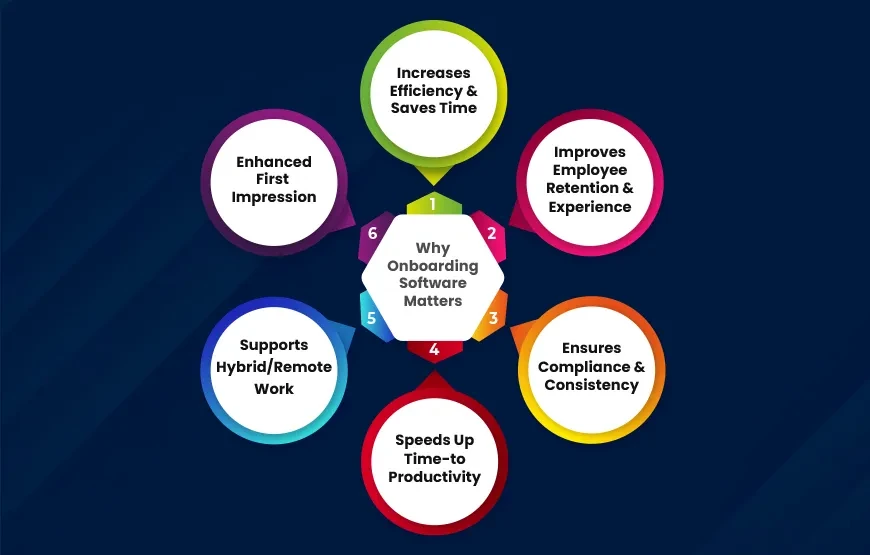
Why Onboarding Software Matters
Manual processes are prone to errors. They are inefficient and reduce employee engagement. It drains your HR team. With the best onboarding software, you trade compliance risk for a consistent, digital, and engaging onboarding experience. Moreover, HR can now engage in more productive activities than getting into hectic application reading, evaluation, and manual task assignment that are prone to human mistakes. All these benefits should be enough to shift your old company structure to a positive environment where the organization shines along with employees.
Increases Efficiency & Saves Time:
Paperwork automation eliminates manual errors.
No manual leads to less workload on the HR department.
Improves Employee Retention & Experience:
A well-structured onboarding process that your new employee deserves.
Increases the employment engagement.
Ensures Compliance & Consistency:
Automated Documentation means no more payroll errors. Saving your organization from legal complications.
Speeds Up Time-to-Productivity:
Faster and more advanced training for the new hires, leading to efficient employees.
Employees are empowered to work quickly and contribute towards the organization’s goals swiftly.
Supports Hybrid/Remote Work:
An onboarding experience for the new tech-savvy generation, which is remote-friendly.
Enhanced First Impression:
Upgrade the company’s professionalism, setting a positive tone by engaging more with employees.
What Makes Onboarding Software Truly Effective
According to onboarding thought leaders, successful onboarding doesn’t stop on Day 1. It begins when the offer is made and continues well into the first 90 days—or longer. Effective onboarding should:
Introduce company culture and values early
Provide clear task milestones and checklists
Enable compliance and paperwork automation
Facilitate training and role expectations
Encourage early social engagement
Track progress through dashboards and surveys
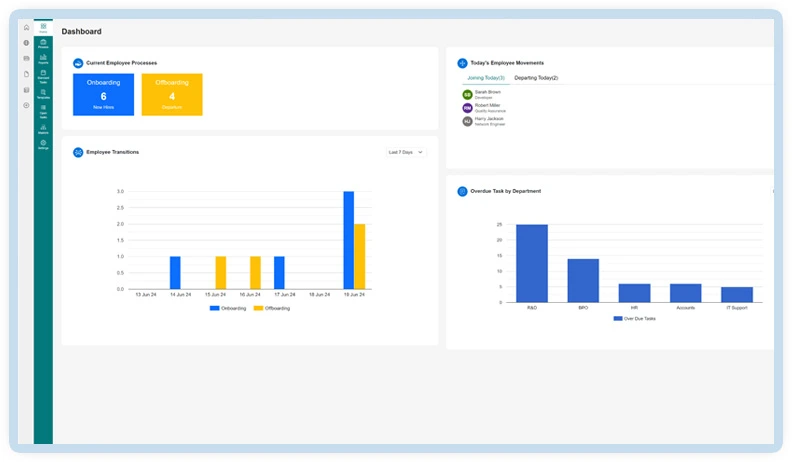
That is not all, the primary function of onboarding software includes automating hectic documentation tasks, including payroll, employee training, and real-time analytics. Just one look at the dashboard and you get the whole picture of organization’s operations.
That is not all, the primary function of onboarding software includes automating hectic documentation tasks, including payroll, employee training, and real-time analytics. Just one look at the dashboard and you get the whole picture of organization’s operations.
How to Compare Onboarding Solutions by Implementation Time and ROI
To compare onboarding solutions by implementation time and ROI, focus on outcomes and not just features. Try answering these questions: –
How long will it take to launch across teams?
Will the system integrate with existing payroll and IT tools?
Does it provide insights into onboarding bottlenecks?
Does automation reduce manual HR significantly?
Does it measurably enhance the employee experience?
The best employee onboarding software solution should be able to balance your expectations with optimal speed, depth of integration, automation of manual processes, and give you long-term solutions.
Leading Employee Onboarding Software in 2026
Beyond Intranet – Best for: SharePoint-based organizations and Microsoft 365 ecosystems.
Beyond Intranet is one of the best employee onboarding software solutions, uniquely pairing onboarding and offboarding features within the Microsoft SharePoint environment. It streamlines paperwork and improves employee engagement from start to exit.
Best Features
Automated onboarding and offboarding workflows
Centralized task management
Customizable onboarding templates
Integrated document uploads and reminders
Real-time progress reporting
Integration with Microsoft Teams and Azure
Active Directory Candidate portal for pre-boarding engagement
Implementation Time: Within 2 minutes
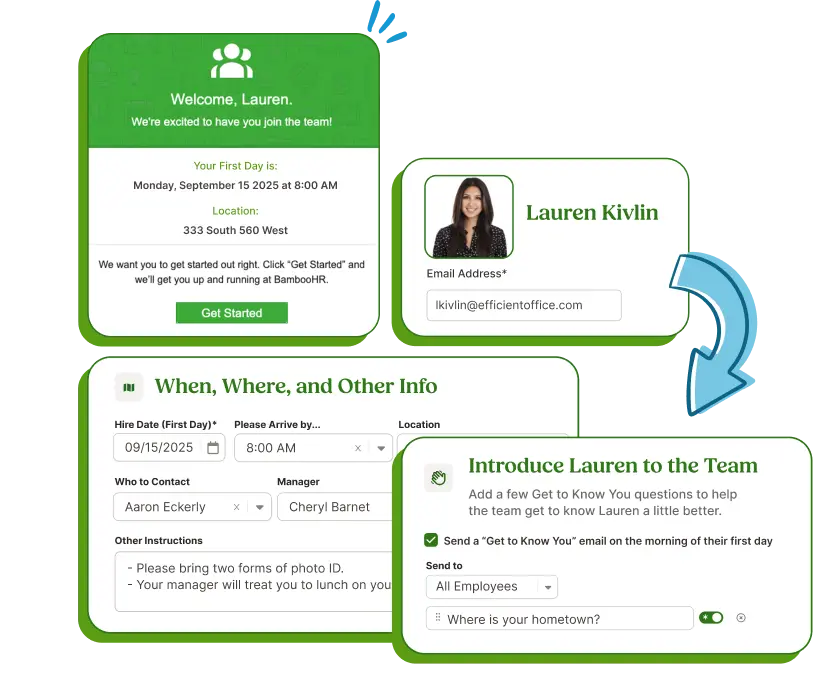
BambooHR – Best for: Growing SMBs that want simplicity and power.
BambooHR is another trusted HR onboarding software known for its ease of use and broad feature set. It is intuitive software that accelerates employee onboarding and training.
Preboarding task management and automated reminders
E-signature integrated contract creation, signing, and collection
API integrations with major payroll and communication tools
Implementation Time: 2–4 weeks
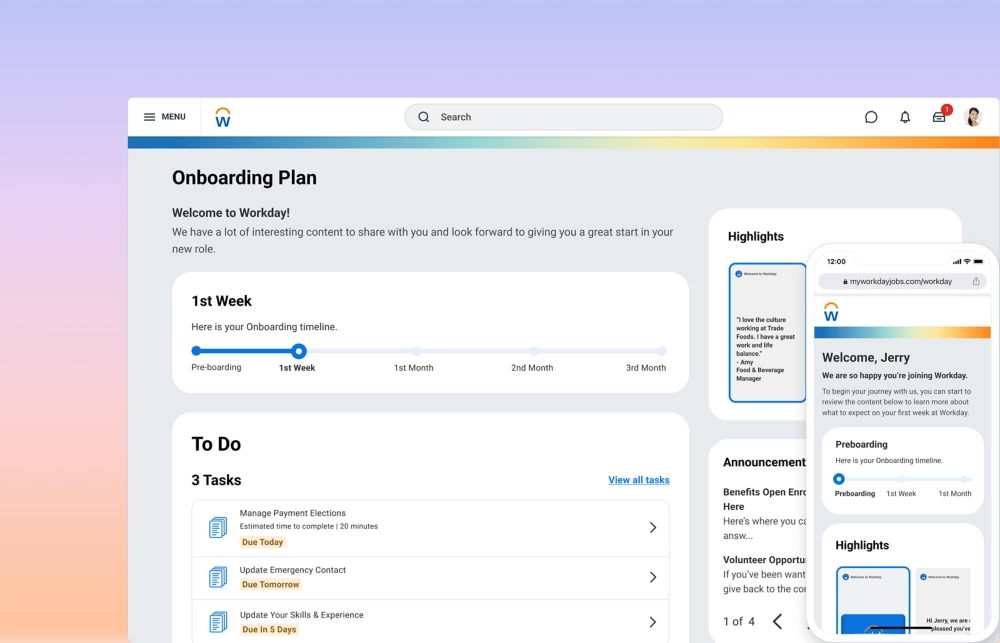
Workday – Best for: Large, global enterprises.
Workday is another employee onboarding software that offers real-time analytics, compliance support, and document management.
Best Features
Integrated Learning Management System (LMS)
Workforce analytics
Single Sign-on (SSO)
Payroll Management
Implementation Time: 8–16 weeks
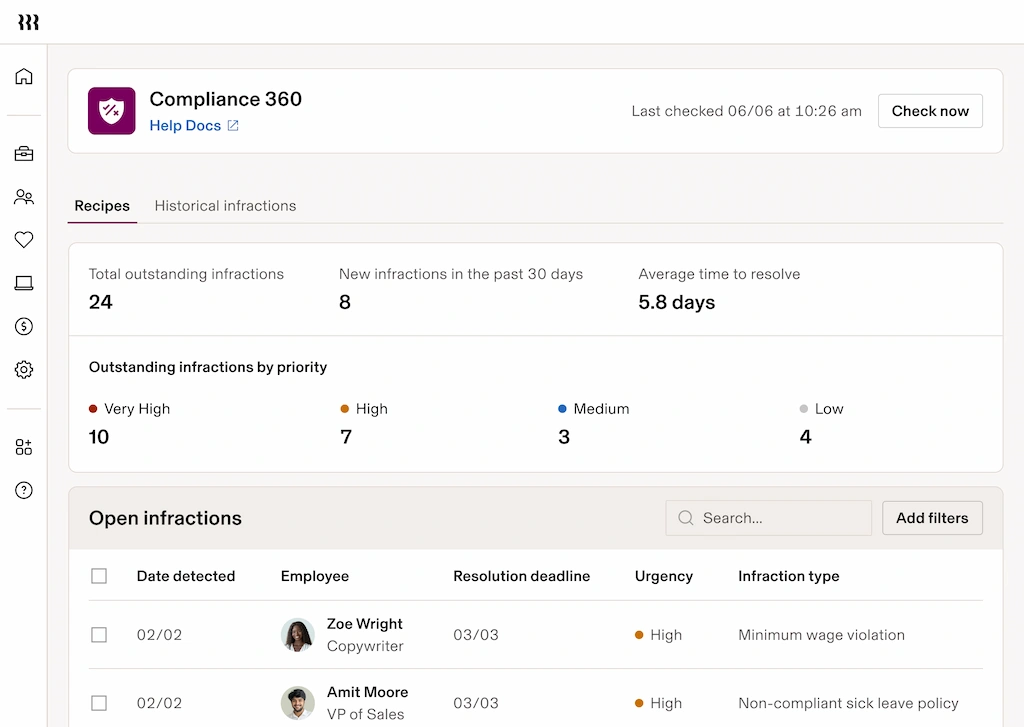
Rippling – Best for: Companies needing HR + IT automation.
Rippling is special because it saves HR and IT teams a great deal of time by integrating automated IT provisioning, benefits administration, and employee onboarding.
ADP is widely regarded as one of thebest HR onboarding software options for companies where payroll compliance and benefits administration are critical.
Best Features
Automated onboarding tasks
Digital tax form and documentation workflows
Integrated payroll engine
Benefits administration portal
SOC-certified security
Background check integrations
Implementation Time: 4–8 weeks
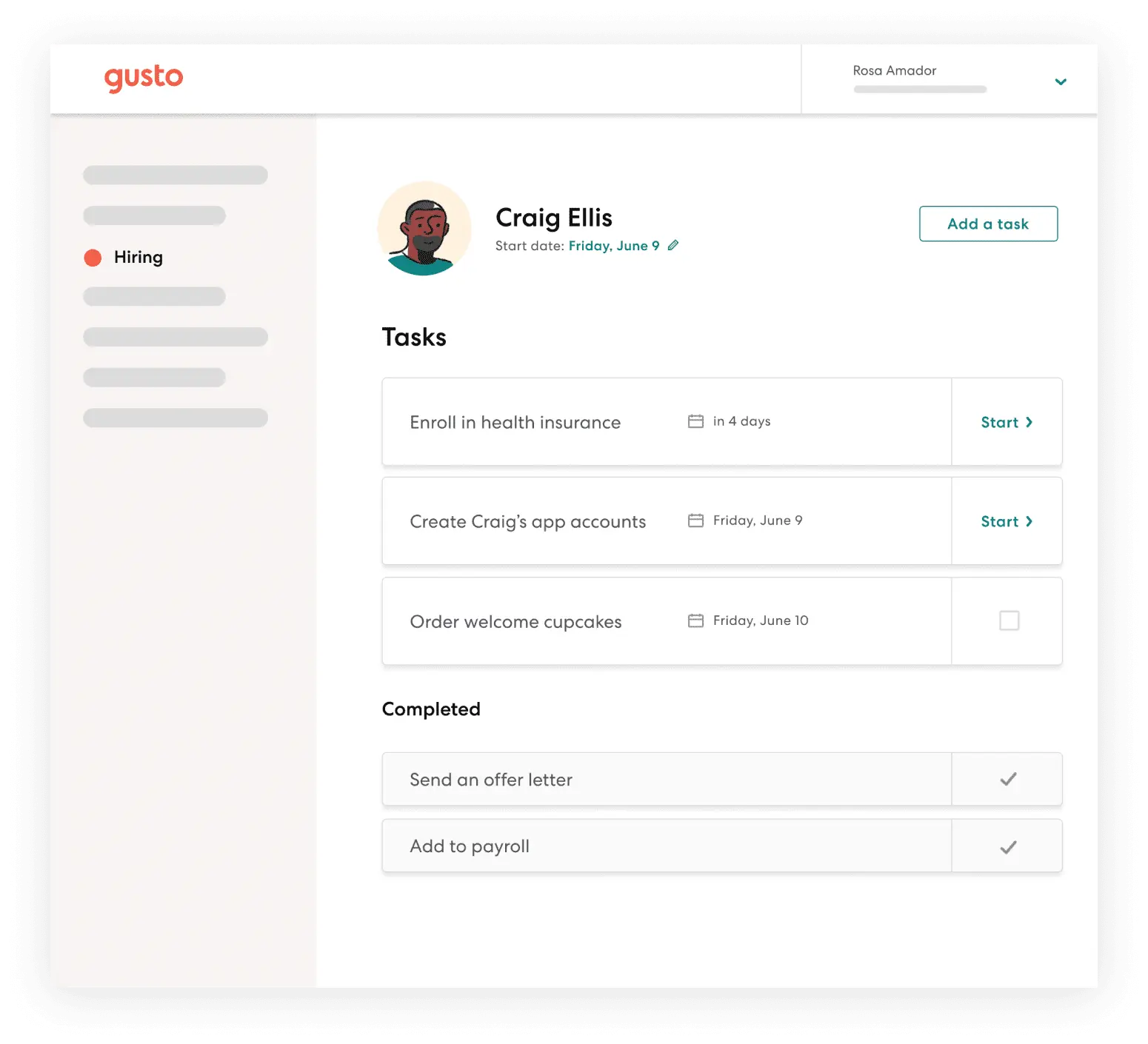
Gusto – Best for: Startups and fast-moving teams.
Gusto simplifies onboarding with actionable checklists and self-guided employee portals.
Best Features
Self-guided onboarding tasks
Automated checklists
Enrolment integration
Payroll synchronization
Tax documentation automation
Offer letter templates
Implementation Time: 1–3 weeks
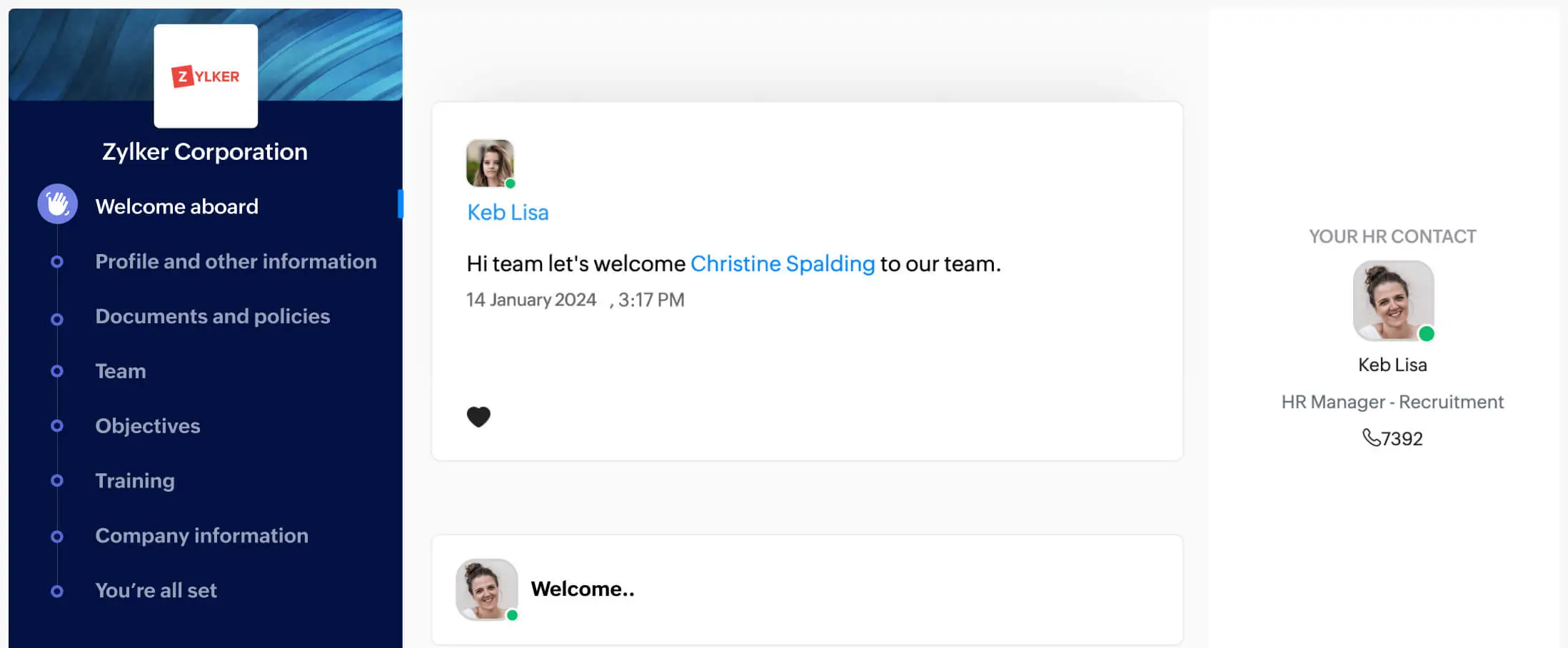
Zoho People – Flexible and cost-friendly
Zoho People offers a customizable suite suitable for growing teams.
Best Features
Custom form and checklist builder
Multi-stage onboarding flows
Attendance & leave tracking
Learning module integration
REST API support
Implementation Time: 2–5 weeks
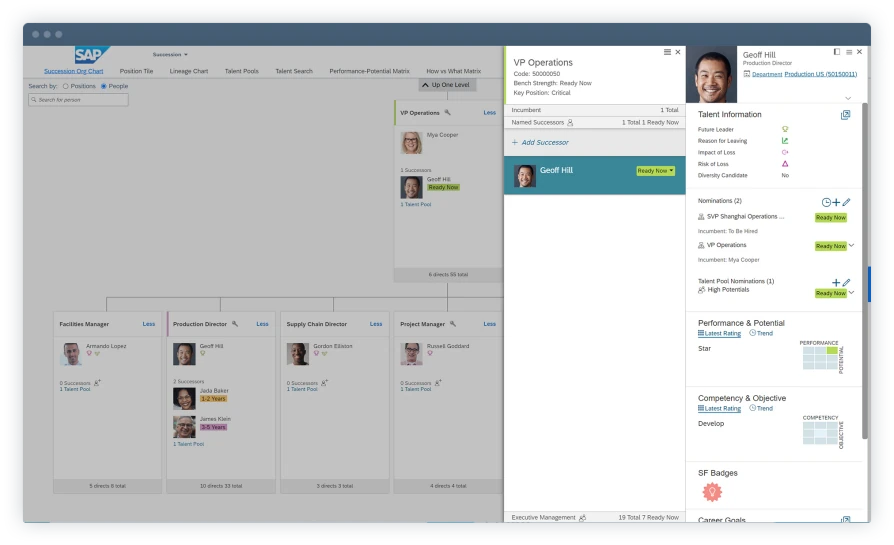
SAP Success Factors – Best for: Enterprise ecosystems.
SAP SuccessFactors combines onboarding with broader talent management, learning, and performance modules — ideal for structured HR programs.
Best Features
AI-driven onboarding journeys
Integrated learning management system
Localization and compliance tools
9–15: Additional Complementary Platforms
These tools also contribute to the evolving landscape of employee onboarding solutions:
Paycor — Compliance and mobile onboarding.
Greenhouse — Strong ATS linkage and onboarding handoff.
ClearCompany — Structured onboarding playbooks.
Lever — Robust integrations and analytics.
Namely — Unified HRIS and benefits sync.
Paylocity — Engagement surveys and learning.
UKG — Workforce analytics with AI.
Employee Onboarding Software Comparison (2026)
Below is a side-by-side comparison to help you evaluate scalability, integration strength, and implementation effort.
Platform
Ideal For
Ease of Use
Implementation Time
Integration Depth
Pricing Model
Beyond Intranet
M365 Orgs
★★★★★
3–6 weeks
SharePoint + Azure
Custom
BambooHR
SMBs
★★★★★
2–4 weeks
Payroll + ATS
Custom
Gusto
Startups
★★★★☆
1–3 weeks
Payroll + Benefits
Tiered
Zoho People
Growth Teams
★★★★★
2–5 weeks
API + Attendance
Per User
Rippling
HR + IT
★★★★☆
3–8 weeks
IT + Payroll
Per Employee
ADP
Payroll Focus
★★★★☆
4–8 weeks
Payroll + Compliance
Custom
Workday
Enterprise
★★★★☆
8–16 weeks
ERP + Global
Enterprise
SAP
Enterprise
★★★★★
10–16 weeks
Talent + ERP
Enterprise
UKG
Large Workforce
★★★★☆
8–14 weeks
Payroll + Analytics
Enterprise
Pros & Cons Breakdown
Now let’s get practical. Every tool has trade-offs.
Platform
Pros
Cons
Beyond Intranet
Native Microsoft 365 integration
SharePoint-based workflows
Strong task tracking dashboards
Good for organizations already in the Azure ecosystem
Best suited for Microsoft environments
BambooHR
Extremely user-friendly
Fast implementation
Strong reporting for SMBs
Excellent support reputation
Limited deep enterprise analytics
May require integrations for complex payroll scenarios
Workday
Deep global compliance capability
Advanced analytics and workforce insights
Scales easily across regions
Long implementation cycle
Higher cost
Requires a dedicated internal admin team
Rippling
Combines HR + IT provisioning
Strong automation workflows
Integrated benefits and payroll
Pricing can increase with modules
Feature depth may feel overwhelming for small teams
ADP
Payroll accuracy and compliance strength
Trusted enterprise brand
Robust regulatory updates
Interface is less modern than newer SaaS tools
Customization may require support assistance
Gusto
Very easy to deploy
Startup-friendly pricing
Clean UI
Limited scalability for global enterprises
Advanced analytics are basic
Zoho People
Affordable, highly customizable forms
Good for regional compliance
UI not as polished as premium tools
Enterprise integrations are less extensive
SAP SuccessFactor
Strong enterprise HR ecosystem
AI-driven onboarding journeys
Excellent localization
Expensive Complex configuration
Longer deployment time
Paycor
Payroll + onboarding alignment
Mobile onboarding access
Good mid-market fit
Not ideal for global enterprises
Limited AI capabilities
Greenhouse
Strong ATS-to-onboarding handoff
Great candidate-to-employee transition
Integration marketplace
Requires additional HRIS for the full lifecycle
Not a standalone HR ecosystem
ClearCompany
Structured onboarding playbooks
Talent management alignment
Performance integration
Less robust payroll features
Best used within a talent-focused strategy
Lever
Data-driven analytics
Smooth ATS integration
API ecosystem
Onboarding module not as deep as HRIS-native tools
Namely
Unified HRIS Benefits + payroll integrated
Good mid-market solution
Limited global reach
Pricing is less transparent
Paylocity
Engagement tools built-in
Learning integration
Compliance workflows
Setup may require an onboarding consultant
UI complexity for smaller teams
UKG
AI workforce analytics
Enterprise-grade payroll
Strong compliance management
Enterprise pricing
Longer deployment timeline
Freshteam
ATS + onboarding alignment
Quick implementation
Startup-friendly pricing
Limited enterprise scalability
Basic analytics compared to larger platforms
Strategic Recommendation
If you are:
Microsoft 365 ecosystem → Beyond Intranet
A startup → Gusto, FreshTeam
A growing SMB → BambooHR, Zoho
Payroll-heavy organization → ADP
HR + IT automation need → Rippling
Enterprise global org → Workday, SAP, UKG
Final Thoughts
Your organization’s success depends not only on the services you provide to customers but also on your employees’ commitment to your goals. An employee onboarding software can do exactly that for you. It helps new hires feel more confident and productive and brings them on board faster. Some of the recommended software tools in these blogs help you make the process welcoming, organized, and efficient.