A practical, vendor-neutral guide for CIOs, IT directors, and digital workplace leaders evaluating SharePoint consulting partners in Australia — including a comparison...
Quick answer: A SharePoint AI Readiness Assessment is a structured evaluation of a Microsoft 365 tenant’s governance, information architecture, content...
Picture this. Your team needs to source packaging for a new product line. You email four suppliers asking for quotes. Two respond within a week. One takes ten days. The fourth never replies. You build a comparison spreadsheet. Then you call each supplier to negotiate. Supplier A drops 5%. Supplier B says they can’t go lower. Supplier C asks what the others quoted. You go back and forth for another week.
Three weeks later, you award the contract and call it a win because you saved 7%. But here’s the thing: if those same four suppliers had been competing against each other in real time, watching each other’s prices drop, you’d have saved 18 to 22%. The difference between sequential negotiation and a reverse auction isn’t effort. It’s structure.
What Is a Reverse Auction? (In Simple Words)
In a regular auction, buyers bid up. Whoever pays the most wins. A reverse auction flips that. Suppliers bid down. Whoever offers the lowest price (or best value) wins your business.
Think of it like this. You’re buying 10,000 units of corrugated packaging. Five qualified suppliers log into a platform at a scheduled time. For 45 minutes, they can see the current lowest bid (not who placed it) and decide whether to beat it. The price drops in real time. When the clock runs out, you have a clear winner at a price that the market determined through competition, not through your negotiation skills on a phone call.
Why Procurement Teams Are Moving to Reverse Auctions
The savings are the obvious reason. Most first-time reverse auctions on previously negotiated categories deliver 15 to 25% below what the team was paying. That’s not a theoretical number. We see it repeatedly on categories like packaging, logistics, MRO, raw materials, and professional services.
But there’s more to it than price. A reverse auction compresses weeks of back-and-forth negotiation into a single event that lasts under an hour. Your team isn’t spending days on phone calls and emails. The process is transparent because every bid is recorded and time-stamped. And the award decision is defensible. When somebody asks “why did we go with this supplier?” the answer is documented in the auction record, not in somebody’s memory of a phone conversation that happened six weeks ago.
Ready to Run Your First Reverse Auction?
ProcureKey’s eAuction module sets up in minutes. No training required for suppliers.
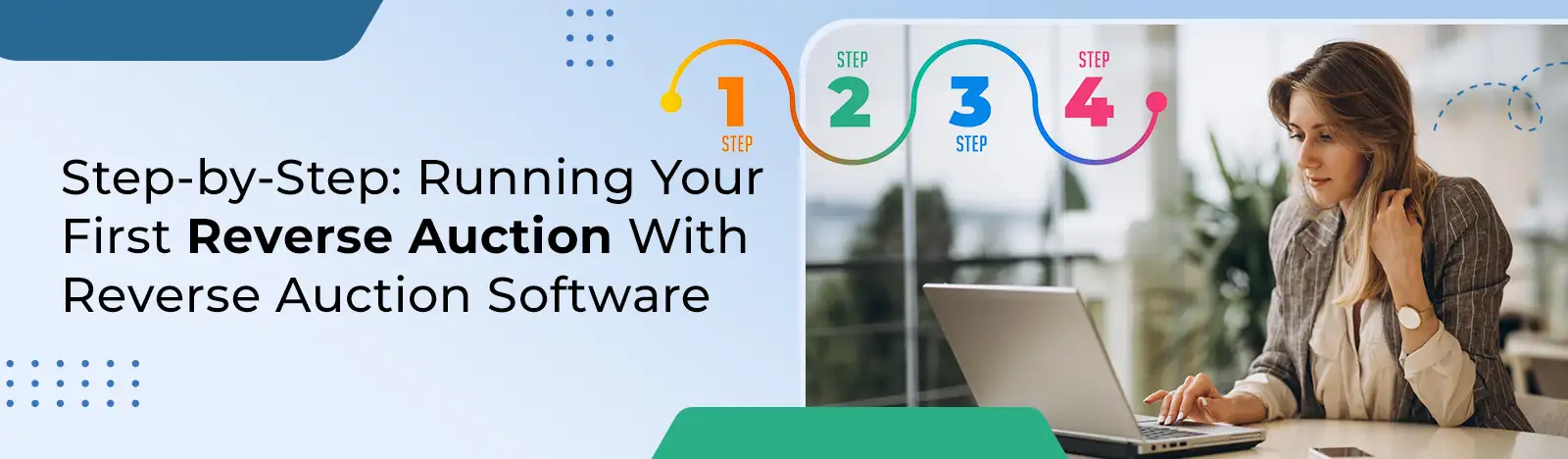
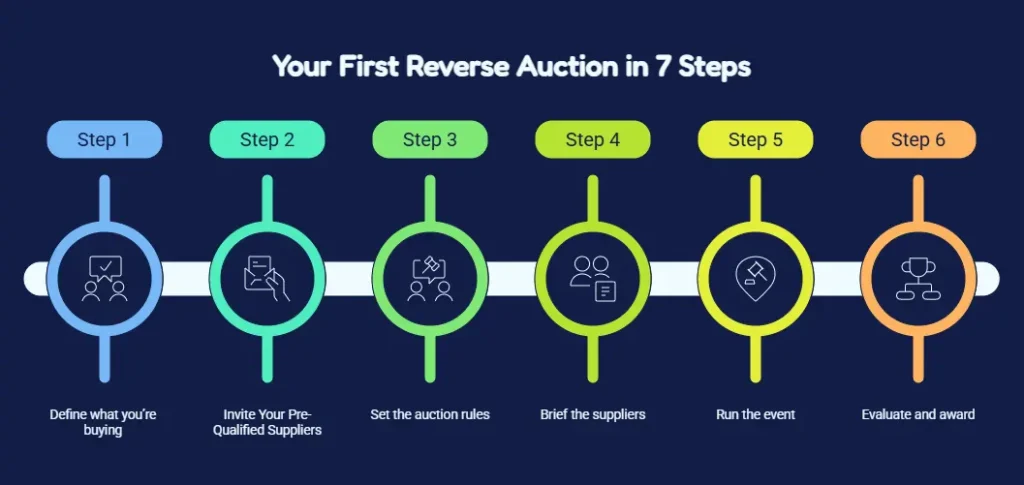
What’s the item? What quantity? What quality standard? What delivery schedule? Get the spec locked before anything else. Vague specifications produce bids you can’t compare. If supplier A is quoting on 200gsm board and supplier B thinks you want 250gsm, the auction results are meaningless. Clarity here saves you from wasted events later.
Step 2: Invite Your Pre-Qualified Suppliers
A reverse auction only works if the supplier’s bidding can actually deliver. Pre-qualify them. Check capacity, certifications, past performance. Three to six qualified bidders is the sweet spot for most categories. Fewer than three and you won’t get real competition. More than eight and you’re probably including suppliers who shouldn’t be there.
Step 3: Set the auction rules
Duration, bid decrements, starting price, ranking visibility. Will suppliers see their rank or just the leading bid? Can they see actual prices or just whether they’re winning? These decisions affect bidding behaviour. A 30 to 45 minute window with rank visibility and a minimum bid decrement of 0.5% is a solid starting point for your first event.
Step 4: Brief the suppliers
Don’t assume they’ve done this before. Send them the specification, the auction rules, and platform login instructions at least three business days before the event. Answer questions beforehand. An auction where two suppliers can’t figure out how to submit a bid is a waste of everyone’s time.
Step 5: Run the event
Launch day. Suppliers log in, see the starting price, and begin bidding. Your team watches the prices come down in real time. Resist the temptation to intervene. The competition does the work. If bidding is still active when the clock is about to expire, most eAuction platforms offer automatic time extensions so you don’t cut off a supplier mid-bid.
Step 6: Evaluate and award
Lowest price doesn’t always win. If you’ve set the auction up with weighted criteria (price 70%, quality 20%, delivery 10%), the platform calculates the value-weighted ranking automatically. Review the results. Check that the winning bid is realistic. Then award and notify the participants. Transparency matters here because you want these suppliers to show up for your next auction.
Common Mistakes to Avoid
The biggest one? Running an auction on a category where the spec isn’t clear. If suppliers are guessing at what you need, the bids won’t be comparable and the lowest price might not be the best value. Lock the spec first.
Second mistake we see a lot: inviting suppliers who aren’t actually qualified. They bid low to win the business, then can’t deliver. Pre-qualification isn’t optional. It’s what makes the auction results trustworthy.
And then there’s the communication gap. Suppliers who’ve never participated in a reverse auction need a briefing. Send instructions early. Walk them through the platform. If a supplier misses the first ten minutes because they couldn’t find the login button, you’ve lost a bidder and weakened the competition.
What Changes When You Run Auctions on a Digital Platform
The manual version of a reverse auction is a conference call where suppliers shout out prices. It’s chaotic, hard to document, and impossible to scale. A digital platform changes the dynamic completely. Bids are recorded automatically with timestamps. The ranking updates in real time so every supplier knows exactly where they stand. And the audit trail builds itself. No screenshots, no handwritten notes, no “I think supplier B said $47,000 but I’m not sure.”
There’s also the AI angle. Platforms with AI-powered sourcing can flag when a bid looks unrealistically low, suggest starting prices based on historical data, and identify categories that are good candidates for auction based on past spend patterns. The platform isn’t just hosting the event. It’s making the event smarter.
How ProcureKey Makes Reverse Auctions Straightforward
ProcureKey’s eAuctionmodule runs inside Microsoft 365, which means your team doesn’t need to learn a new system. Suppliers access the auction through a web portal with nothing to install. Setup takes minutes, not days. You configure the rules, invite the suppliers, and go live.
What makes it different from a generic auction tool: weighted scoring that goes beyond price, automatic time extensions when bidding is active, real-time dashboards that your stakeholders can watch, and a complete audit trail from first bid to final award. The supplier experience is clean enough that first-time participants figure it out without a training session. And everything sits inside ProcureKey’s broader sourcing platform, so the auction data feeds into your overall category intelligence.
Smarter Sourcing Starts Here
Your first reverse auction won’t be perfect. The spec might need tightening. You might invite one supplier too many or one too few. But even a slightly imperfect auction will deliver better results than three weeks of sequential negotiation over email. The suppliers compete. The prices drop. The documentation creates itself. And every auction after the first one gets easier because you’ve built the muscle. Start with Beyond Intranet’s Bid Management System and see what competitive sourcing looks like when it runs on a platform instead of a phone call.