AI in employee retention is changing how organisations understand, predict, and act on employee turnover. Replacing a single employee can cost between 33% and 200% of their annual salary, according to research from SHRM and Work Institute. Despite this, many organisations still rely on reactive signals exit interviews, delayed engagement surveys, or manager observations long after an employee has mentally checked out.
This is where AI introduces a critical shift. Instead of analysing why employees left, it focuses on identifying who might leave and “why” before it happens. By analysing behavioural data, engagement patterns, and workplace signals, AI helps HR teams intervene earlier and more effectively.
At the same time, AI for employee retention is not a silver bullet. It works best when combined with strong managerial practices, transparent communication, and a well-designed employee experience. This article explores the real capabilities of AI, the measurable benefits it brings, and equally important where human judgement remains essential.
What is AI in employee retention?
AI in employee retention refers to the application of machine learning, predictive analytics, and natural language processing to identify and address the drivers of employee turnover. It transforms retention from a reactive process into a proactive one.
Traditional retention strategies rely heavily on hindsight. Exit interviews explain why employees left. Annual engagement surveys provide delayed snapshots of sentiment. Managerial intuition varies widely across teams. These methods are useful, but they do not prevent attrition; they explain it after the fact.
AI introduces a forward-looking layer. It continuously analyses employee data such as performance trends, engagement levels, collaboration patterns, and feedback signals. From this, it identifies patterns associated with disengagement and predicts potential turnover risks.
For readers newer to HR technology ecosystems, understanding what HR software is provides useful context. AI capabilities are increasingly embedded within HR platforms, turning them into intelligent systems rather than static databases.
In practice, ai for employee retention enables HR teams to prioritise interventions, personalise employee journeys, and make decisions based on evidence rather than assumptions.
5 Ways AI is used for employee retention today
1. Predictive attrition modelling
Predictive attrition modelling is one of the most impactful applications of AI in HR. It uses historical and real-time data to identify patterns that indicate potential employee turnover.
These systems analyse variables such as tenure, compensation changes, promotion frequency, engagement scores, workload patterns, and even collaboration behaviour. By comparing these variables across large datasets, AI models can detect subtle signals that humans often miss.
According to research from Deloitte and iTacit (2025), AI-driven attrition models can identify potential flight risk employees 6–12 months before they resign, with accuracy rates exceeding 85% in some cases.
This capability fundamentally changes how organisations approach retention. Instead of reacting to resignations, HR teams can proactively engage employees who show early warning signs.
Another advantage is prioritisation. Not all attrition risks are equal. AI helps HR teams focus on high-impact roles, critical talent segments, or teams with rising turnover patterns.
2. Sentiment analysis and continuous feedback
Employee sentiment is dynamic. It changes based on workload, leadership, organisational shifts, and personal circumstances. Traditional surveys often fail to capture these fluctuations in real time.
AI-powered sentiment analysis addresses this gap by continuously analysing employee feedback from surveys, internal communication platforms, and collaboration tools. Using natural language processing, it identifies tone, emotional signals, and emerging concerns.
iTacit (2025) reports that organisations using AI-driven feedback systems see higher participation rates and more actionable insights compared to traditional survey methods. Employees are more likely to respond when feedback mechanisms are simple, frequent, and embedded into their daily workflows.
For HR teams, this means earlier detection of disengagement. A gradual decline in sentiment within a specific team or department can signal deeper issues such as leadership challenges, workload imbalances, or cultural misalignment.
This is where AI in employee retention supports continuous listening rather than periodic measurement.
3. Personalised career development and internal mobility
Career stagnation is one of the most cited reasons employees leave organisations. However, identifying and addressing this at scale is difficult without structured systems.
AI helps by analysing employee skills, performance history, career preferences, and learning activity. It then recommends personalised development paths, training programmes, and internal opportunities.
According to iTacit (2025), 74% of employees are open to new roles if they are offered meaningful development opportunities. This highlights a critical retention opportunity: employees do not always want to leave the organisation they want to grow within it.
By using AI for employee retention, organisations can proactively offer career progression pathways before employees start exploring external opportunities.
AI also supports internal mobility by matching employees to open roles based on skills and experience. This reduces hiring costs while improving retention among high-potential talent.
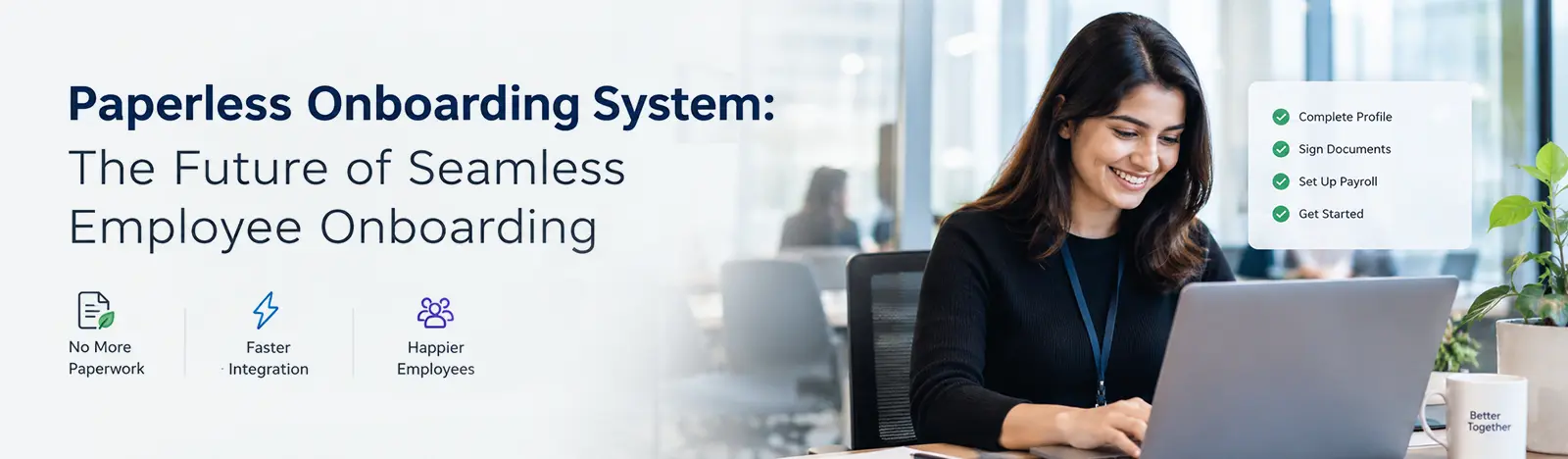
4. AI-enhanced onboarding as a retention driver
Onboarding is one of the most underutilised levers for retention. According to Glassdoor, organisations with structured onboarding programmes improve retention by 82%. SHRM further reports that employees who experience strong onboarding are 69% more likely to remain with the organisation after three years.
AI enhances onboarding by making it personalised, consistent, and adaptive. Instead of generic onboarding checklists, AI-driven systems tailor onboarding journeys based on role, department, location, and individual learning pace.
This strengthens the employee onboarding retention link, ensuring that new hires feel supported from the start. Early clarity reduces confusion, builds confidence, and accelerates productivity.
For additional insights, explore the benefits of employee onboarding for retention and this new employee onboarding process guide.
Fix Fragmented Onboarding in Microsoft 365
Unify tasks, workflows, and employee experiences with automated onboarding built directly on SharePoint. Faster ramp-up. Better retention.
See How It Works5. Automated recognition and engagement nudges
Recognition and engagement are often inconsistent across teams. Some managers actively recognise contributions, while others do not, leading to uneven employee experiences.
AI addresses this by analysing engagement signals and triggering timely nudges. For example, if an employee completes a milestone project or shows signs of disengagement, the system can recommend recognition, feedback, or a one-on-one check-in.
These nudges help managers maintain consistent engagement without relying solely on memory or manual tracking.
This application of AI in employee retention ensures that employees feel seen and valued two critical drivers of long-term retention.
AI tools vs human-driven support for retention
The discussion around ai tools vs human-driven support for retention is not theoretical, it reflects a real decision many HR leaders are evaluating today.
What does AI do well?
AI excels at processing large volumes of data quickly and accurately. It identifies patterns across thousands of employees, detects subtle behavioural changes, and provides consistent insights without fatigue.
It also reduces bias in data analysis and enables continuous monitoring. For large organisations, this scalability is essential.
In the context of AI in employee retention, AI acts as an early warning system flagging risks before they escalate.
Where does human judgement win?
Retention is not purely a data problem. It is a human experience problem.
Managers understand context that AI cannot fully interpret team dynamics, personal challenges, cultural nuances, and emotional signals. Sensitive conversations around burnout, conflict, or career dissatisfaction require empathy and trust.
Employees are more likely to stay when they feel genuinely supported and not when they feel analysed.
The Hybrid Model That Works
The most effective approach combines both. AI identifies the signal; humans interpret and act on it.
For example:
- AI flags declining engagement in a team
- HR analyses the data and identifies a trend
- Managers have meaningful conversations with employees
- Interventions are personalised and timely
This hybrid approach balances efficiency with empathy.
For organisations focusing on experience-led retention strategies, insights from the best employee experience platform provide additional perspective.
Challenges and Risks of Using AI for Employee Retention
AI adoption is not without challenges. Understanding these risks is essential for responsible implementation.
Data Privacy and Compliance
AI systems require access to sensitive employee data. Organisations must ensure compliance with regulations such as GDPR and CCPA while maintaining transparency with employees.
Algorithmic Bias
AI models trained on historical HR data may reflect existing biases. Without careful oversight, this can lead to unfair predictions or decisions.
The “Watched Employee” Effect
Gartner reports that 66% of employees are concerned about AI-driven monitoring. If employees feel constantly observed, it can reduce trust and engagement.
Integration and Data Silos
Gartner also found that 61% of organisations struggle to modernise their data infrastructure. Fragmented systems limit the effectiveness of AI initiatives.
These challenges highlight that AI for employee retention must be implemented with governance, transparency, and employee trust at the center.
How to Get Started with AI in Employee Retention
Implementing AI in employee retention does not require a complete transformation. A structured approach ensures better outcomes:
1. Identify High-Impact Retention Problems
Focus on areas where attrition has the highest cost early-stage turnover, critical roles, or high-performing employees.
2. Audit Your HR Data
Ensure data accuracy, consistency, and centralisation. AI models depend heavily on data quality.
3. Start with One Use Case
Choose a focused starting point such as onboarding, sentiment analysis, or predictive attrition.
4. Use Microsoft 365-Native Tools
Platforms like HRMS 365 centralise HR data and reduce integration complexity. Learn more about how HRMS unlocks business efficiency. HRMS 365 provides a unified data foundation for retention strategies bringing together employee records, performance data, and engagement insights in one place.
Upgrade Your HR with Smarter Software
From onboarding to employee management, explore solutions designed to simplify HR operations and improve efficiency.
Learn MoreSolutions like AIKA 365 can also improve employee self-service by helping employees access information quickly reducing friction in day-to-day work.
5. Measure and Iterate
Track metrics such as retention rates, engagement scores, and intervention success. Use these insights to refine your approach.
Conclusion
AI in employee retention represents a fundamental shift in how organisations approach workforce stability. It enables HR teams to identify risks earlier, personalise employee experiences, and take proactive action.
However, AI is not a replacement for human connection. The most effective retention strategies combine AI-driven insights with empathetic leadership and strong organisational culture.
Employee retention starts on Day 1. Explore Beyond Intranet’s Employee Onboarding Software to build structured, personalised onboarding experiences that support long-term engagement.
Frequently Asked Questions
AI in employee retention uses machine learning and predictive analytics to identify employees at risk of leaving and enable early intervention. It shifts HR from reactive processes to proactive strategies.
AI for employee retention is used for predictive attrition, sentiment analysis, personalised development, and engagement automation. These tools help organisations act before disengagement leads to resignation.
In AI tools vs human-driven support for retention, AI provides data-driven insights at scale, while humans offer empathy, context, and trust. The most effective approach combines both.
Yes. AI can identify over 85% of flight risks early, enabling proactive intervention. Combined with strong onboarding, organisations see measurable improvements in retention.
Risks include data privacy concerns, algorithmic bias, and employee discomfort with monitoring. These can be mitigated through transparent policies and responsible implementation of AI for employee retention.
HRMS platforms that centralise employee data provide the foundation for AI tools. Microsoft 365-based solutions help reduce integration complexity and improve adoption.