A practical, vendor-neutral guide for CIOs, IT directors, and digital workplace leaders evaluating SharePoint consulting partners in Australia — including a comparison...
What is dutch auction? It is a falling price setup where sellers start high and drop prices until a buyer bids. Buying teams use this simpler format to find fair market value fast, skip long talks, and build better global supply chains.
Introduction
Ninety percent of CPOs believe making buying digital is a must to stop losing money today. Asking exactly What is dutch auction gives you a clear edge here.
This specific dutch auction setup speeds up price discovery. Global enterprise teams gain a strong, compelling tool to control spending and run daily buying tasks very fast.
Breaking Down What is dutch auction
Let us look closely at how this pricing works. Standard deals waste weeks. To solve this, auctioneers start events with very high asking prices. These prices drop at fixed times.
The Power of Quick Choices
Buyers watch falling numbers on their screens. They check budgets constantly. The first buyer willing to accept the current price stops everything. That buyer wins the contract.
This design forces quick choices. Waiting too long means losing lucrative deals to faster rivals. Action beats hesitation completely.
Achieving Pure Pricing Fairness
Many teams ask how a dutch auction is going to help their final costs. It creates pure fairness. Multiple items sell at once using uniform prices.
Uniform prices mean all winning buyers pay the same amount.
This simple rule treats everyone equally and fairly.
Buyers stop feeling regret and stop overpaying completely.
Enterprise groups use this exact model to sell old stock, sign new contracts, and find fair value instantly. Speed is much better here compared to slow email chains.
Removing the Safety Net
Finding real market value means forcing buyers to show what they will truly pay. Going up in price lets buyers hide their true budgets until the last second.
Going down in price removes that safety net. Bidders must act right when prices hit their targets. If you wait, your rival wins the deal.
Teams using this model create rooms where smart math wins contracts. Clear thinking beats emotional bidding. Logic controls the final results.
Why This Model Saves Time and Money
Looking into What is dutch auction theory shows clear math benefits. Studies prove this setup works great when buyers need time to research their target items.
Fixing Bad Research Habits
Old rising formats force bad habits. Low value bidders research first, which slows down market speed. Falling formats push highly valued bidders to act fast.
Smart buyers only spend money checking items when they know they can get a good return. This keeps budgets focused.
Boosting Market Health
Looking at market health supports this downward method too. In normal markets with basic research costs, total social welfare improves compared to standard rising formats.
Buyers balance their fixed costs well. They put money into checking target items only when chances look good. Company budgets stay perfectly protected.
Daily Output Improvements
Daily output gets much better for teams using these rules. Automated downward clocks cut out long one on one talks completely.
Sourcing teams handle more deals without hiring more staff.
Messy paperwork drops to zero rapidly.
Finding the true price happens right away.
Companies link smart purchasing directly to better profits. Sourcing turns into a money maker instead of a money pit. Finance leaders love this simpler math.
What is dutch auction vs. Standard Bidding?
Comparing different setups shows great benefits for procurement teams. Buyers must learn basic what is auction rules to spend money well.
The Flaws of Rising Prices
Standard English formats use rising prices. People bid against each other openly. Prices go up until one buyer stays.
Excitement pushes prices way past true value. Panic ruins budget plans. Procurement teams hate not knowing final costs.
The Reverse Format Approach
On the flip side, learning what is a reverse auction action shows sellers fighting to offer the lowest prices. Buyers share their exact needs.
Sellers try to beat rival prices hard. Prices go down until profits shrink totally. This setup works perfectly for basic raw materials.
Forcing suppliers to bid against each other drives raw material prices to their absolute lowest safely.
Falling price structures mix speed with exact price discovery perfectly. Sellers pick starting points. Prices fall on their own. Buyers act when value matches their budgets.
Looking at different types of auctions shows falling models are best at moving large amounts of items fast. This gives a great dutch auction comparison for leaders.
Companies needing to clear out stock or award contracts quickly pick this choice every time. Cash flow speeds up. Business health gets better.
Bringing It All Together
Adding strong systems puts all these formats into one simple place. Teams run events easily across different countries. Data goes into central folders automatically.
Strategic sourcing becomes simple to repeat and measure. Leader dashboards track savings from competitive bids instantly. Open views replace hidden data. People take true ownership of their daily tasks.
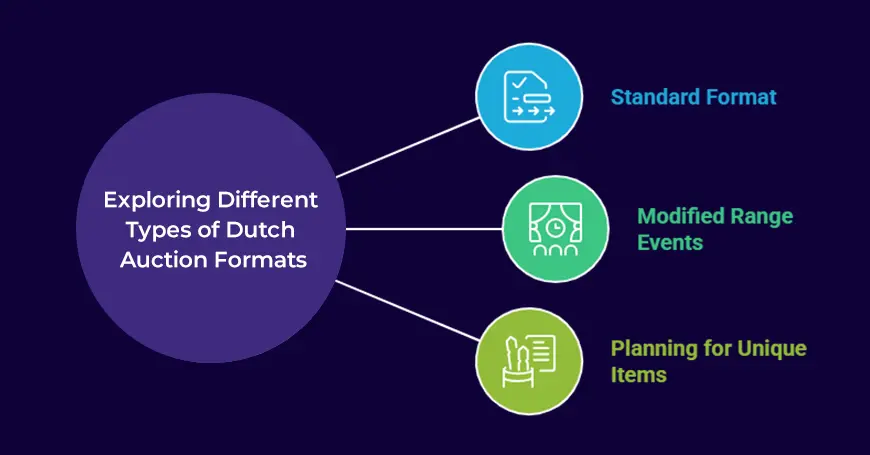
Exploring Different Types of Dutch Auction Formats
Companies use different versions based on their market needs. Standard fixed price events ask buyers to accept exact prices at set times.
The Standard Format Wins on Speed
Auctioneers control price drops completely. Bidders just click to accept. Speed is the biggest win here.
Simpler rules mean more people join in. Hard rules scare bidders away. Standard formats keep things very easy for everyone.
Modified Range Events
Modified range price events give more options for tough deals. Sellers share price ranges at each step. Bidders make their best private offers inside those limits.
Pressure stays high from start to finish. Buyers guide final pricing while giving market feedback at the same time.
Financial markets use modified setups for buying back company shares often. Corporate boards give money back to investors fast without hurting normal market trading. Shareholder value goes up simply.
Planning for Unique Items
When you ask What is dutch auction planning for unique items, you must look at item popularity. Popular items sell well in standard formats.
Rare items need modified rules to get people interested.
Clear rules matter a lot no matter which format you pick.
Good rules stop bad behavior from happening.
Players need totally clear details about time limits and price drops. Confusion kills trust instantly. Strong trust brings strong bids.
Keeping all your bidding formats in one central place makes tracking daily savings completely effortless.
Knowing exactly when to deploy this pricing format matters heavily. Not every buying category fits a falling price model.
You must pick categories where price is the main factor. Quality and scope must be firmly decided before the bidding starts.
High Volume and Standard Goods
This method shines brightest when buying common, standard goods. Raw materials, bulk office supplies, and basic packaging fit perfectly.
Because the items are identical across all suppliers, price becomes the only real battlefield. This format drives that price down fast.
Fast Moving and Perishable Items
Industries dealing with flowers, fish, or seasonal crops rely on this heavily. Time is the biggest enemy for perishable items.
The falling clock forces buyers to act before the goods lose value. The speed of the event matches the short lifespan of the products naturally.
Public Sector and Fast Buying
Government groups are updating their old, slow rules to buy things faster. New laws are demanding quick digital choices.
Many groups must fix their buying rules within a strict 180-day window. Falling price events give these groups a clear, fair way to pick vendors quickly.
Common Challenges You Might Face
Even great systems have hurdles. Asking What is dutch auction risk helps you plan better events safely.
Buyer Reluctance and Fear
Many suppliers hate this format at first. They feel forced into a corner by the fast ticking clock.
They worry about dropping their prices too low just to win. You must train your suppliers so they feel comfortable using the software properly.
Technical Problems During Events
Because these events rely purely on speed, any software glitch ruins everything. If a screen freezes for ten seconds, a bidder loses.
You need highly reliable digital platforms. Poor internet connections or buggy apps will destroy your entire pricing strategy instantly.
Digital Cheating and Bot Risks
Modern bidding faces new dangers from smart computer bots. Bad actors use software programs to rig the game secretly.
Without proper checks, bots can work together to keep prices unfairly high. You must use secure tools that watch for weird bidding patterns all day long.
Step by Step Process to Run Your Event
Knowing What is dutch auction strategy is great, but execution matters more. You must prepare your team before launching any event.
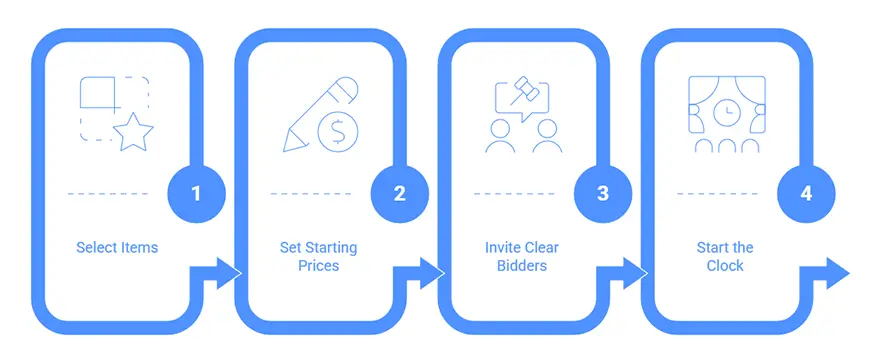
Setting up these events takes clear focus and good software. If you miss a step, you lose money. Here is a simple path to follow.
Pick the Right Items: Do not put highly complex services here. Pick basic materials or bulk goods. High volume items work best. You need active competition to drive prices downward.
Set Starting Prices and Drops: The starting price must be high enough to catch attention but realistic. Set time intervals carefully. Price drops every five minutes keep excitement high. Speed keeps buyers glued to their screens.
Invite Clear Bidders: Tell everyone the exact rules. Explain how the clock works. Make sure they test their software login before the real event starts. Good communication prevents angry phone calls later.
Start the Clock: Watch the data roll in. Good software shows you exactly who logs in and who watches the price. Let the system run its course.
Do not pause the clock unless an emergency happens. The first bidder to click the accept button ends the event. Award the contract quickly to keep momentum going.
Why Good Software is Crucial for Success
Going digital is a must for companies to stay competitive today. Modern supply chains need total open views.
Leaving Old Tools Behind
Manual tracking hides bad data. Spreadsheets lose money every week. Long email chains delay important choices.
Companies using old tools lose their edge daily. Smart tools separate market winners from market losers.
Multiplying Your Speed
Enterprise software puts sourcing, approvals, and vendor details in one neat place. Live dashboards replace boring weekly reports.
Smart workflows force rule checking silently. Running a dutch auction inside digital tools multiplies your speed.
Software tracks bidder clicks instantly. Smart math picks perfect price drop times based on past data. Tracking logs record every single mouse click forever. Following industry rules happens naturally while you work.
Ensuring Total Exactness
Trying to run falling price events on paper ensures massive failure. Clocks need total exactness.
Bid capture tools must work perfectly when many people click at once. Security steps must block unwanted guests.
Only dedicated platforms give you this safety. Buying proper digital tools brings huge money back to your company. Money saved pays for software costs very fast. The finance team will approve this logic easily.
How Beyond Intranet Drives Your Success
Beyond Intranet builds tools exactly for these high pressure needs. Our tools let companies pick exactly what features they need today.
Smooth Workflows and Security
Managing requests, handling suppliers, and running live bids fit together smoothly. Built right on Microsoft SharePoint, your company data stays highly secure.
Following strict global rules keeps you safe. Our software acts as a massive speed boost for your purchasing teams. Your teams run hard sourcing plans with zero stress.
Focusing Purely on Better Deals
We make things simpler. You log in, set your starting prices, and let our engine do the heavy lifting.
You can track every supplier move on simple screens. You get real alerts when prices hit your targets.
We remove all confusing steps so you focus purely on getting better deals. We give you a pure peer to peer enterprise tool that just works.
Guaranteed Fair Competition
Learning about dutch auction software from Beyond Intranet shows you how simple saving money gets. We do not use confusing terms.
We give you a clear dashboard, a ticking clock, and guaranteed fair competition. You invite your vendors, and our system handles the entire bidding war.
Once the event ends, all reports generate automatically. You take those reports straight to your leadership team to show massive savings.
Hosting fast, downward price events on a secure digital tool protects your company margins perfectly.
Running falling price formats requires smart teamwork across your company. Procurement leaders must check category details deeply before starting.
Picking the Right Moments
Basic items with high vendor counts give best results every time. Unique, hard services need different tools.
Forcing wrong items into falling models burns cash. Small details matter a lot to your success.
Prep Work Decides Success
Good prep work completely decides your success. Market checks set perfect starting prices. Checking supplier quality early ensures only good vendors play.
Clear talks about rules build deep trust. Checking data after the event improves your next try. Always getting better drives pure procurement success. Data gathered today powers your future deals.
Saving Money Smoothly
Understanding exactly What is dutch auction gives companies a great way to spend capital wisely. Using these tools right takes focus.
Software handles the heavy lifting, but human smarts pick the right moments. Global companies using these tools beat inflation and supply chain delays smoothly.
They gain compelling control over their daily tasks. They lead their markets easily. Fresh thinking in procurement ensures lasting company success.