A practical, vendor-neutral guide for CIOs, IT directors, and digital workplace leaders evaluating SharePoint consulting partners in Australia — including a comparison...
The first few weeks of any new hire in your organization are the most important ones. It is the first time they are getting introduced to their role in your enterprise, the long-term and short-term goals of your business, compliance, and most importantly, the culture of your organization. And someone who can truly guide them through this journey is a manager.
Modern organizations see a manager as a mentor, a cultural torchbearer, and a performance enabler. And yet, in many organizations, their role is reduced to something administrative. Their first interaction is buried under spreadsheets, email reminders, access requests, and repetitive orientation tasks. Thus, building relationships is replaced by IT tickets, coaching is replaced with piles of paperwork and PowerPoint presentations, and the enthusiasm of new hires goes down the drain. Apart from that, it is also an administrative overload on your managers and HR teams, and the overall business outcomes take a hit.
No organization wants its first impression to be bad in front of its new hires. And hence, it has been a constant decision for CIOs, IT leaders, and HR decision-makers – how do you reduce onboarding friction without reducing manager involvement? The answer lies in technology.
Modern HR onboarding software helps you automate routine processes while elevating the human elements. It helps you drive employee retention, increases productivity from week 1, speeds up the onboarding process, and improves performance.
The Hidden Cost of Manual Onboarding
Managers can be more than just an administrative head when integrating a new hire into an organization. They are the most in touch with the new hire, they set the expectation bar for the new hire, and they introduce the roles and responsibilities to the new hire. And that has to happen in the first 90 days of joining. However, these crucial months are lost in follow-ups and coordination due to the traditional onboarding environment.
A traditional onboarding environment hampers communication. It is an opaque system that is loaded with tedious repetitive work and adds very little value to your operations. As an organization, it is also putting itself at many compliance and security risks. Here is how, as an organization, using manual onboarding, you are losing time, money, and energy.
• Scheduling introductory meetings manually • Tracking document completion • Answering the same policy and process questions repeatedly • Following up on tasks across HR, IT, and department stakeholders
These administrative tasks are necessary – no denying that, but do they generate high value? If you ask organizations like McKinsey & Company and LinkedIn, they emphasize the manager’s role in keeping a new hire engaged, enabling productivity, and employee retention. However, traditional onboarding processes lead to keeping managers busy with administrative work.
Things such as frequent one-on-one interactions, structured coaching, and early alignment on expectations significantly improve employee experience. Yet ironically, outdated onboarding processes reduce the time managers have for precisely these high-impact interactions.
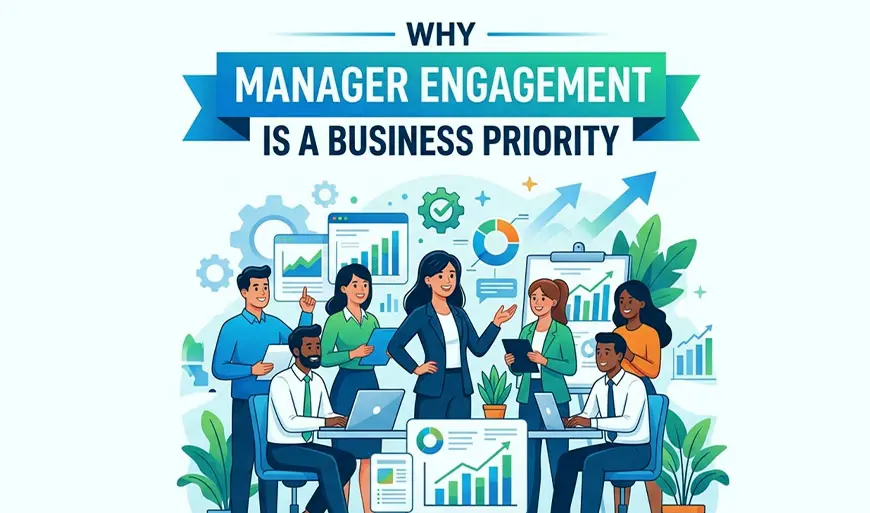
Why Manager Engagement Is a Business Priority
Bringing higher involvement of managers in employee onboarding brings in the human element into your onboarding experience. You make the onboarding experience more about people than processes, and your business outcomes improve significantly.
Here are a few factors that prove manager engagement in a new hire’s journey with your organization should be a business priority.
Faster Productivity Ramp-Up
Managers help give clarity to a new hire. When you join an organization, there is confusion in your mind about the expectations of the organization towards hiring you. The faster a new hire gains that clarity, the sooner they contribute. Thus, interaction between a manager and a new hire can help coach them rather than just having an exchange of operational tasks.
Stronger Employee Engagement
Communicating organizational expectations and having a strong and consistent feedback system can keep an employee engaged. It creates a feeling of belonging and care in an employee. It helps a new hire connect with your organization on a deeper level, and it creates a sense of safety.
Higher Retention Rates
You are investing money in hiring good add-ons to your organization; meanwhile, having a poor onboarding experience can put them off, and they might start having second thoughts about your organization. Thus, building a stronger employee-manager relationship is important. They are more engaged towards the larger goals of your organization, which can translate into higher retention rates.
Improved Team Performance
When onboarding is structured and guided – not just about paperwork, teams experience fewer disruptions and are more ready to collaborate with the new hire.
How HR Onboarding Software Removes the Administrative Burden
Modern human resources onboarding software helps you automate processes and replace fragmented workflows with a structured journey. Let’s see how modern HR onboarding software can help an organization.
Automated Task Management
The software system pre-configures the workflows and assigns tasks to HR, IT managers, and new hires automatically. No follow-up emails, no spreadsheets for tracking. The software does it all for you.
Intelligent Notifications and Reminders
When we say no follow-up emails, we mean it. Stakeholders are sent automated alerts when actions are required. The system ensures that no compliance clause is missed.
Centralized Document Management
Policies, compliance forms, and training material are centrally managed within the database. The welcome kit is delivered through a unified digital workspace.
Standardized Communication Flows
Standardized communication flow is maintained. You don’t have to manually send welcome messages, orientation schedule, and training links. It is shared automatically, not requiring any human intervention. Thus, reducing the manager’s effort.
Progress Tracking Dashboards
The progress tracking dashboard gives you real-time updates. You can easily track at which stage the new hire stands currently and allow them time to complete their onboarding journey at the right pace. You can also make engagement milestones and see if there are any urgent pending tasks.
These were a few factors that show how an integrated employee onboarding platform that reduces operational friction across departments.
Making Collaboration Visible with an HR Directory
There is no one team involved in onboarding. Several people are involved in welcoming a new hire. HR business partners that guide compliance. IT teams provide access to systems, software, and tools. Office buddies that help in social integration. Mentors who support the career growth and alignment.
However, in many organizations, identifying these stakeholders, assigning them duties, and expecting collaboration between them to bring a new hire on board is done manually. And when we say manually, imagine fragmented processes, a lack of communication, and low transparency in operations. This delays the onboarding and training process.
An integrated HR Directory solves this challenge by making every contributor visible and accessible within onboarding workflows. Managers can instantly identify:
• Assigned IT support contacts • HR business partners • Reporting structures • Buddies and mentors • Cross-functional collaborators
This visibility enables faster coordination and removes the dependency on email chains and informal communication. By embedding stakeholder access within onboarding journeys, employee onboarding tools help managers build collaborative ecosystems around each new hire without administrative effort.
How Beyond Intranet Enables Manager-Led Onboarding Excellence
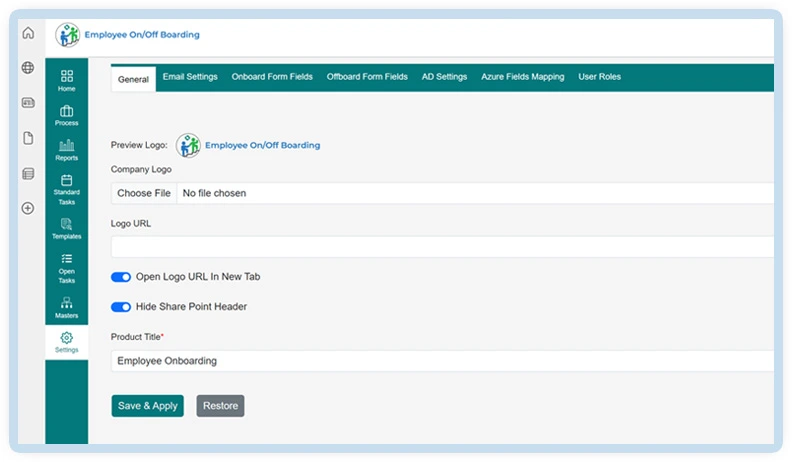
If you are looking for a feature-rich HR onboarding software, BeyondKey Intranet is your solution. It is designed to reduce managerial workload, making onboarding people-centric and process-driven. It seamlessly connects to the Microsoft 365 environment and allows enterprises to deploy unique onboarding journeys that are well-structured. It does not add to any complications in the existing systems, but rather elevates your capabilities as a user.
Here is how we create an employee-centric, manager-led onboarding experience.
Manager Dashboards for Clear Oversight
Managers can get real-time updates through a centralized dashboard to see onboarding progress, pending approvals, engagement milestones, etc.
Smart Prompts for Meaningful Interactions
Get automated reminders and prompts to schedule first-week check-ins, 30-day reviews, and feedback sessions.
Ready-to-Use Touchpoint Templates
There are certain interactions that do not require a manager to do the manual work. We give a pre-built conversation guide, feedback forms, and coaching frameworks in the database that can be used directly by the managers. It allows them to conduct more effective, auditable, and comprehensive one-on-ones with new hires, without having to prepare everything manually.
Automated Workflows Across Departments
Coordination gaps, as indicated earlier in this blog, can lead to unnecessary delays in the onboarding journey. You want quick integration that is also effective, and that can only happen when all the cogs of the machine are working right. Thus, HR teams, the IT department, and business managers can operate within a synchronized onboarding journey through seamless and automated workflows that eliminate coordination gaps.
Built-In HR Directory Integration
The built-in HR directory helps managers see the available onboarding stakeholders in one centralized dashboard. It helps them connect with them and coordinate for collaborative efforts required in successful onboarding.
Learn More About Beyond Intranet’s Manager-led Onboarding Software Here!
Investing in advanced onboarding tools is not just an HR upgrade. It is a measurable business strategy.
Increased Manager Capacity
Automation helps you take the workload off your employees. You get to automate all the repetitive, time-consuming tasks and free your managers to focus on things that truly matter, like coaching, team alignment, and performance development.
Higher Coaching Quality
It provides templates and prompts that help create a well-structured workflow that remains consistent and flows naturally into the next step.
Improved Employee Engagement
Improving employee engagement is important as a motivated and engaged employee is easy to retain. Reports show that the first 90 days are an important matrix for an employee to decide whether they want to continue their journey with any organization. When you provide them with a guided experience and provide a responsive onboarding journey to foster belonging and trust.
Reduced Operational Friction
Integrated systems prevent delays, miscommunication, and duplicated effort across HR, IT, and business functions.
When multiplied across departments and hiring cycles, these efficiency gains translate into significant cost savings and stronger workforce performance.
Strategic Advantage for CIOs and HR Leaders
Here is how HR onboarding software helps different stakeholders in an organization.
Stakeholders
Value Creation
CIOs & IT Leaders
Governance, security alignment, and workflow consistency within 365 environment
HR Leaders & CHROs
Employee experience, personalized training, operational control
Managers
Reduction in administrative tasks
Organizations
Competitive advantage, Talent retention, brand value
The Future of Onboarding Is Human-Centred and Technology-Enabled
Onboarding should not feel like a task. It is the very first experience of your new hire with your organization and speaks volumes in terms of how valuable you think your employees are to your brand.
Leveraging the power of HR onboarding tools, you can make it happen. Modern technology tools can eliminate manual inefficiencies while empowering managers to focus on what technology cannot replace – the human touch. It helps you add empathy, coaching, and connection between team players. That leads to stronger leadership impact and better business performance. The result is not just smoother onboarding, but stronger leadership impact and better business performance.