Summary: Modern buying needs exact financial tracking. This key metric shows the total money required to get an asset ready for use. Mastering this number helps teams choose better suppliers, lower supply risks, and turn purchasing into a real value driver for the business.
Introduction
Modern buying demands exact financial tracking. Today, about a third of global business leaders rank cost control as their top priority. Acquisition cost is the total money required to get an asset ready. Mastering this metric helps teams choose reliable suppliers and turn purchasing into a profit driver.
What Is Acquisition Cost?
Defining the Core Metric
Finding a clear acquisition cost meaning requires looking past simple vendor invoices. This financial term describes the total amount of money a business spends to buy physical assets, goods, or services and get them ready to use.
Key Expenses Included
This complete amount includes the base purchase price, shipping charges, and setup fees. It also covers taxes, customs duties, and the internal admin costs needed to finish the deal entirely.
Separating from Unit Pricing
To fully grasp what is acquisition cost, your team must separate it from basic unit pricing. Unit pricing only shows what the vendor wants to charge you for the item itself, leaving out hidden fees.
Tracking the True Drain
The cost of acquisition covers the complete drain on your company resources. It tells you exactly how much money left your bank account to make that asset work for your business.
Spotting Long Term Value
Buying departments use this number as a reliable warning sign for long term value and supplier risk. Utilizing the best procurement software solutions ensures this figure is never just a static number written on a purchase order.
Stopping Budget Leaks
Accurate tracking of this expense stops budgets from running dry. When you know what is acquisition cost, you stop money from leaking out across different company departments over the year.
Reacting to Global Changes
Understanding this total financial commitment (the acquisition cost meaning) also means paying attention to global changes. Supply chain delays force companies to stop playing defense and start playing offense with their profit margins.
Types of Procurement Spend
Different kinds of company spending need specific tracking methods. Knowing what is acquisition cost across different groups of items ensures your finance team does not miss anything. Below is a clear breakdown of common buying types and their specific details.
Type
Definition
Example Breakdown
Asset Spend
The total money spent to buy, ship, and set up heavy machinery or physical buildings.
Buying a factory cutting machine. It includes a $50,000 base price, $2,000 for shipping, $1,500 for installation, and $500 for safety checks.
Goods / Inventory Spend
The cash used to secure raw materials or finished products that your company plans to sell or use in manufacturing.
Sourcing bulk steel. It includes the base material price, import taxes, fees to store it at the port, and the cost of trucking it to your warehouse.
Services Spend
The total spend needed to hire outside professional services, consulting firms, or contract workers.
Hiring an outside IT security team. It includes their monthly retainer fee, hourly billing for extra work, software licenses they need, and the admin time spent onboarding them.
Software and Licence Spend
The first financial payout to get digital tools, company wide platforms, and user seats.
Rolling out a new HR system. It includes the base software fees, setup consulting, server upgrades, and the hours employees spend learning the new tool.
Spotting Extra Spending
Looking closely at the cost of acquisition for each category helps teams spot where they are spending too much. Operations directors can then use this data to negotiate better deals with specific groups of suppliers.
Department Level Clarity
This clear view is absolutely necessary for figuring out the total expense at a specific department level. It ensures every manager knows exactly where their budget goes each quarter.
Stop overpaying by forcing suppliers to compete for your business in a clear, standard format.
Tracking the total capital outlay across these different areas also helps you see which costs are stubborn. Some costs go up very fast when your business grows, but they drop very slowly when business slows down.
Understanding Sourcing Basics
Properly sorting out this metric requires a strong grasp of what is sourcing and basic vendor selection. This knowledge helps leadership teams keep their options open when the market gets tough.
How to Calculate Total Expense
Using Simple but Strict Math
Figuring out exactly what is the acquisition cost requires simple but strict math. The calculation must include every direct expense tied to the buying process and all indirect fees like setup.
Including All Hidden Fees
You must also include shipping, delivery, and non-recoverable taxes. Accurately finding the cost of acquisition gives everyone in the company the truth about where the money is going.
Total Expense = (Purchase Price + Delivery + Installation + Taxes + Admin Fees) / Number of Assets Acquired
A Fleet Buying Example
Let us look at a shipping company buying a fleet of new delivery vans. The base price from the dealer for 10 vans is $400,000. The delivery charge to get them to the main lot is $5,000.
Adding Up the Extra Fees
Adding the company logos and GPS trackers costs $15,000. State taxes and vehicle registration fees total $20,000. Finally, the internal paperwork and legal checks add another $1,000 in admin time.
Applying the Math
To find out what is the acquisition cost per vehicle, we use the simple formula. We add up all the total expenses. That is $400,000 plus $5,000 plus $15,000 plus $20,000 plus $1,000.
Finding the True Cost
The grand total equals $441,000. Next, we divide this big number by the total number of assets we bought, which is 10. The true, final expense for each van equals $44,100.
Following a Standard Guide
Using a standard bid management guide shows exactly why asking for the full total gives you a totally different answer than just reading the sticker price.
Setting a Universal Rule
Finance teams must make this cost of acquisition formula the standard rule for all buying activities. Setting up one universal way to calculate these numbers makes sure you can fairly compare different supplier offers.
The Role of This Metric in Procurement
Going Beyond Basic Bookkeeping
The value of this number goes far beyond basic bookkeeping. In modern supply chains, calculating the complete final expense drives how companies choose their partners.
Grading Vendor Performance
Using professional procurement management software helps buying leaders use this exact data to grade how well vendors perform. This clear tracking directly improves how the company spends its available cash.
Total Cost of Ownership Differences
Companies must understand the difference between the first purchase expenses and the Total Cost of Ownership. While the initial spend focuses on the money needed to get an asset ready to use today, Total Cost of Ownership covers a wider span.
Looking at Lifecycle Economics
It looks at the entire lifecycle economics from the first day to the day you throw it away. A heavy machine might have a very low initial price tag, but it could cost a fortune to repair every month.
Regional Influences on Procurement Spend
Trade Rules and Tariffs
Global events greatly change what is acquisition cost for large companies. In the United States, buying strategies face constant pressure from new trade rules and tariffs.
Playing It Safe at Home
Right now, many US factories expect input costs to rise because of changing tax rules at the border. Because of this, US companies are buying from suppliers closer to home to keep their capital outlay stable.
Canadian Buying Rules
Canadian buying teams deal with their own set of rules. Government policies that favor local businesses change how companies calculate the final purchasing expense.
Comparing Vendor Proposals
Using bid management software helps buyers weigh the local benefit against the higher project costs to make the right choice when local vendors charge higher base prices.
Green Energy Rules in Europe
In European markets, green energy rules and social guidelines heavily shape the acquisition cost meaning. European companies must include sustainability scores into their buying choices to follow strict new laws.
Counting Carbon Taxes
Tracking the true cost of acquisition in Europe today means you have to count carbon taxes. You must also include the premium prices charged by eco friendly suppliers into your final budget.
Find reliable vendors faster and remove manual tasks from your daily buying routine with ease.
Buying teams track all these important numbers using clear, powerful tools like esourcing software. These digital platforms give managers a real time look at what each department is spending and how much profit the suppliers are making.
Enforcing Strict Buying Rules
Keeping all this data in one place helps companies spot wasted money quickly. It allows leaders to enforce strict buying rules across the whole business without slowing down daily work.
Tracking Spend Under Management
A very important target for operations directors is called Spend Under Management. This metric tracks how much of the company’s total spending actually follows the official buying rules.
Lowering Department Costs
When you increase the amount of spend that follows the rules, you directly help in lowering the overall cost of running the purchasing department. This metric shows how disciplined your teams really are.
Stopping Low Quality Purchases
Looking closely at the complete expense makes sure teams do not buy low quality items just to save a few dollars today. This clear, data driven thinking separates simple order taking from true strategic buying.
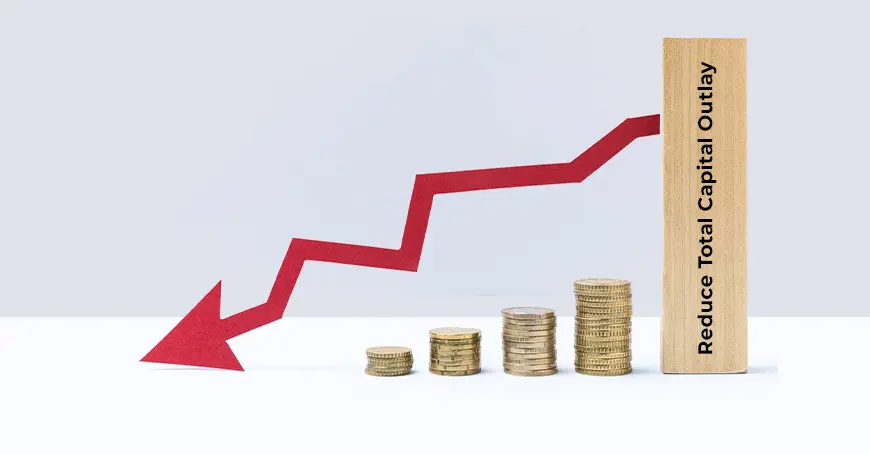
How to Reduce Total Capital Outlay
Lowering the financial weight of buying requires a clear plan and steady action. Companies cannot just call vendors and demand cheaper prices. Permanently lowering your procurement spend requires better daily habits, smart software tools, and building actual partnerships with your best suppliers.
Improve Supplier Selection
Cutting down your overall corporate spend starts with grading your vendors strictly. Companies must rate suppliers based on:
How often they deliver on time.
How close their warehouses are to your sites.
If they can easily handle large, sudden orders.
Moving your business to a smaller group of top performing vendors often unlocks bulk discounts. It also cuts down the admin hours your team spends managing too many different contracts.
Compare vendor offers side by side to ensure you always pick the best contract terms.
Handling paperwork by hand drives up final project numbers because of slow work and human mistakes. Moving to reliable procurement management software removes boring, repetitive admin tasks from your team’s plate.
Speeding Up the Process
Automation speeds up making purchase orders, checking invoices, and signing contracts. This simple change drastically cuts down your internal operating expenses over time.
Use Smart Data and Analytics
Predicting Material Needs
Using clear data changes how teams control the final capital outlay. Smart analytics help predict exactly what materials you will need and find the fastest shipping routes available.
Avoiding Panic Buys
By seeing supply chain traffic jams before they happen, companies avoid paying huge rush shipping fees. Avoiding these panic buys keeps the total budget stable and predictable for everyone.
Start Category Management
Grouping Purchases Smartly
Grouping your purchases smartly leads to massive drops in your corporate spend. This means putting similar products into buckets and building a specific buying plan for each bucket.
Gaining More Buying Power
Combining orders from different company branches gives you more buying power. Also, forcing everyone to buy the same standard items stops people from paying extra for fancy features they do not need.
Negotiate Total Cost, Not Just Unit Price
Looking Past the Price Tag
Great negotiators focus on the complete acquisition cost meaning, not just the single number on the price tag. Using the best procurement software solutions helps buyers learn how to build better contracts.
Securing Better Terms
These contracts should include longer payment times, free extended warranties, and cheaper shipping rates. This complete approach creates real, measurable savings for the company.
Common Procurement Mistakes to Avoid
Preventing Financial Mistakes
Getting confused about what is acquisition cost leads to terrible financial mistakes. Many companies wonder why their big projects lose money month after month.
Fixing Basic Math Errors
The answer is usually because they made basic math errors during the buying phase. Staying away from these common traps ensures your budgets stay accurate and your profit margins stay healthy.
Hidden Costs Not Included
Ignoring Shipping and Taxes
The most common mistake happens when teams only count the base purchase price. Leaving out shipping, installation, import taxes, and internal processing time artificially shrinks the perceived total expense.
Draining Cash Reserves
This mistake drains your cash reserves when the real invoices finally show up. You will suddenly find you need more money to finish the project than you originally planned.
No Baseline or Benchmarking
Tracking Past Payments
If you do not track what you paid last year, you cannot judge current offers at all. Reading a solid bid management guide shows how important comparing current prices to past orders truly is.
Stopping Slow Price Hikes
Regularly checking your total spend stops vendors from slowly raising prices on you year after year without you noticing. This habit keeps your supplier relationships honest.
Confusing Short Term Price with Long Term Cost
The Risk of the Cheapest Option
Caring only about the immediate price instead of the long term total cost is a massive failure. Picking the cheapest option today usually leads to huge repair bills and replacing the asset way too early.
Weighing Lifespan and Reliability
Buying leaders must always weigh the initial capital outlay against how long the item will actually last. You must consider how reliable it will be in the field over its entire life.
The Danger of Working in Silos
Another trap is working in silos. If the buying team does not talk to the finance team, the company fails. The buyers might think they secured a great price on their end.
Stopping Unexpected Fees
But the finance team then gets hit with unexpected banking fees for international wires. Open communication between departments easily stops these expensive, hidden surprises.
Conclusion
Lowering your total corporate spend guarantees a stable business. By calculating the true cost, you stop hidden fees from draining your budget. Leaders who master this financial tracking secure better contracts, build stronger supply chains, and win a lasting advantage in a competitive market.
The acquisition cost meaning is simply the total cash a business spends to buy an item and get it completely ready to use. For example, if you buy office computers, it includes the price of the computers plus the shipping, the taxes, and the fee for the IT staff to set them up.
The cost of acquisition is only the upfront money required to obtain an asset today. Total cost of ownership, however, includes all the bills that come later, like monthly maintenance, electricity, user training, and the cost to throw it away eventually.
To find out what is the acquisition cost, you add the purchase price, delivery fees, setup charges, taxes, and any admin costs together. Then, you divide that total by the number of items you bought. This ensures all extra expenses are counted properly.
When you ask what is acquisition cost, you must include the base price, freight charges, installation labor, unrecoverable taxes, and border duties. It also covers legal fees to review the contract and internal admin processing time.
Purchase price is just the single number quoted by the vendor for the item itself, nothing else. The final, actual expense is the true landed cost that adds all the shipping, legal, and setup fees needed to actually use the item.
Understanding exactly the full financial commitment helps buying teams make correct choices and compare supplier offers fairly. It brings hidden shipping or admin fees into the light so they do not eat up the budget later.