
What Is Preboarding? Meaning, Process & Benefits of Pre-Onboarding
By beyondintranet / April 8, 2026
Introduction Preboarding is no longer a formality and an administrative task. It is the need of the hour, and if...
Read More


Preboarding is no longer a formality and an administrative task. It is the need of the hour, and if you do it just right, you can retain some of the most talented people out there.
You see, when a candidate has accepted your job offer, there is a teeny chance that they are still weighing other options. If you want to be the first choice of a potential candidate, it is going to take more than a good salary and employee benefits to hold them. You need to keep them engaged right from the moment they say YES to the moment they join the organization. Hence, pre-boarding.
This helps you build stronger and long-term employee-organization relationships. This makes them more certain about their choice and stops the second-guessing. This is precisely why you need structured preboarding.
If you’re wondering what preboarding is and how to design a workflow that makes your candidate feel comfortable when joining your organization, you’ve come to the right blog. It begins with understanding that onboarding starts much earlier than day 1.
For many organizations, it is not new for a candidate to refuse to join after accepting a job offer. Meaning, he has found a better offer. But if you, as global HR leaders, indicate that a lack of engagement with the candidate during the preboarding phase is the real culprit.
At its core, preboarding is the phase during which all activities occur after a candidate has accepted a job offer but has not yet officially started with the organization.
It is a process of preparing and engaging new hires before they officially join the organization. And that requires going beyond just doing the administrative tasks.
As much as it is important to have a preboarding workflow, it is equally important to make it structured. The transition from a candidate to an employee has to be seamless. Hence, you must try to:
Unlike traditional onboarding, modern preboarding begins way before the first day. It is people-centric and built on emotional connection. It ensures that when a candidate walks through the doors of your office on their first day, they leave happy and satisfied, and gradually transition into a loyal employee.
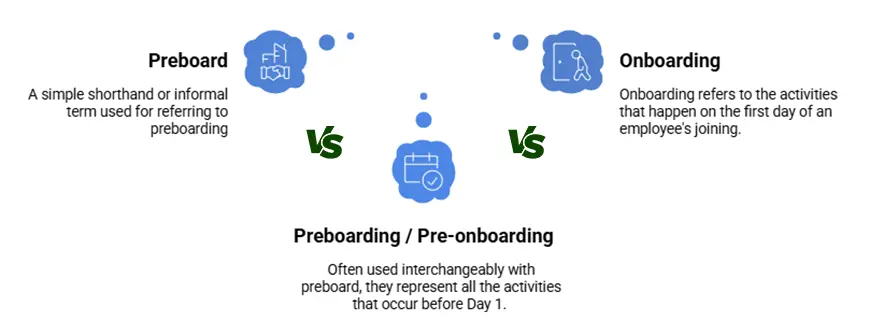
Often used interchangeably, these are three different terms. Before we proceed with the discussion, here is some clarity:
A simple shorthand or informal term used for referring to preboarding
Often used interchangeably with preboard, they represent all the activities that occur before Day 1.
Onboarding refers to the activities that happen on the first day of an employee’s joining.
The key difference between preboard/preboarding/pre-onboarding and onboarding lies in the timing and intent. While onboarding is about helping employees on their first day, pre-onboarding is about preparing them before they join to succeed.
To understand how onboarding continues this journey, explore the benefits of employee onboarding here: How to Enhance New Employee Onboarding Experiences?

It is important to realize that organizations compete not just for talent but also for brand reputation and employee commitment. The days between offer acceptance and the joining day are the period when you can engage your new hire and make them an integral part of your organization. This is why preboarding plays a crucial role.
Good candidates have multiple offers coming their way, and they are most likely to compare your organization with others based on culture, engagement, hand-holding, etc. If your organization is experiencing more drop-offs, it is likely that they don’t feel engaged and may lose interest, leading them to accept another role. A strong preboarding strategy can help you keep them assured, connected, and engaged with your organization.
Making a first impression should not be delayed till day 1. A well-structured pre-onboarding experience can serve that purpose. It helps you show professionalism, care, and value to the new hire.
A new hire may be weighing other options while accepting your job offer. The reason behind this confusion is that they don’t actually know what to expect at the new organization. Changing the organization is already a big transition for them. The culture changes, and employees do not know what their employer expects from them, while they also have new processes to comply with. You can end their apprehensions through a structured preboarding experience.
When employees feel valued even before joining, it shows an organization’s strong intent to onboard them. This helps them stay committed and engaged with your organization.
One of the best benefits of having a preboarding workflow is that it helps you brief and train employees faster. It also handles many administrative tasks and introduces employees to the culture well before they start their day at the organization.
A well-designed pre-onboarding strategy delivers tangible benefits for both organizations and employees.
When employees feel prepared and informed, they are more likely to succeed and stay engaged.
Manual preboarding processes can be inconsistent and time-consuming. This is where technology becomes essential.
Modern pre-onboarding platforms help organizations:
Instead of relying on emails and spreadsheets, HR teams can create a seamless and structured experience.
If you’re looking to streamline your process, explore the employee onboarding/offboarding solution.
Automation plays a key role in scaling preboarding efforts. Learn more about onboarding automation here.

To maximize the success of your preboarding activities, organizations must have a strong strategy. Here are a few practices that ensure preboarding success:
The best way to ensure your preboarding strategy succeeds is to start immediately after the offer is accepted. Delays may lead to disengagement and indicate low interest or intent by the organization in hiring a high-value candidate. The delay also leaves room for other organizations to swoop in and steal your candidate.
Some of the candidates may not have a 2-week notice. This may lead to long gaps in communication. Therefore, consistency in communication is very important. Do not allow them to become disengaged during this period.
Now, the biggest question is, aside from compliance and administrative tasks, what will you discuss with the new hire? Videos of work life at your organization, a virtual tour of the office, introductions to teammates, FAQs, and welcome messages make the experience more dynamic. Encourage them to ask any questions they have about their work at your organization as well.
People often assume that a manager’s role in onboarding is primarily administrative. But they can play a big role in preboarding. Consider this—they are the ones who will have the most contact with the new hire. They are the ones setting expectations for the new hire. Thus, allow them to have a stronger bond before the actual joining date.
When it comes to strategies, pre-boarding strategies are no different than business strategies. It requires dedication and intent for constant improvement. Take feedback from new hires and stakeholders involved to refine the preboarding process for success.
Understanding preboarding is only the start of developing a suitable workflow for your organization. There are organizations that understand preboarding but struggle to implement it successfully. Here are some common challenges that come with preboarding.
A poorly structured preboarding experience is unhelpful. You need to have defined processes for the preboarding journey.
Solution: Define activities that go in the preboarding bucket. Set standardized processes and timelines for impending activities. Maintain a digital checklist to track progress.
If you are handling preboarding activities manually, there will be many repetitive tasks. And this adds to the workload of all the stakeholders involved.
Solution: Automate repetitive tasks with preboarding software.
A lack of coordination among stakeholders can lead to poor communication and disengagement.
Solution: Setting up a communication timeline can help you coordinate among different stakeholders.
A new hire’s primary motivation for joining an organization is career growth. It is not a job for them, but they actually wish to stay with your organization—if they feel valued and engaged. Mechanical messaging, such as sending typical emails and pushing for administrative tasks, is not going to keep them engaged.
Solution: Interactive messaging, introduction to organizational culture, and personalized messaging help an organization convey value to new hires.
The future of preboarding is crucial to discuss. The world is fast-moving, and creating meaningful experiences rather than just completing tasks is essential. As an organization, you must work on:
The question is no longer what is preboard, but how organizations can use it strategically to build stronger employee relationships.
Preboarding is an excellent tool for successful employee integration. It helps you prepare your employees before they join your organization. It helps you keep them engaged. It is reaping the benefits of day 1 success before day 1. Understanding the meaning of preboarding allows your organization to create a thoughtful, engaging, and structured experience for its new hire even before day 1.
Ready to enhance your onboarding experience?
Contact Us