What Is Preboarding? Meaning, Process & Benefits of Pre-Onboarding
By beyondintranet / April 8, 2026
Introduction Preboarding is no longer a formality and an administrative task. It is the need of the hour, and if...
Read More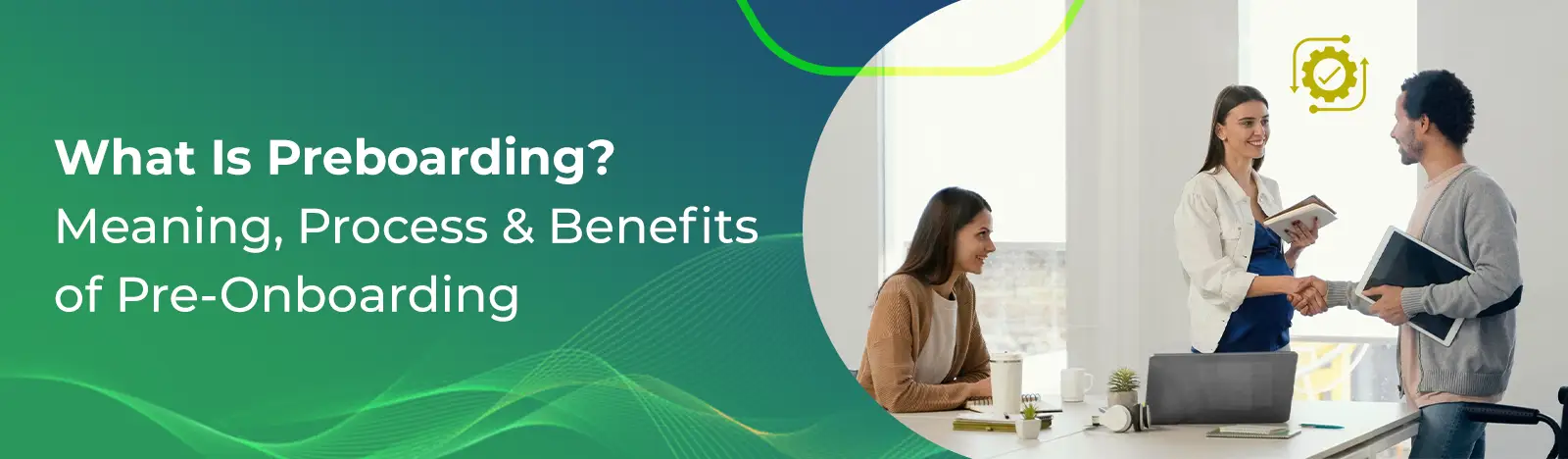

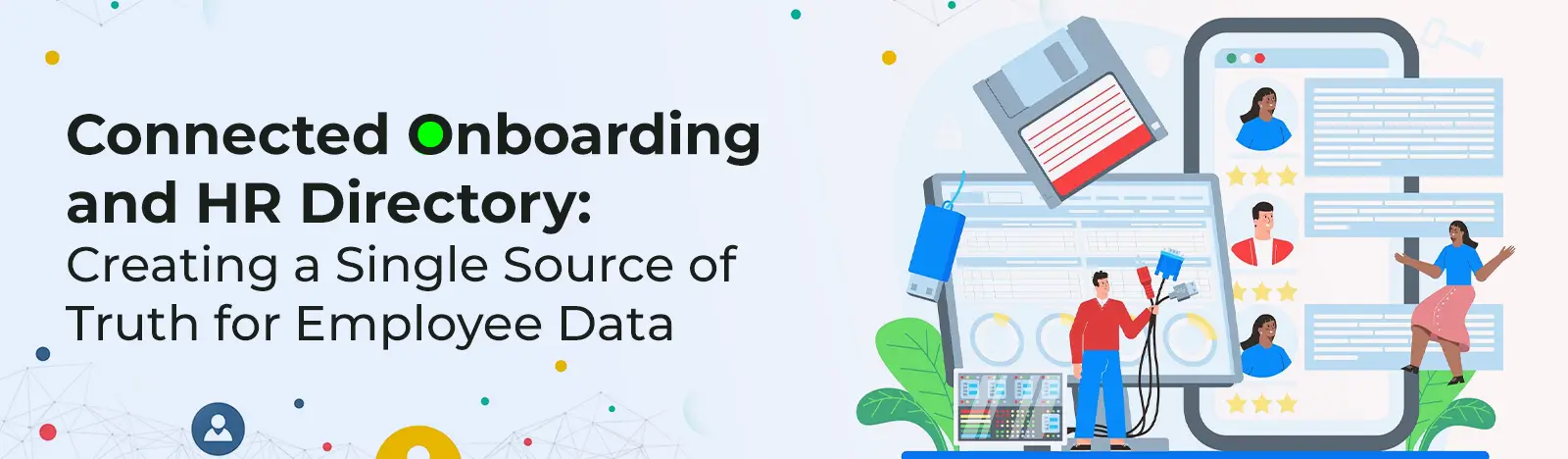
TL;DR: Hybrid work has permanently altered enterprise communication. It replaced natural office connections with an endless cycle of scattered digital messages. This silent crisis drains productivity and fuels burnout. Discover how a unified directory deployment restores visibility, aligns teams, and drives quantifiable business value.
Knowledge workers spend roughly 60 percent of their time in communication apps, interrupted constantly. Yet, despite this digital noise, hybrid teams are incredibly disconnected. Without robust employee directory software, organizations face a silent communication crisis. A unified HR directory is now vital infrastructure to restore visibility.
Vital casual interactions have been removed by moving to remote and hybrid work. Earlier deep trust and team-culture was built over water-cooler chats and quick problem-solving sessions. This sudden shift lowered efficiency for agile teams that used to work in the same room. They lost the frequent in-person contact needed to make fast and aligned decisions. Furthermore, remote staff are often sidelined in hybrid meetings, which stops smooth collaboration completely.
Instead of clear teamwork, we are seeing the rise of the infinite workday. The average employee receives about 117 emails and 153 Teams messages per day. Additionally, 57 percent of meetings are sudden calls without a prior calendar invite. This flood of disconnected messages creates a fake sense of collaboration. Underneath, it hides a serious breakdown in real teamwork.
When an organization lacks an intuitive employee directory app, workers spend hours blindly navigating complex digital systems. This constant searching drains focus and leads to severe daily fatigue.
That does not sound easy to fix. And no, it is not easy. A global survey notes that 68 percent of organizations have not provided a detailed vision for hybrid work. This lack of direction leaves employees anxious and disconnected. Employees who feel left out of clear company communication are almost three times more likely to report feeling burned out.
This friction creates a severe financial drain. The average knowledge worker spends nearly 20 percent of their workweek simply searching for internal information. This lost time costs a standard 1,000-person enterprise an average of 2.5 million dollars annually in unrecoverable payroll (Advanced modeling demonstrates that). The true cost of fragmented employee data is measured in lost time, lower employee well-being, and broken trust between departments.
But hey, we have 30 years of digital innovation behind us to solve this exact problem. Implementing a comprehensive SharePoint employee directory directly reduces this heavy mental burden. By grouping crucial employee details in one place, like specialized skills, real-time availability, and reporting structures, a company drastically cuts the time spent searching for internal help.
For instance, modern directories connect directly with Microsoft Teams. They provide smart filters and advanced search tools to remove data silos. This empowers staff to find anyone instantly, using features like presence tracking to enable clear communication without the friction of separate platforms.
Eliminate internal search delays and unify your hybrid workforce within Microsoft Teams today.
Get Employee Directory 365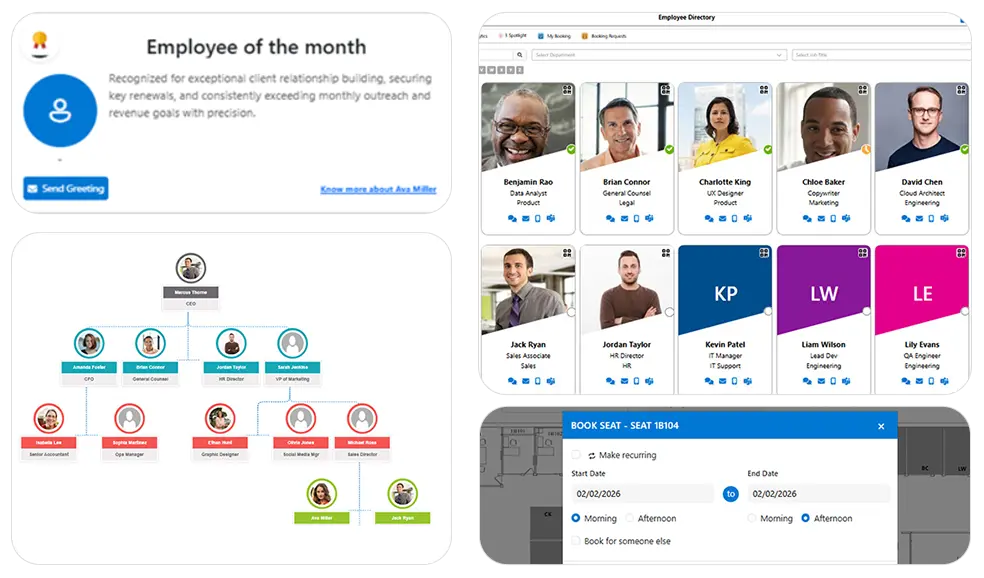
For IT Directors and business leaders, fixing this communication gap requires a solid system, not just another messaging tool. Centralized staff directory software acts as a single source of truth. It establishes a clear framework that lowers IT Help Desk tickets related to basic access and routine routing requests. Password resets and basic access queries account for 20 to 50 percent of all IT helpdesk volume.
Having participated in the miracle of the personal computer and the internet, I have a bias to believe innovation can do these things beautifully. However, the need for strong structural data is even greater with the rapid rise of artificial intelligence. Data indicates that 78 percent of AI users are bringing their own unmanaged AI tools to work. They do this because their companies lack clear technology plans. Over 50 percent of the applications used in the modern enterprise are now unsanctioned. A unified directory serves as the required data layer for secure enterprise AI use, ensuring access controls remain strict and data remains protected.
Regarding workspace design, experts state that hybrid environments must be built purposefully. Rather than treating remote work as a temporary fix, they should let employees thrive both professionally and personally. Deploying the best employee directory software supports this strategic goal by providing complete organizational clarity.
We have a generation that is speaking out on this topic, demanding better digital tools and clearer connections. To prove the real value of an employee directory application, leaders must establish and track specific team connectivity metrics. Standard productivity measurements are simply not enough in a hybrid model. Companies must actively measure their network health to ensure long-term success.
Companies with strong internal learning cultures see 57 percent higher retention and 23 percent more internal mobility. Furthermore, 70 percent of employees state that structured learning and clear onboarding improve their sense of connection to the company.
The desire for functional hybrid models is global. Data from India shows 74 percent of employees want flexible remote work options, while 73 percent also crave more in-person time with their teams. To monitor the health of hybrid teams effectively, HR Leaders should track the following metrics:
Tracking these data points ensures that the workforce remains engaged, visible, and capable of executing business goals without being blocked by structural confusion.
Deploy scalable digital architecture to accurately map and connect your enterprise human capital.
Contact Our Deployment SpecialistsThe scale of the hybrid work shift demands strong system support. Businesses can no longer afford the hidden costs of disconnected teams and invisible employees. By prioritizing a comprehensive directory solution, enterprises can transform a frustrated workforce into a unified, agile, and aligned team ready for the future of work.
Digitize your workplace with a modern, unified employee database. Book a Free Demo or Download a 7-Day Trial to experience seamless Microsoft Teams integration today.
Require a tailored deployment for your specific enterprise architecture? Contact us to speak directly with our deployment specialists and explore custom solutions.