What Is Preboarding? Meaning, Process & Benefits of Pre-Onboarding
By beyondintranet / April 8, 2026
Introduction Preboarding is no longer a formality and an administrative task. It is the need of the hour, and if...
Read More

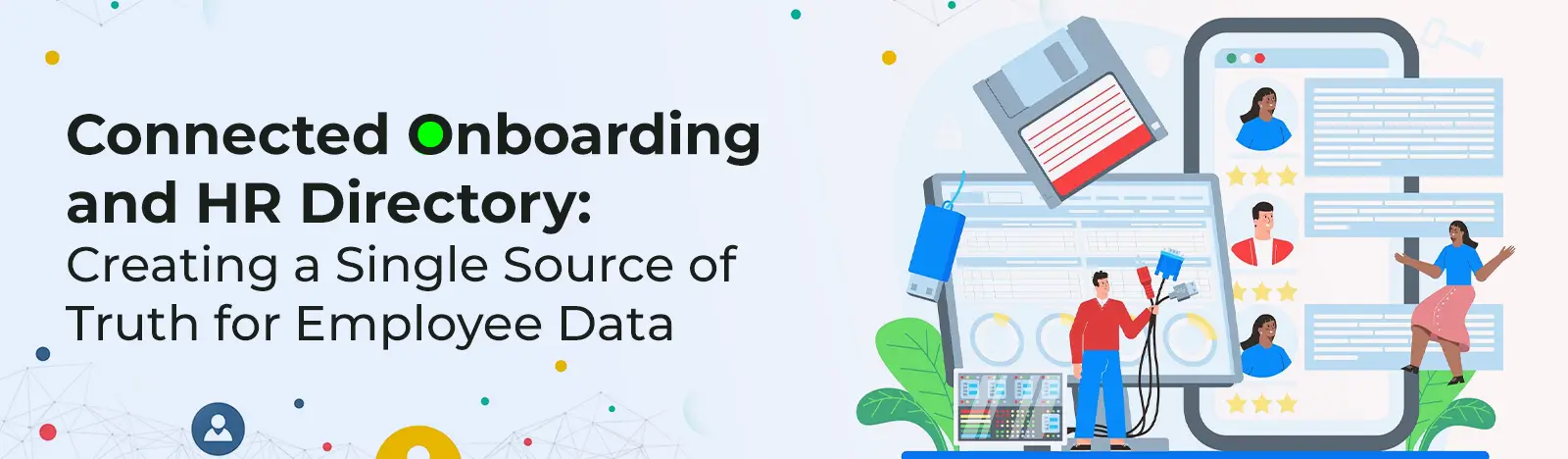

Determining who governs the Microsoft 365 HR/Employee directory is a critical operational decision. By implementing a shared governance model, where IT secures the platform and HR manages workforce data, enterprises can maximize data accuracy, boost adoption, and enhance digital workplace collaboration.
Implementing employee directory software in large enterprises often sparks a debate. Who controls the HR directory? IT prioritizes system security, while HR focuses on people. In a Microsoft 365 environment, resolving this tension requires looking past departmental silos to establish joint accountability and ensure seamless operations.

The modern workplace has fundamentally shifted, demanding more inter-departmental cooperation than ever before. McKinsey points out that core people’s data must be treated as business-owned master data with a clear operating model.
Look at Microsoft’s Work Trend Index. Microsoft 365 is essentially the system of record for digital collaboration. It processes trillions of productivity signals every single day. The data fueling this system has to be perfectly accurate.
If directory ownership remains ambiguous, your organization builds up digital debt. Employees get frustrated by fragmented data, making it impossible to find the right people when they need them. Search relevance drops entirely. Trust in the system erodes. Inevitably, security protocols get compromised because people start creating unauthorized workarounds. This is not just an administrative burden; it is a fundamental business risk that impacts the bottom line

IT leaders naturally advocate for centralized oversight. They are directly responsible for platform stability. They need to ensure strict identity alignment and secure integrations across the entire enterprise architecture.
To an IT director, the directory is an extension of Azure Active Directory. Centralized IT management makes perfect sense here. It guarantees system synchronization. It ensures rigid access permissions and keeps the company ready for audits and regulatory compliance.
However, treating the directory purely as a technical asset creates operational roadblocks. IT departments do not track daily workforce lifecycle changes. Because of this distance, profile data goes stale very quickly.
Relying exclusively on IT can impede critical workforce processes. Think about managing internal mobility or executing an organizational restructuring. You need absolute profile completeness, and IT alone cannot drive that narrative without HR.

HR leaders present a strong argument for control. They govern the employee lifecycle from hire to retire. Therefore, they naturally argue that they should govern the directory.
HR holds the deepest context. They understand the reporting structures and manage role transitions. They know exactly what data employees need to actually collaborate effectively. LinkedIn’s Workplace Learning Reports confirm that successful internal mobility relies on highly visible and accurate people data.
Exclusive HR ownership brings massive technical liabilities. Without rigorous IT involvement, your organization will face platform scalability issues.
You will encounter severe hurdles with identity management provisioning and network security. Typically, HR teams lack the technical infrastructure expertise required to troubleshoot complex integration issues within a global Microsoft 365 environment.

Gartner points out something crucial. No single function truly owns the digital workplace. It requires distributed decision rights. It demands trust-based governance and an accountability framework focused onactual business outcomes.
The best employee directory software acts as both a people management system and a technical platform capability. You cannot have one without the other.
The most successful operating model brings both sides together perfectly. You leverage Azure AD as your technical backbone. You establish HR as the definitive steward of people data and process logic.
At the same time, IT operates as the platform owner to handle uncompromised security and continuous uptime. This shared governance framework significantly cuts down the failure points seen in isolated setups.
The ownership model you choose dictates daily efficiency. Take a sharepoint employee directory, for instance.
When you have clear shared governance, you get incredible search relevance. Profiles become genuinely useful. Inside Microsoft Teams, this integrated approach means faster people discovery. It allows for much easier cross-functional routing for globally distributed teams.
In Outlook, proper governance means absolute trust in contact details. You stop relying on manual lists entirely. You abandon outdated communication sources.
When IT and HR collaborate, the employee directory stops being a static contact list. It transforms into an active engine for enterprise connectivity.
To make this work, enterprises need to formalize a governance council that clearly divides responsibilities.
When evaluating organizational readiness, keep a simple framework in mind. If your primary roadblock is integration and security, IT needs to lead platform technicalities. If stale people data is the issue, HR must drive data stewardship.
Executing this shared model requires a highly adaptable tool. You need an employee directory app that understands this balance. Beyond Intranet’s HR Directory 365 unifies employee information into one secure and user-friendly platform.
For IT directors, the technical foundation is flawless. Our SPFx version is built on modern SharePoint to ensure lightning-fast page loads. It boasts ISO 27001 certified security and GDPR compliance.
It features seamless SharePoint Azure AD Connect integration. Administrators can easily filter out guest users or deactivated accounts without any manual hassle.
For HR leaders, our staff directory software empowers your workforce with enriched profiles. You get an interactive Organization Chart flowchart with multiple viewing layouts.
We offer multilingual support to break down global language barriers. Furthermore, we include modern capabilities natively inside the employee directory application. Other tools offered by Beyond Intranet like Virtual Floor Maps and Desk Booking streamline workplace operations instantly.
You can achieve the perfect balance of technological robustness and human-centric design. Make your internal administration completely seamless.
Digitize your workplace with a modern solution that respects both IT and HR mandates. To explore comprehensive pricing tailored to your enterprise needs, check out our staff directory software.
Ownership of the employee directory should never be treated as a contested departmental asset. In a Microsoft 365 environment, your sustained success relies entirely on separating data stewardship from platform ownership.
When you establish a collaborative framework, HR and IT share clearly defined accountability. This is exactly how large organizations eliminate digital debt and unlock the full potential of their digital workplace.