
What Is Preboarding? Meaning, Process & Benefits of Pre-Onboarding
By beyondintranet / April 8, 2026
Introduction Preboarding is no longer a formality and an administrative task. It is the need of the hour, and if...
Read More



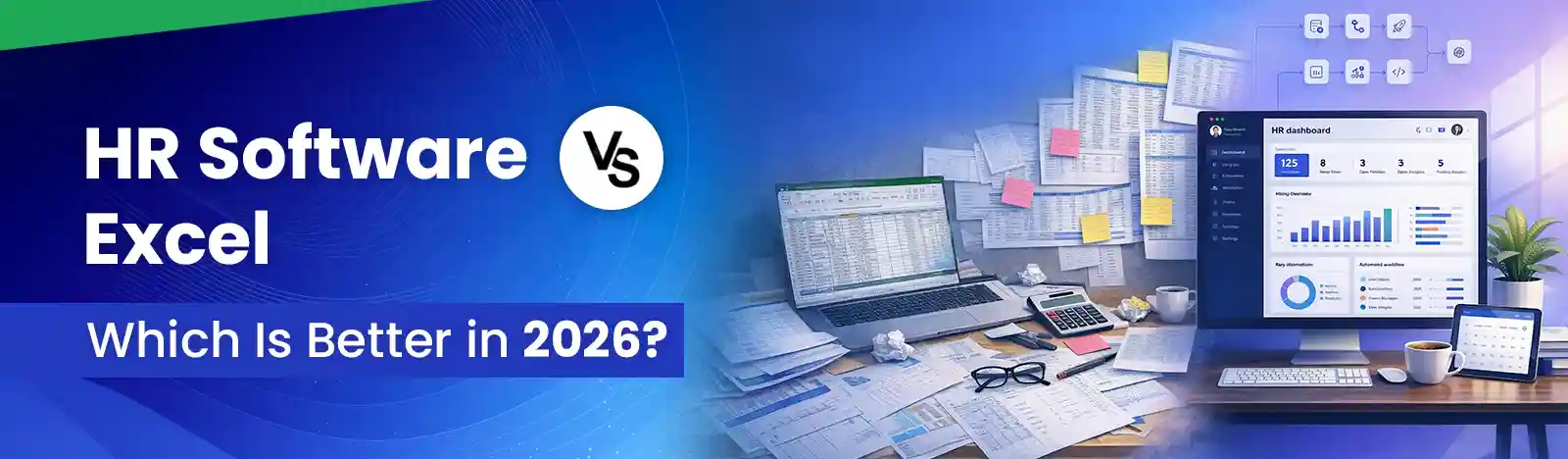
Spreadsheets have served Human Resources teams for years. Whether tracking headcount and leave balances, maintaining employee records, or running HR department operations, Excel has provided flexibility and familiarity at minimal cost.
It has been very useful for organisations, especially for those with smaller teams. But as organisations grow, so do complexity and risk. HR functions in 2026 operate in a drastically different environment. Leadership expectations now extend far beyond record-keeping. HR teams are also responsible for real-time workforce visibility, audit readiness, regulatory compliance, data security, and more predictive workforce analytics when operations have become less predictable. HR departments can no longer afford to be administrative; now the demand is to be more strategic.
As workforce models evolve and compliance standards tighten, reliance on manual spreadsheet systems may limit agility and control. As expectations rise, organisations are reassessing a foundational question:
“Are Spreadsheets still enabling HR efficiency?” or “If a dedicated HR software is the smarter, future-proof choice?”
The evaluation of Excel and employee relations software is no longer centered on just convenience, user preference, or short-term efficiency. It has evolved into broader conversations about how organisations manage growth, protect sensitive data, and mitigate operational risk.
Excel is flexible and familiar. It provides adaptability and is deeply embedded in many HR workflows. However, HR functions now require more than adaptable spreadsheets; they demand visibility, process discipline, and measurable accountability. Relying heavily on manual processes and version control in modern times can. introduce vulnerabilities as complexity increases.
A dedicated employee relation platform delivers structured case management, automated processes, real-time reporting, and complete traceability. HR management platforms help teams operate with confidence, consistency, and compliance.
With scaling organisations and rising expectations, the choice has become clear: build on flexibility or invest in Infrastructure designed for sustainable performance.
Excel solved urgent needs quickly.
For growing teams without formal HR systems, spreadsheets made progress possible.
Yet flexibility without guardrails becomes increasingly fragile as organizations mature.

As workforce size increases, predictable challenges appear.
At this stage, HR leaders often begin deeper discussions about the comparison between Excel and employee directory software.
HR is no longer only administrative.
HR functions in 2026 operate at the intersection of people strategy and business performance. They play a central role in workforce planning, culture-building, employee engagement, regulatory compliance, executive reporting, and strategic decision-making.
Delivering to such expectations at scale depends on strong, dependable data foundations and structured digital systems. The complex dimensions require a reliable, integrated information infrastructure that enables transparency, accuracy, and timely reporting, empowering HR leaders to make informed decisions with confidence and credibility.
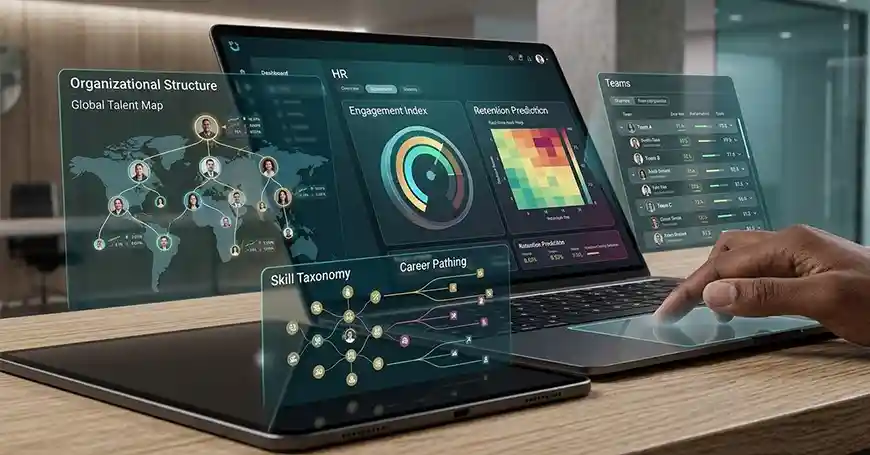
Dedicated platforms introduce:
Instead of files being shared, information lives within governed environments.
Still managing employee data in spreadsheets? It’s time to upgrade to a smarter, centralized HR directory solution.
Request a Demo| Area | Excel | HR Platform |
| Data storage | Distributed files | Central database |
| Access control | Hard to manage | Role based |
| Compliance | Manual | Embedded |
| Reporting | Built manually | On demand |
| Error risk | Higher | Reduced |
| Collaboration | Email driven | Workflow driven |
| Scalability | Limited | Designed for growth |
This view often reframes the Excel vs. employee relations software comparison from a preference to a risk-management perspective.
Spreadsheets appear inexpensive because they are already available.
However, organizations frequently underestimate indirect costs such as:
These elements accumulate as complexity grows.
Executives increasingly want immediate answers.
Modern employees expect transparency and self-service.
HR platforms often provide controlled access for updates, requests, and communication — reducing administrative load.
The data managed by HR teams represents some of the most sensitive information within any organisation. Be it personal identifiers, compensation details or performance records, their protection cannot be negotiated. They must be handled carefully and securely.
Data privacy expectations are continuing to rise, and investing in secure and centralised systems has become a strategic imperative and not just a technical upgrade.
A frequent concern is losing flexibility.
Most modern environments allow configuration while maintaining consistency, enabling HR to adapt processes while protecting data integrity.
| Function | Manual State | After Digitization |
| Data accuracy | Variable | Higher |
| Reporting time | Slow | Faster |
| Policy adherence | Difficult to verify | Transparent |
| Employee requests | Email based | Structured |
| Leadership visibility | Periodic | Continuous |
Reliable data allows teams to move beyond administration toward analytics, talent planning, and culture initiatives.
Many organizations adopt phased approaches.
They may begin with directories or leave management, then expand into performance or workforce analytics.
This method builds comfort while reducing disruption.
Remaining dependent on spreadsheets can lead to:
As expectations rise, these issues intensify.
The decision is rarely emotional — it is structural.
Stop wasting hours on manual updates—streamline your workforce management with powerful HR directory software.
Get In Touch