Summary: Traditional seating flaws are exposed with Hybrid work. Daily frustration, double-booked desks and what not organizations face without reliable seat management. To lower real estate costs, reclaim that lost productivity and improve how teams work together, enterprise leaders need the right tools.
Introduction: The modern office needs a better approach to space. When employees arrive to find double-booked workstations, it ruins their view of return-to-office plans. Using smart desk booking software is now essential for leaders who want to remove these daily hurdles and make the most of their office space without the guesswork.
Why Does the Illusion of Scarcity Derail the Hybrid Experience?
The Headache of the Commute and Double-Booked Desks
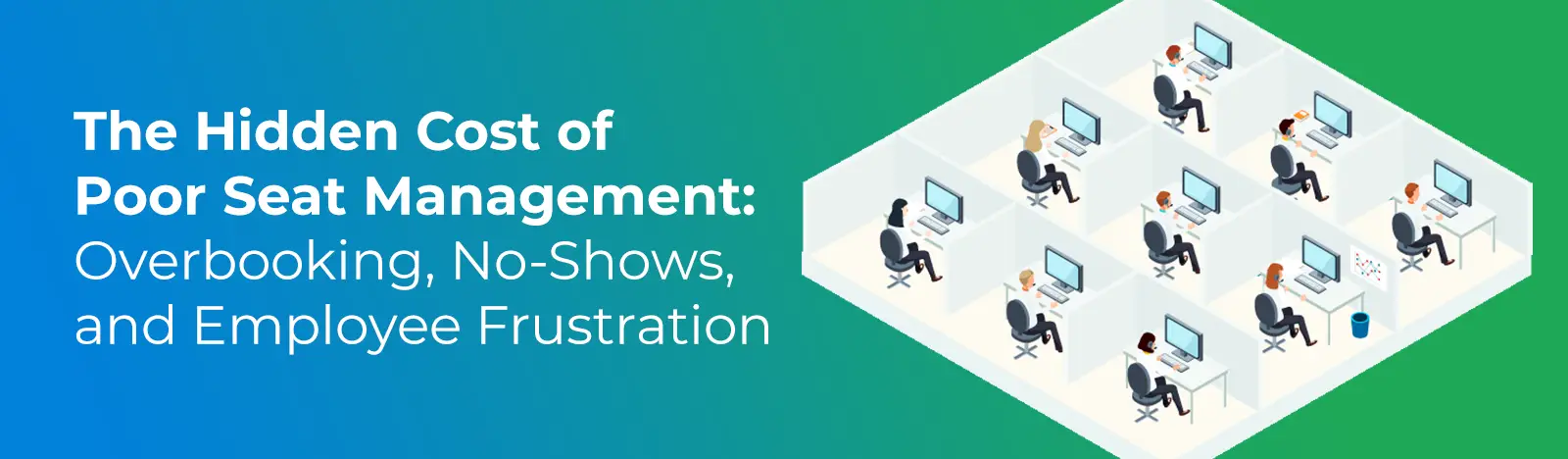
We ask a lot of our teams when we shift to hybrid work. Where office spaces were built for different ways of working, we expect them to coordinate their schedules, just? Not really. And the immediate reaction and deep frustration of that employee who makes the effort to commute, seeing their desk double-booked. This is not just a minor scheduling glitch. It is a core failure in how we manage our physical assets.
Also, consider what happens when teams try to collaborate. The true value of the physical office is bringing people together. When teams are scattered across different floors simply because they could not secure seats next to each other, it defeats the purpose of the office. This is why having reliable seat management software is no longer a luxury. It is a basic need to keep the business running smoothly.
How Ghost Meetings Create the Burden of Hidden Space
Adding to this daily friction is the ongoing issue of ghost meetings and chronic no-shows. In many large companies, employees develop a habit of holding onto reservations. They book spaces “just in case” and often forget to cancel them when plans change. A whopping 35 percent of reserved spaces in hybrid environments are ghost meetings. This makes the office looks busier than it actually is.
This false data is incredibly damaging for directors and facilities leaders trying to map out future real estate needs. Decisions about lease renewals or expanding the office are too often based on skewed numbers. Instead of seeing the hidden space already available in the building, organizations risk wasting money on real estate they do not actually need.
What Is the Direct Hit to Productivity and Employee Morale?
The Hidden Cost of Wasted Search Time
Enterprise resources are actively drained due to poor space planning because it ripples outward, hurting the bottom line. As per McKinsey, nearly 20 percent of workweek is spent by interaction workers simply searching for internal information or tracking down colleagues. When locating a coworker or a quiet desk isn’t easy, the employee’s search time eats directly into the hours they should spend on real, focused work.
To make matters worse, industry benchmarks show global office space utilization remains under 40 percent on average. This high level of unpredictability makes old-school, manual tracking nearly impossible. A dynamic office needs dynamic tools. That’s why a solid workspace management software roll out is critical to balance these daily shifts.
Managing the Fallout of Return-to-Office Policies
Employee morale takes a severe hit when daily office experience is stressful scramble for chairs. The result of this constant friction?
late meetings
delayed projects
a growing resentment toward “back to office” rules.
We can’t let the logistics of getting a seat in the way of allowing teams to view office as a place that helps them perfor best at work.
For CIOs and IT directors, this disorganization translates into more. There’s a flood of support tickets about broken booking systems (or missing monitors at unassigned desks). For HR leaders, it means dealing with a drop in employee satisfaction. With only about 32 percent of workers feeling actively engaged in the U.S., the physical office must serve as a strategic asset, not a daily hurdle.
What Smart Features Are Needed to Restore Order?
Building Accountability With Mandatory Check-Ins
Solving these daily habits requires a better system. Advanced desk booking software acts as the smart layer needed to clear out artificial scarcity and restore order. It does this through automated features designed to build accountability without micromanaging the staff.
Take mandatory check-ins, for example. The person who books, gets to use the reserved space, that is one the critical features that it ensures. And the system automatically frees up space if a user fails to check in within a defined time. Simple, seamless way to make that desk available for others, drastically reducing the impact of no-shows.
Handling Demand With Waitlists and Zone Rules
Modern tools go beyond just holding a reservation; they actively manage the building’s capacity. Features like waitlists and smart rules per zone allow organizations to group specific departments together in their own neighborhoods. This helps facility managers handle busy office days with ease.
Areas for quiet, focused work and others for loud, collaborative sessions can be dedicated by leaders by setting clear boundaries.
How Can Visual Transparency Solve Hybrid Coordination?
Navigating the Floorplan With Digital Blueprints
Transparency is the best way to cure workplace frustration. A digital map of the entire building is provided to everyone with an interactive office floor plan. Employees see exact reserved and currently open seats, and precisely who is sitting where in real-time.
Visibility that completely stops frustrating process of wandering across floors to find empty desks (or a free meeting room). Visual mapping turns a complex, multi-floor corporate office into a highly navigable, easy-to-use space.
Restoring Confidence in the Office Environment
When staff can instantly locate their team and check seat availability on a screen, the friction of hybrid work is removed. A massive cut down on wasted search time thanks to digital wayfinding that restores confidence in coming to office.
Your team will see you respect their time by providing these tools and you’re committed to supporting a modern work environment..
How Does Beyond Intranet Streamline Your Workplace?
Empowering Teams With Intuitive Tools
Reimagining the workplace experience requires a strong foundation. Beyond Intranet provides comprehensive desk booking software built specifically for the Microsoft 365 environment. It is the simplest way to manage your workspace, offering real-time visibility, automated smart assignments, flexible self-service booking, and data-driven space planning. All of this is securely managed from a central dashboard.
Optimizing Operations for Facility Leaders
To ensure no more empty desks and no more workplace chaos, our workspace management software allows administrators to tightly control availability. You can instantly lock or unlock seats to maintain flexibility, manage role-based approvals, and handle batch operations for fast bookings. Employees can secure desks easily, and the employee seat finder ensures teams can focus on work the moment they arrive.
Gaining Clarity with Visual Mapping
Finally, our interactive office floor plan translates your unique office layout into a fully navigable map. With sliders that show real-time availability across various times of the day directly from the map interface, employees never have to guess where they are going.
Together, these connected tools eliminate the daily chaos of hybrid work, ensure you use your space well, and provide the solid foundation needed to support your enterprise’s long-term success.
Ready to Reimagine How You Use Office Space?
Discover how our solutions can eliminate overbooking and bring clarity to your workplace today.