Determining who governs the Microsoft 365 HR/Employee directory is a critical operational decision. By implementing a shared governance model, where...
Spreadsheets have served Human Resources teams for years. Whether tracking headcount and leave balances, maintaining employee records, or running HR...
Choosing the right org chart software in 2026 is no more just about creating visual hierarchies through simple diagrams, It’s about selecting a platform which best supports your enterprise visibility, governance, and workforce planning as organisations scale.
This comparison blog reviews the leading tools that are shaping the category in 2026 by offering a structured comparison of their planning capabilities, scalability, and flexibility across integration. It helps you with practical evaluation guidance to select a system that aligns with your organisation’s technical environment, governance standards, and workforce planning goals in the long run.
Here’s a quick summary to help you evaluate and make a decision.
Automation and permission governance outweigh visual customization.
Enterprises expect search, filters, and analytics, and not just hierarchy diagrams.
Vendors are increasingly adding intelligence, forming the emerging AI org chart tool layer.
Microsoft ecosystem compatibility is often considered a deciding factor.
Due to its deployment model and security alignment, Beyond Intranet frequently becomes a natural shortlist candidate for organizations standardized on Microsoft 365.
Quick Comparison: Top Org Chart Softwares of 2026
Platform
Core Strength
Best Fit
Live HR Sync
Enterprise Governance
Microsoft Ecosystem Fit
Visual Impact (1–5 stars)
Beyond Intranet Org Chart Software
Native Microsoft 365 org chart solution with automated sync, advanced filters & secure tenant deployment
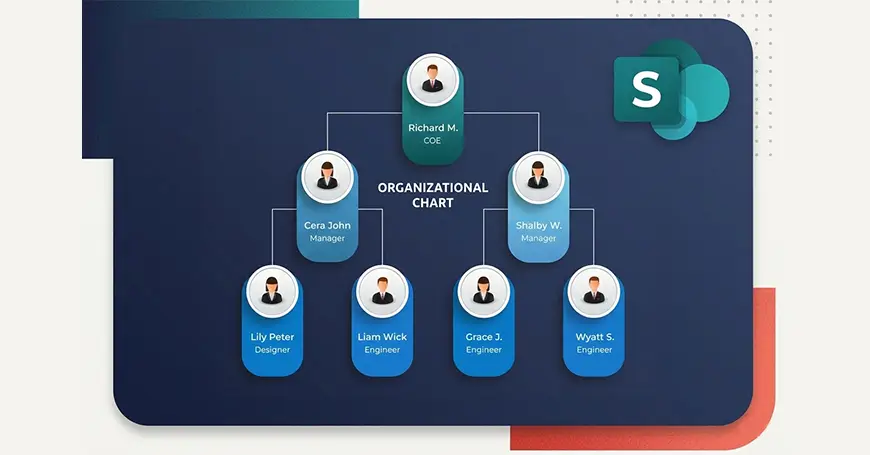
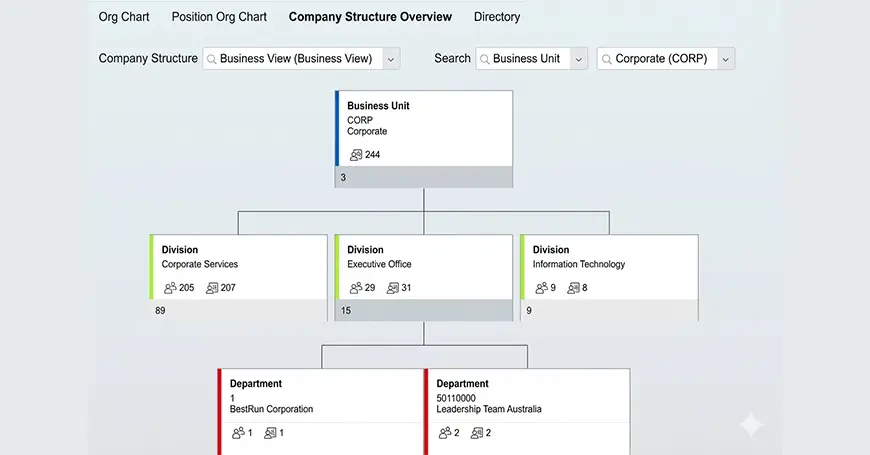
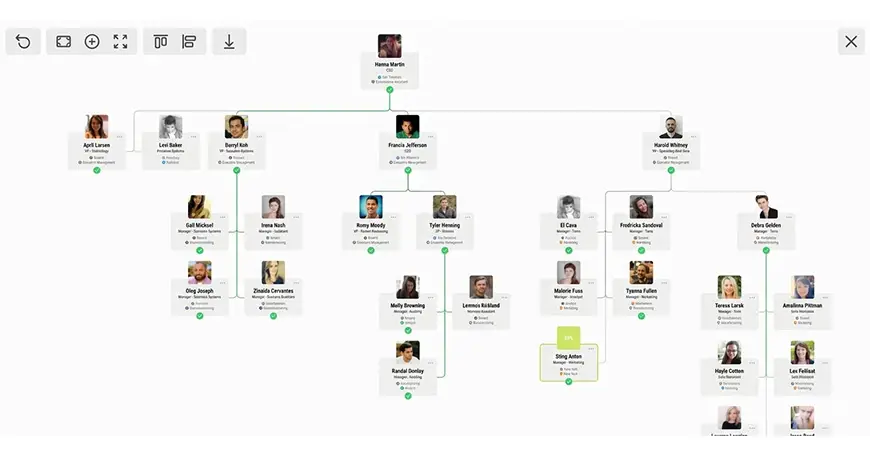
Org chart tools are systems that automatically build and maintain reporting structures using employee data. They allow users to explore teams, search for individuals, understand relationships, and support planning initiatives without relying on manually updated diagrams.
Unlike presentation files, these platforms are dynamic environments that evolve as your workforce changes.
Why org visibility is now strategic infrastructure
In conversations with enterprise buyers, one theme is consistent: structure drives performance.
Leadership teams depend on organizational insight to determine:
Whether spans of control are healthy
Where critical roles are vacant
Which departments are overloaded
How mergers or expansions affect reporting
Who is positioned for succession
These discussions become opinion-based rather than data-driven when they lack clear visibility into the data.
This is exactly why many companies are now investing in modern organizational design software rather than continuing to use spreadsheets.
What defines the best org chart tools in 2026
Through market observation and buyer interviews, five capabilities consistently separate leaders from basic products.
1. Live synchronization Automatic updates from HRIS or identity systems eliminate manual intervention.
2. Governance & security Role-based access, data boundaries, and auditability are mandatory.
3. Workforce insight Leaders need context beyond reporting lines.
4. Planning support Restructuring and future-state modeling are increasingly important.
5. Enterprise scalability Global organizations must manage their employees effectively, whether the workforce is in the tens or thousands.
The best org chart tools treat visualization as the foundation and not the end goal.
How to choose the right platform?
Buyers should clarify the following fundamentals before reviewing vendors:
What is your primary data source?
How frequently must updates occur?
Who needs editing rights versus view-only access?
Will the platform support transformation initiatives?
How complex is your security environment?
If any of these areas is misaligned, it can result in slow implementation and reduce adoption.
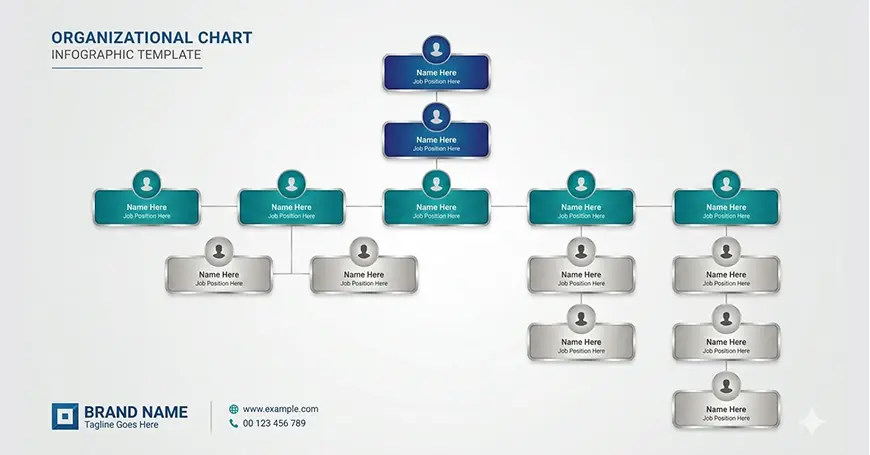
Org chart template vs organizational chart software
While useful for small teams, it requires manual maintenance and quickly becomes outdated. An org chart template provides a predefined structure for building diagrams.
By contrast, organizational chart software automatically updates relationships based on live records. It supports permissions, search, analytics, and enterprise collaboration.
For growing organizations, automation usually outweighs design flexibility.
Evaluation checklist buyers use
Requirement
Why it’s critical
Automated HR sync
Prevents outdated reporting
Permission model
Enables compliance
Enterprise search
Improves adoption
Scenario modeling
Supports change management
Integration ecosystem
Reduces IT workload
Leading platforms reviewed
1. Beyond Intranet Org Chart Software
Best suited for Microsoft-first enterprises
Beyond Intranet delivers a fully Microsoft 365-native org chart solution deployed directly within your tenant. With automated Azure AD and HRIS synchronization, advanced filtering, and enterprise-grade governance controls, it is purpose-built for organizations prioritizing security, scalability, and seamless Microsoft ecosystem alignment.
Ideal for: Regulated industries, global enterprises, and Microsoft-standardized environments seeking secure, real-time organizational visibility.
2. Workday
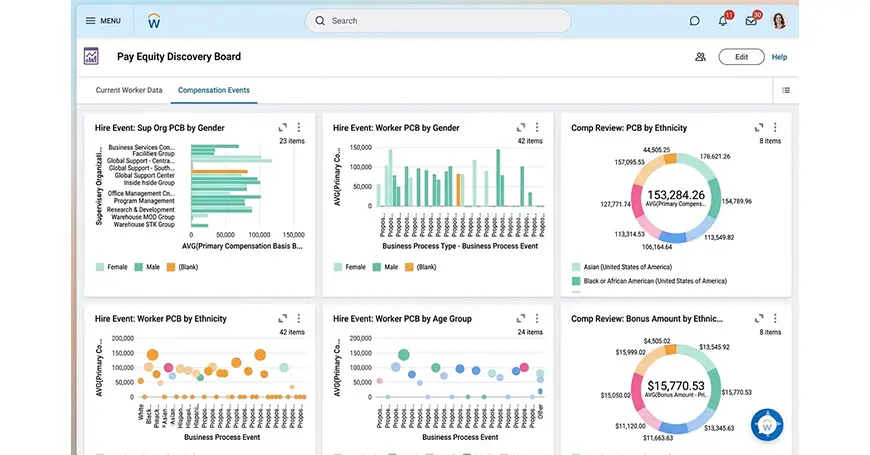
Workday integrates org chart functionality within its broader enterprise HCM and finance suite. It is well-suited for large enterprises already operating within the Workday ecosystem, offering native HR synchronization and strong governance capabilities.
Ideal for: Enterprises using Workday as their primary HR system.
3. SAP SuccessFactors
SAP SuccessFactors provides embedded organizational visibility within its cloud HCM suite. With strong compliance controls and workforce analytics integration, it is typically favored by organizations standardized on SAP technologies.
Ideal for: SAP-driven enterprises seeking integrated HR and reporting structures.
4. BambooHR
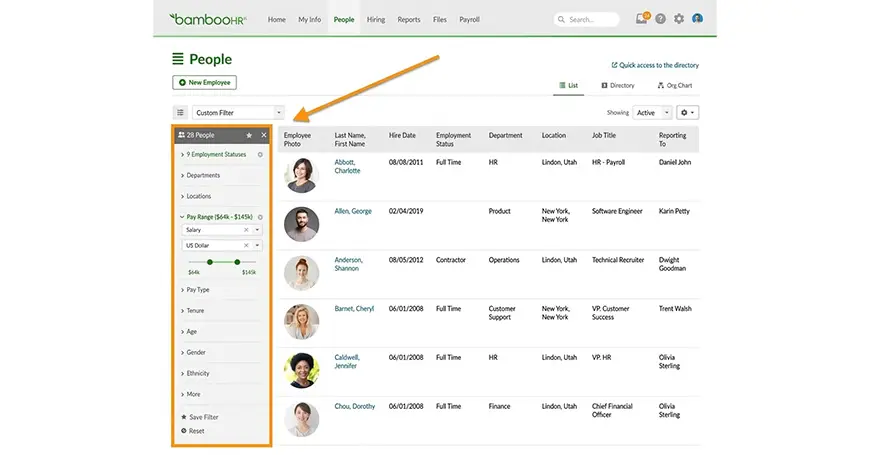
BambooHR focuses on simplicity and usability, offering built-in org charts connected to employee records. While effective for growing businesses, its governance and modeling depth may be limited for complex enterprise structures.
Ideal for: Small to mid-sized organizations prioritizing ease of use.
5. HiBob
HiBob combines people management, engagement tools, and org visualization within a modern HR platform. It is often chosen by scaling mid-market companies focused on culture and growth.
Ideal for: Fast-growing organizations seeking modern HR experiences.
6. Personio
Personio is widely adopted across Europe, offering HR administration with integrated org visualization. It emphasizes compliance and structured workforce management for scaling businesses.
Ideal for: EU-based or compliance-focused growing companies.
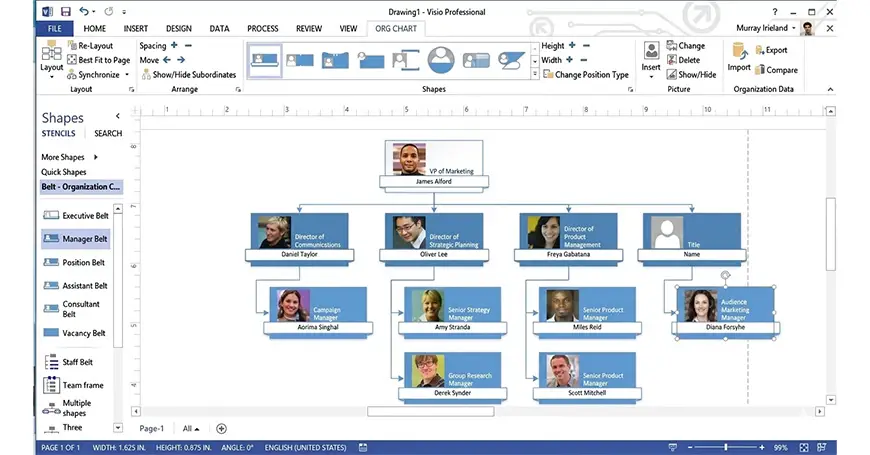
7. Microsoft Visio
Microsoft Visio is a diagramming tool rather than a dynamic org chart platform. It supports manual chart creation with strong design flexibility but lacks automated HR synchronization and enterprise governance features.
Ideal for: Static documentation and presentation use cases.
8. Creately
Creately offers collaborative diagramming and visual workspace capabilities. While useful for flexible design and brainstorming, it is not primarily built for live enterprise organizational data management.
Ideal for: Teams prioritizing design collaboration over automation.
9. SmartDraw
SmartDraw provides template-driven diagram creation for business documentation. It supports static org charts but does not typically deliver enterprise-grade automation or governance.
TeamOrgChart integrates with SharePoint and Azure AD to generate directory-based org charts. It is often evaluated by Microsoft-centric organizations seeking automated directory synchronization.
Ideal for: Companies leveraging SharePoint for internal structure visibility.
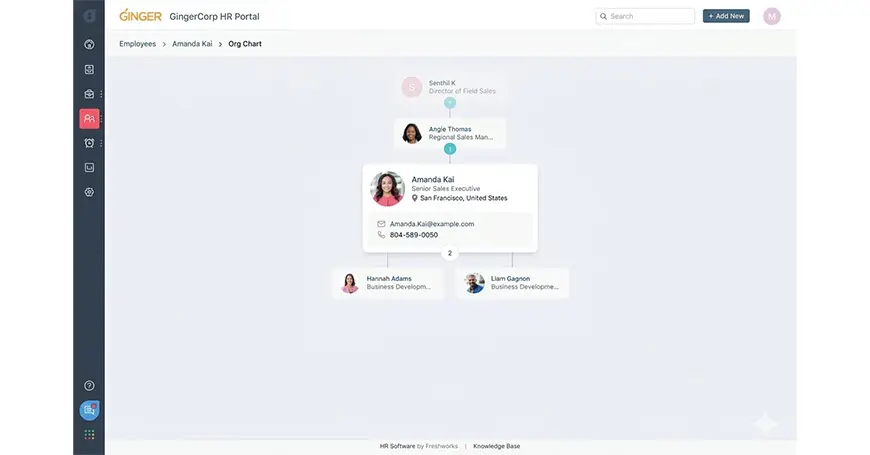
11. Freshteam (* Plus one)
Freshteam, part of the Freshworks ecosystem, offers lightweight HR management with built-in org chart functionality. It is generally positioned for growing teams seeking recruitment and basic workforce visibility.
Ideal for: Expanding teams requiring simple HR-linked org charts.
The emergence of the AI layer
Advanced systems are introducing capabilities associated with an ai org chart tool.
These may include automated anomaly detection, structural recommendations, or visibility into succession risk.
While promising, buyers should remember that intelligent outputs are only as strong as the data feeding them.
When organizations typically modernize
A shift often occurs when:
Executives no longer trust reports
HR spends excessive time validating information
Multiple unofficial charts exist
Audit requirements intensify
Growth accelerates
At this stage, investment in structured org chart tools becomes less about convenience and more about operational reliability.
For you, the best and the rightest org chart software is the one that aligns with the data security requirements, governance framework, and technology landscape of your organisation while staying intuitive and accessible to ensure widespread adoption across teams. No one software fits all organisations.